Vai al contenuto
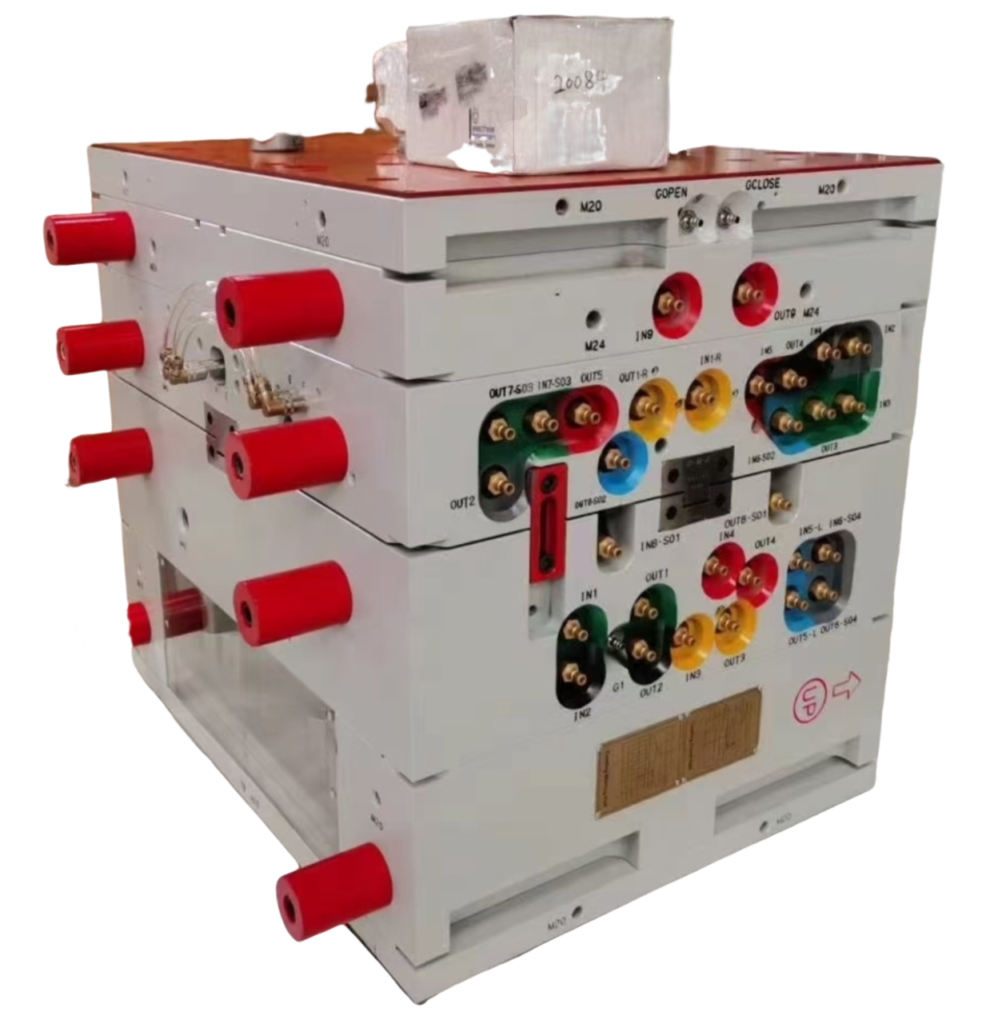
Controllo qualità dei pezzi stampati stampo a iniezioneing transitions from purely mechanical repetition to **Smart Manufacturing (Industry 4.0)**. This evolution integrates **Internet of Things (IoT)** connectivity, **Artificial Intelligence (AI)** for predictive quality control, and **Conformal Cooling** channels enabled by metal additive manufacturing. Key drivers include the shift toward high-performance **Post-Consumer Recycled (PCR)** materials, micro-molding tolerances below ±5 microns, and “Lights Out” automation. This guide explores the technical convergence of digital twins, advanced materials, and automated process monitoring.
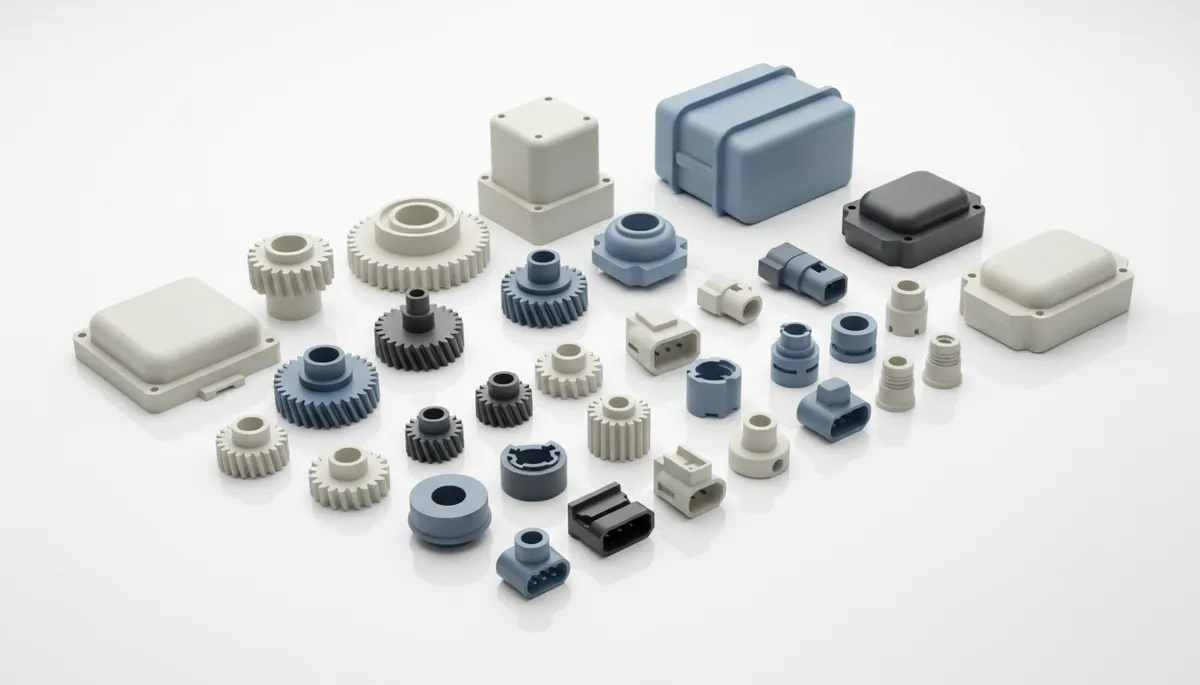
What is Smart Injection Molding and Industry 4.0?
Smart Injection Molding refers to the integration of sensors, data analytics, and automated feedback loops into the traditional processo di stampaggio a iniezione. Unlike legacy molding, which relies on periodic human sampling, smart molding utilizes Cavity Pressure Sensors and real-time melt temperature data to adjust machine parameters (injection speed, holding pressure) shot-by-shot.
This approach relies heavily on Cyber-Physical Systems (CPS), where a Digital Twin—a virtual replica of the physical mold and machine—simulates performance to predict defects like warpage or sink marks before they occur physically.

Industry 4.0 Integration Levels
| Level | Descrizione | Technical Standard Reference |
|---|---|---|
| 1. Monitoring | Real-time data visualization (Cycle time, scrap rate). | ISO 22400 (KPIs) |
| 2. Control | Machine self-correction based on sensor limits. | Euromap 77 (Data exchange) |
| 3. Optimization | AI analysis of historical data to improve cycle efficiency. | ISA-95 (Automation interface) |
| 4. Autonomy | "Lights Out" manufacturing with automated mold changes. | VDI 5600 (Manufacturing execution) |
Industry 4.0 integration allows injection molding machines to self-correct process parameters in real-time without human intervention.Vero
Closed-loop systems using cavity pressure sensors can automatically adjust holding pressure to maintain part weight consistency.
Implementing Smart Manufacturing eliminates the need for skilled process engineers in the factory.Falso
While automation handles repetition, skilled engineers are critical for interpreting complex data, managing system architecture, and advanced troubleshooting.

How Do Future Technical Parameters Compare to Traditional Standards?
The evolution of molding technology necessitates tighter tolerances and faster interactions. The table below contrasts current standard capabilities with emerging next-generation parameters.
| Parametro | Traditional Molding Standard | Future/Smart Molding Target |
|---|---|---|
| Tolleranza dimensionale | ±0.05 mm (DIN 16742 TG4) | ±0.005 mm (Micro-molding precision) |
| Cooling Method | Straight-line drilled channels | Raffreddamento conforme1 (3D printed channels) |
| Cycle Time Reductions | Dependent on wall thickness | 20–40% reduction via thermal optimization |
| Material Source | Virgin Petrochemical Resins | Bio-polymers & >50% PCR content |
| Controllo qualità | Q1: Cos'è la produzione "Lights Out" nello stampaggio a iniezione? | 100% In-line Vision & Cavity Sensing |
| Data Resolution | Data logged per batch/hour | Data logged per millisecond (ms) |
What Are the Advantages and Disadvantages of Advanced Molding?
Adopting future-ready technologies involves significant capital expenditure (CapEx) but offers long-term operational expenditure (OpEx) benefits.
Vantaggi
- Manutenzione predittiva: IoT vibration sensors on clamping units predict toggle wear or screw failure, preventing unplanned downtime.
- Traceability: Every part can be laser-marked with a unique QR code linking to its specific shot data (melt temp, pressure curve), critical for automotive and medical compliance.
- Sustainability: Advanced hot runner systems and AI-driven process optimization significantly reduce sprue waste and energy consumption per kilogram of plastic.
Svantaggi
- Cybersecurity Risks: Connecting OT (Operational Technology) to IT networks increases vulnerability to ransomware attacks.
- High Implementation Costs: Smart molds with embedded sensors and conformal cooling inserts can cost 30–50% more than standard tooling.
- Skill Gap: Operators must transition from mechanical troubleshooting to data interpretation and HMI (Human-Machine Interface) management.

Where Are These Future Technologies Applied?
- Medical Devices (Lab-on-a-Chip):
- Utilizes Cyclic Olefin Copolymer (COC).
- Requires micro-features <10 microns for fluidic channels.
- Relies on electric machines for extreme shot-to-shot repeatability.
- Automotive Electrification (EV Components):
- High-voltage connectors using Polybutylene Terephthalate (PBT) o Polyamide 66 (PA66).
- Lightweighting via structural foam molding (MuCell® process) to increase EV range.
- Consumer Electronics (Wearables):
- Gomma siliconica liquida (LSR)2 over-molding on rigid substrates.
- Waterproofing requires chemical bonding capabilities and vision-system verification.
How Should Manufacturers Implement Future Molding Processes?
Transitioning to a smart factory is a stepwise process.
- Conduct a Digital Maturity Audit
- Assess current machine connectivity (e.g., do machines support OPC UA protocol?).
- Identify bottlenecks where data is currently recorded on paper.
- Implement Conformal Cooling in Pilot Molds
- Utilizzo Sinterizzazione laser di metalli diretti (DMLS) to print mold inserts with cooling channels that follow the part geometry.
- Risultato: Reduces cycle time by uniform heat dissipation, minimizing warpage.
- Integrate Process Monitoring Sensors
- Install cavity pressure sensors near the gate and end-of-fill positions.
- Set "reject limits" on the machine controller to automatically divert bad parts based on pressure curves.
- Adopt Material Lifecycle Management
- Switch to materiali sostenibili3 like Polyhydroxyalkanoates (PHA) or mechanically recycled blends.
- Adjust screw designs (L/D ratio) to handle the lower thermal stability of bio-resins.
Conformal cooling channels can reduce injection molding cycle times by up to 40% compared to traditional cooling.Vero
By following the part's contours exactly, conformal channels remove heat more efficiently and uniformly, allowing for faster ejection.
All 'bioplastics' or sustainable resins can be processed using standard general-purpose screws and barrel settings.Falso
Bio-resins often have narrower processing windows and lower thermal stability, requiring specialized low-shear screw designs to prevent degradation.

FAQ: Future of Injection Molding
Q1: What is "Lights Out" manufacturing in injection molding?
Smart Injection Molding: Abbraccia le Innovazioni dell'Industria 4.0
Q2: How does a Digital Twin help in mold design?
A Digital Twin simulates the injection process using physical data inputs. Unlike basic Moldflow analysis, a Digital Twin operates in parallel with the physical machine, updating predictions based on real-time wear and environmental conditions to predict tool maintenance needs.
Q3: Will 3D printing replace injection molding?
No, they are complementary. 3D printing (Additive Manufacturing) is ideal for prototyping and low-volume production. Injection molding remains the only viable solution for high-volume manufacturing (10,000+ units) due to speed and material cost efficiency. However, 3D printing is revolutionizing costruzione di stampi via conformal cooling inserts.
Q4: What is the role of OPC UA in future molding?
Open Platform Communications Unified Architecture (OPC UA) is the machine-to-machine communication protocol (standardized in Euromap 77) that allows injection molding machines to "talk" to auxiliary equipment (dryers, chillers) and central MES (Manufacturing Execution Systems) seamlessly.
Q5: How do sustainable materials affect mold design?
Materiali come Post-Consumer Recycled (PCR)4 plastics often have higher viscosity variations. Molds may require larger gating and runner systems to reduce shear stress, and robust venting is essential to prevent gas traps caused by volatiles in recycled content.

Sintesi
The future of injection molded parts is defined by the convergence of precision hardware e intelligent software. The transition from analog to Produzione intelligente enables tighter tolerances, reduced waste, and the effective processing of sustainable polymers. Manufacturers who adopt conformal cooling, real-time cavity sensing, e data-driven process control will dominate the market by delivering defect-free parts with full traceability. See our Supplier Sourcing Guide for a comprehensive overview. See our Supplier Sourcing Guide for a comprehensive overview.
-
Conformal Cooling and DMLS: This resource details how Direct Metal Laser Sintering creates complex cooling channels impossible with drilling, drastically reducing cycle times. ↩
-
Liquid Silicone Rubber (LSR) Trends: Provides market analysis on the growing demand for LSR in medical and automotive sectors due to its biocompatibility and thermal stability. ↩
-
Sustainability in Plastics: Covers the latest developments in biodegradable resins and the circular economy, essential for future regulatory compliance. ↩
-
Designing for Recycled Plastics: Offers technical guidelines on accommodating the variability of PCR materials in mold design to ensure part quality. ↩
Need a Quote for Your Injection Molding Project?
Get competitive pricing, DFM feedback, and production timeline from ZetarMold’s engineering team.





 EN
EN  ES
ES  FR
FR  DE
DE  PT
PT  AR
AR  RU
RU  JA
JA  KO
KO  IT
IT  NL
NL  TR
TR  PL
PL