- Mexico is North America’s largest manufacturing export platform with over USD 500 billion in annual exports, driven by automotive (Monterrey, Juárez, Puebla), medical devices (Tijuana, Baja California), and electronics (Guadalajara, Chihuahua) clusters.
- Domestic injection molding capacity in Mexico focuses on high-volume commodity production, while precision tooling for engineering resins—particularly medical and automotive grades—comes from China, Taiwan, and United States.
- Mexican maquiladoras can import Chinese injection molded components duty-free under IMMEX program, eliminating Mexico’s standard 5–15% import duty on plastic parts for goods re-exported to US market.
- Compared to US-based injection molders, ZetarMold’s tooling costs run 40–60% lower and unit part costs are 20–40% below US market rates, with sea freight taking 18–22 days to Manzanillo.
- ZetarMold holds ISO 9001 and ISO 13485 certifications and provides USMCA-compatible documentation including IATF-aligned PPAP packages for automotive and FDA 21 CFR Part 820 records for medical device maquiladoras.
What Does Mexico’s Injection Molding Market Look Like?
Mexico is North America’s top manufacturing export hub, with USD 500B+ in annual exports from automotive, medical, and electronics clusters. injection mold1 tooling produces billions of plastic2 components annually for global supply chains, serving OEMs, tier-1 suppliers, and contract manufacturers across the continent. The country shares a nearly 3,200 km border with the United States and operates as a primary nearshore production base under the maquiladora system—export-oriented factories operating under the IMMEX program that allow duty-free importation of components destined for re-export to the US market.
For a broader view, our injection molding complete guide covers process fundamentals, material behavior, and production decisions.
For buyers comparing Mexico-based molding capacity with China-based precision tooling, the key decision is not geography alone. The practical question is whether the supplier can control mold design, resin behavior, process validation, documentation, logistics, tariff exposure, and launch timing well enough to support automotive, medical device, electronics, or maquiladora production without delaying launch schedules or buyer approvals.
For Mexico sourcing teams, the key decision is not only supplier location but also documentation quality, tooling control, and stable communication.
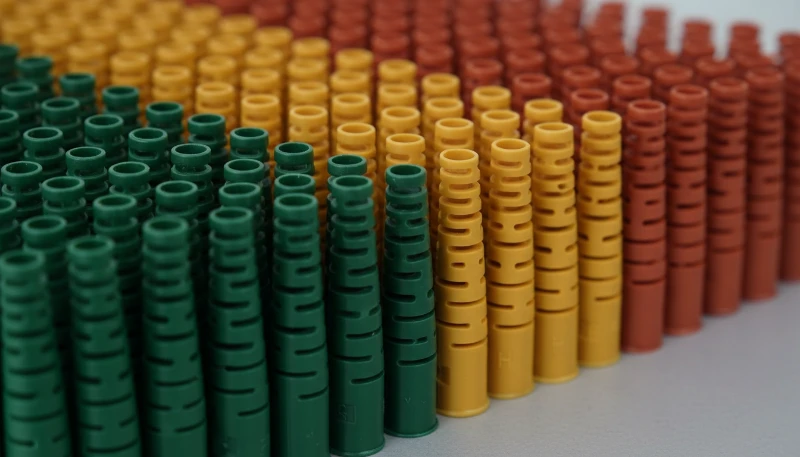
Major industrial clusters have developed around specific industries: automotive production in Monterrey, Juárez, and Puebla; electronics manufacturing in Guadalajara and Chihuahua; and medical device assembly in the Tijuana-Ensenada corridor and the Juárez cluster. The automotive sector alone represents Mexico’s largest manufacturing export segment, with OEM and tier-1 plants from GM, Ford, Toyota, Nissan, and BMW requiring millions of precision injection molded plastic components annually—dashboard assemblies, connector housings, sensor brackets, under-hood shields, and interior trim pieces.
Mexico’s medical device sector is the world’s seventh-largest exporter of medical devices, supplying BD, Stryker, and Medtronic with assembled products that depend on precision plastic housings and sterile-path components. However, despite this manufacturing scale, domestic injection molding3 capacity is heavily weighted toward large-volume commodity production. Precision mold tooling for engineering resins—particularly for medical and automotive-grade parts—is predominantly sourced from China, Taiwan, or the United States. This creates consistent demand among Mexican maquiladoras for offshore injection molded components that meet international quality standards while fitting within USMCA regional value content calculations.
What Trends Are Shaping Mexico’s Injection Molding Industry?
Nearshore outsourcing is accelerating as North American manufacturers reduce reliance on distant Asian supply chains. Post-pandemic disruptions exposed risks of 60–90 day shipping lanes from Southeast Asia, pushing sourcing teams toward Mexico’s 3–5 day air freight and 18–22 day sea freight routes. The IMMEX program simplifies customs procedures for maquiladoras importing components from China duty-free, provided those components are incorporated into products re-exported to the US. This regulatory framework makes Mexico an effective bridge between Chinese manufacturing costs and North American market proximity.
Automation investment in Mexico’s automotive and electronics sectors is increasing, with collaborative robots and automated assembly lines reducing labor content per unit. However, injection molding—particularly for multi-cavity tooling and precision medical components—requires more than automation; it needs experienced toolmakers who understand gate design, weld-line placement, and cycle-time optimization across 400+ materials.
USMCA (United States-Mexico-Canada Agreement) regional value content requirements drive sourcing decisions. Automotive parts typically need 75% regional value content to qualify for zero tariffs, pushing maquiladoras to maximize Mexican content while still accessing cost-advantaged Chinese tooling. Medical device and electronics maquiladoras face similar RVC calculations varying by HS code. This creates opportunities for Chinese injection molders that provide detailed material content and origin documentation, enabling Mexican customers to qualify finished goods under USMCA while leveraging offshore cost advantages.
"“Mexican maquiladoras can import Chinese injection molded components duty-free under the IMMEX program.”"True
The IMMEX program (formerly Maquiladora program) allows Mexican manufacturers to temporarily import raw materials, components, and parts from any country—including China—duty-free, provided those materials are incorporated into products that are subsequently exported. This means a Mexican automotive or medical device maquiladora can import injection molded housings, brackets, and assemblies from ZetarMold in China without paying Mexico’s standard 5–15% import duty on plastic parts, as long as the finished product is re-exported to the US or another market.
"“Chinese injection molded parts cannot qualify as USMCA-compliant content in finished goods exported from Mexico to the US.”"False
USMCA uses a regional value content (RVC) calculation to determine whether goods qualify for preferential tariff treatment. Chinese-origin injection molded components can be incorporated into a Mexican maquiladora’s finished product, and if sufficient value-added manufacturing occurs in Mexico to meet the applicable RVC threshold—typically 75% for automotive parts, varying by HS code for other categories—the finished good qualifies as USMCA-compliant. Many Mexican maquiladoras successfully use Chinese-sourced plastic components as inputs while maintaining USMCA qualification on their assembled output.
How Do You Choose an Injection Molding Supplier in Mexico?
Verify certification alignment first: IATF 16949 for automotive and ISO 13485 for medical programs are non-negotiable when choosing a Mexico supplier. Evaluate documentation capability (PPAP, FAI, SPC), dimensional tolerance claims, lead time transparency, and USMCA documentation support before committing to tooling. Ask prospective suppliers for case studies or reference projects similar to your industry and volume range.
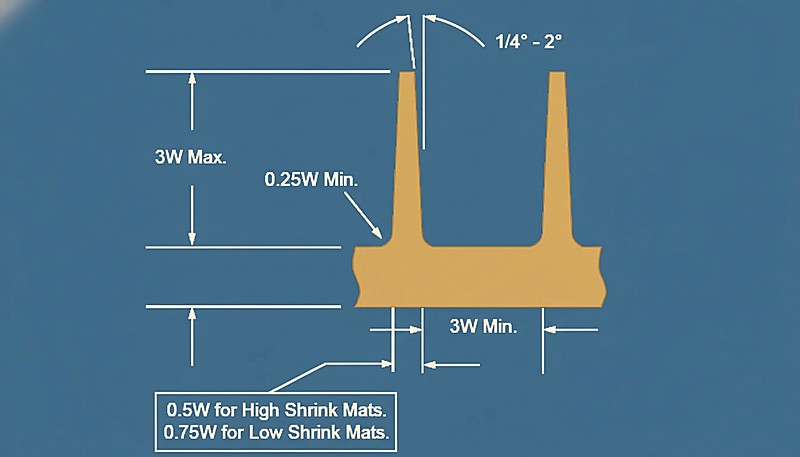
Quality capability verification is critical before committing to tooling. Request a DFM (Design for Manufacturability) review and pay attention to how the supplier identifies potential manufacturability issues—draft angles, gate locations, wall thickness consistency, and venting. For precision parts, verify dimensional tolerance capability and process control methodology. ZetarMold maintains ±0.005 mm tolerance on critical features and provides structured SPC documentation supporting IATF and FDA quality system requirements.
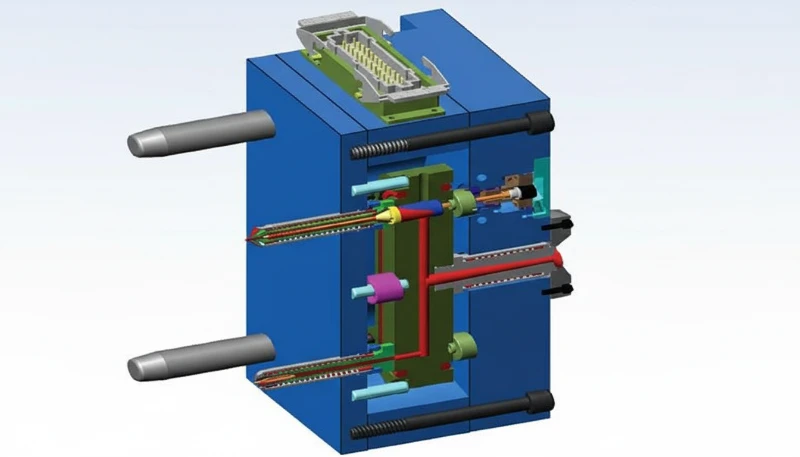
Lead time structure should be transparent: T1 sample delivery (typically 10–20 days from tooling approval), production lead time (30–45 days for standard orders), and shipping time to Mexico ports. For time-critical programs, verify air freight capability and confirm documentation completeness for IMMEX customs clearance. Avoid suppliers with vague timelines or those who quote sample times but cannot provide firm production dates. ZetarMold delivers T1 samples within 15 days from design approval and offers both sea freight to Manzanillo (18–22 days) and air freight to Mexico City and Monterrey (3–5 days).
| Selection Criterion | What to Verify | Red Flag |
|---|---|---|
| Certifications | ISO 9001, ISO 13485 for medical | No quality certification provided |
| Documentation | PPAP, FAI, SPC reports available | Vague quality references only |
| Dimensional Tolerance | ±0.01 mm or better claimed | No tolerance specification |
| Lead Time | T1 within 15 days, clear production schedule | Delays or excuses on sample delivery |
| USMCA Support | Material content and origin documentation provided | No IMMEX/USMCA documentation experience |
Which Are the Top 10 Injection Molding Companies in Mexico?
Mexico’s top 10 injection molding companies span 700 to 8,000+ employees across automotive, medical, electronics, and consumer goods sectors. The table below details each company’s founding year, employee scale, primary industries, and core differentiators to help you evaluate sourcing options.
| Company | Founded | Employees | Industries | Core Strengths | Website |
|---|---|---|---|---|---|
| Nemak | 1966 | 8,000+ | Automotive, HVAC, Appliances | Large-scale metal stamping and plastic injection for automotive OEMs | nemak.com |
| Plásticos Técnicos Mexicanos (PTM) | 1955 | 2,500+ | Automotive, Medical | IATF 16949, ISO 13485, precision molding | ptm.com.mx |
| Grupo Plasticos | 1974 | 1,800+ | Electronics, Consumer Goods | High-volume production, in-mold decoration | grupoplasticos.com.mx |
| Industrial del Envase | 1982 | 1,200+ | Packaging, Consumer Goods | Specialized packaging containers and closures | industrialdelenvase.com.mx |
| Plásticos Omega | 1990 | 900+ | Automotive, Medical | Cleanroom molding, ISO 13485 | plasticosomega.com.mx |
| Plásticos Reynosa | 1985 | 1,500+ | Automotive, Appliances | Tier-1 supplier to Ford and GM | plasticosreynosa.com.mx |
| Plásticos del Bajío | 1995 | 1,100+ | Electronics, Automotive | Guadalajara cluster location, just-in-time delivery | plasticosdelbajio.com.mx |
| Elastómeros Tecnológicos | 1988 | 800+ | Medical, Automotive | Thermoplastic elastomers and overmolding | elastomeros.com.mx |
| Plásticos del Norte | 1978 | 700+ | Consumer Goods, Appliances | Large household goods production | plasticosdelnorte.com.mx |
| Grupo Zimat | 1969 | 1,300+ | Automotive, Industrial | Multi-material molding, engineering support | zimat.com.mx |
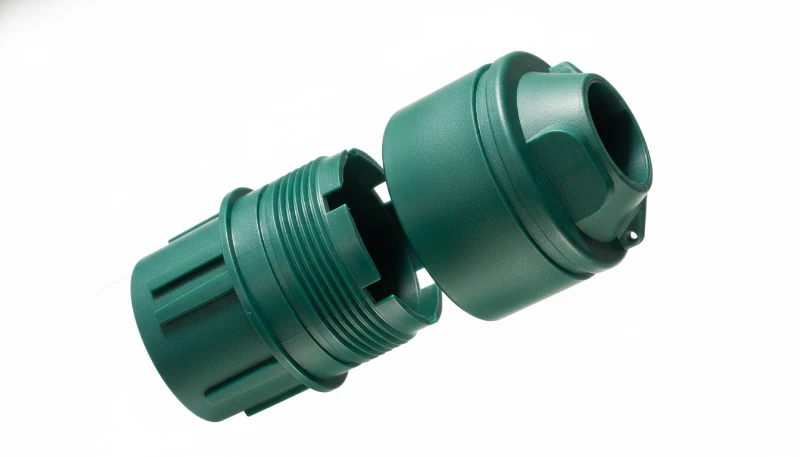
For maquiladoras requiring specialized medical-grade molding or complex automotive components with tight tolerances, many of these domestic companies focus on high-volume commodity production rather than precision engineering resins. This creates an opportunity for Chinese injection molders like ZetarMold to supply precision components while Mexican maquiladoras add value through assembly, testing, and final packaging for US market delivery.
How Does Mexico’s Injection Molding Cost Compare to China?
Mexico’s tooling costs are 40–60% higher than China’s: medium-complexity molds cost USD 15K–60K domestically versus USD 6K–25K from ZetarMold. Unit part prices for precision engineering resins carry an additional 20–40% premium due to limited domestic expertise with medical and automotive-grade materials.
Compared to Chinese injection molders, ZetarMold’s tooling costs typically run 40 to 60 percent lower than Mexico domestic rates for equivalent mold complexity and steel specification. Unit part costs from ZetarMold are 20 to 40 percent below Mexican market rates before shipping and import duties. When sea freight costs (18–22 days to Manzanillo) and Mexico import duties (5–15% on plastic parts) are added, total landed costs from ZetarMold remain substantially lower than Mexico-based alternatives for precision components.
| Cost Factor | Mexico Domestic | ZetarMold (China) | Notes |
|---|---|---|---|
| Tooling Cost (medium complexity) | $15,000–60,000 | $6,000–25,000 | 40–60% lower from China |
| Unit Part Cost (commodity) | $0.15–0.40 | $0.10–0.25 | 20–40% lower from China |
| Precision Grade Premium | +20–40% | None included | China has engineering resin expertise |
| Sea Freight to Mexico | N/A | +$0.03–0.07/part | 18–22 days to Manzanillo |
| Import Duty (without IMMEX) | 5–15% | 5–15% | IMMEX eliminates duty for maquiladoras |
| Total Landed Cost (IMMEX) | Base + duty | Base + freight (duty waived) | IMMEX program enables duty-free import |
For maquiladoras operating under the IMMEX program, ZetarMold’s components can enter Mexico duty-free, eliminating the 5–15% import duty entirely. This cost advantage makes Chinese sourcing particularly attractive for re-export applications where Mexican value-addition through assembly, testing, and packaging satisfies USMCA regional value content thresholds.
When Is Mexico the Right Sourcing Choice for Injection Molding?
Mexico is the right choice when you need 3–5 day air freight to US distribution centers and USMCA-compliant North American assembly.
China is the better choice when tooling cost reduction is the primary driver and when your components require precision engineering resin expertise. Medical device and automotive parts made from polycarbonate, PEEK, ABS blends, or glass-filled nylons often demand specialized processing knowledge that is more abundant in China than in Mexico. Complex multi-cavity tools with tight tolerances also benefit from Chinese toolmakers’ decades of accumulated experience and lower steel costs. When the final product is assembled in Mexico for US market export under USMCA, Chinese-sourced components maintain tariff eligibility while delivering significant upfront cost savings.
"“Mexico’s 3–5 day air freight to the US eliminates shipping risks for time-critical programs.”"True
Mexican manufacturing locations offer air freight delivery to US distribution centers in 3–5 business days from most major airports—Mexico City, Monterrey, Guadalajara, and Tijuana. This shipping window is substantially faster than the 18–22 day sea freight lanes from China and the 5–7 day air freight routes from Asia, making Mexico the superior choice for programs with aggressive launch timelines or where supply chain disruption risks must be minimized.
"“Chinese injection molders cannot support USMCA-compliant sourcing for Mexican maquiladoras.”"False
Chinese injection molders like ZetarMold can fully support USMCA-compliant sourcing by providing detailed material content documentation, certificates of origin, and HS code classifications. Mexican maquiladoras incorporate Chinese-origin components into their finished products and, when sufficient value-added manufacturing occurs in Mexico to meet the regional value content thresholds—typically 75% for automotive parts—the assembled output qualifies for USMCA preferential tariff treatment. ZetarMold’s documentation package is designed specifically to support Mexican customers’ USMCA qualification processes.
What Are the Most Common Questions About Injection Molding in Mexico?
How does the IMMEX program work for importing injection molded components to Mexico?
The IMMEX program (formerly Maquiladora program) allows Mexican manufacturers to temporarily import raw materials, components, and parts from any country—including China—without paying Mexico’s standard import duties, provided those materials are incorporated into products that are subsequently exported. For injection molded plastic components, this means a Mexican maquiladora can import housings, brackets, and assemblies from ZetarMold duty-free and assemble them into finished goods for US market export. ZetarMold provides complete commercial documentation including HS code classification, unit values, and material descriptions to support IMMEX customs compliance.
Can Chinese-sourced injection molded parts qualify under USMCA for Mexico-based exports?
Yes, Chinese-sourced injection molded parts can qualify as inputs in USMCA-compliant finished goods. Under USMCA regional value content (RVC) rules, Mexican maquiladoras incorporate Chinese components into assembled products; when sufficient value-added manufacturing occurs in Mexico to meet the applicable RVC threshold—typically 75% for automotive parts—the finished output qualifies for preferential tariff treatment. ZetarMold provides material content documentation and certificates of origin to support this qualification.
What Certifications Do Mexico-Facing Suppliers Need?
Automotive suppliers serving Mexican maquiladoras should demonstrate IATF 16949 awareness through PPAP-compatible documentation including PFMEA, control plans, measurement systems analysis, and statistical process control data. Medical device suppliers require ISO 13485 certification and GMP documentation packages including material traceability, First Article Inspection reports, and process capability studies. ZetarMold holds ISO 9001 and ISO 13485 certifications and provides IATF-aligned manufacturing documentation and FDA 21 CFR Part 820 support for medical device maquiladoras.
How long does shipping from China to Mexico take?
ZetarMold ships from its Shanghai facility to Mexico via two primary routes. Sea freight to Manzanillo Port—Mexico’s largest Pacific container port—takes 18 to 22 days depending on the carrier and routing. Lázaro Cárdenas Port is an alternative for deliveries to central Mexico and Guadalajara-area clients. Air freight to Mexico City’s Benito Juárez International Airport or Monterrey’s General Mariano Escobedo Airport arrives in 3 to 5 business days. Most Mexican maquiladora clients use air freight for T1 sample review and validation batches, then transition to sea freight for production replenishment.
What are the cost differences between Mexico domestic and Chinese injection molding?
Mexico domestic tooling costs for medium-complexity molds typically range from USD 15,000 to 60,000, with unit part costs for commodity plastics competitive with Chinese rates. ZetarMold’s tooling costs are 40 to 60 percent lower than Mexico domestic rates for equivalent mold complexity, with unit part costs 20 to 40 percent below Mexican market rates. When sea freight (18-22 days) and Mexico import duties (5-15%) are factored in, total landed costs from ZetarMold remain substantially lower. The IMMEX program can eliminate import duties entirely for maquiladora customers re-exporting finished goods.
Does ZetarMold provide documentation for USMCA and IMMEX compliance?
Yes. ZetarMold provides complete customs and quality documentation packages supporting USMCA regional value content calculations and IMMEX program requirements. Documentation includes material content certificates, certificates of origin, HS code classifications, unit values, and commercial invoices. For automotive clients, ZetarMold supplies PPAP-compatible documentation (PFMEA, control plans, MSA, SPC data). For medical device maquiladoras, ZetarMold delivers ISO 13485 GMP documentation including material traceability, FAI reports, and process capability studies supporting FDA 21 CFR Part 820 supplier qualification.
Can ZetarMold support pilot production batches for Mexican medical device validation?
Yes. ZetarMold supports production runs from 100 units upward using full production tooling, accommodating small validation and clinical evaluation batches typically ranging from 500 to 2,000 parts for Mexican medical device maquiladoras. This eliminates the cost and timeline of transitioning between prototype and production tooling suppliers. T1 and T2 sample sets, pre-production validation batches, and limited-run pilot builds are all supported using the same production tooling that serves full-volume manufacturing.
Why Is ZetarMold the Right Partner for Mexico Buyers?
ZetarMold delivers Shanghai precision tooling at 40–60% below Mexican domestic rates, with full USMCA and IMMEX documentation for maquiladora buyers. The company operates injection molding machines from 90T to 1850T, holds ISO 9001, ISO 13485, ISO 14001, and ISO 45001 certifications, and supports automotive, medical device, electronics, and consumer goods programs. With 20+ years of experience, ZetarMold handles everything from miniature sensor housings to large structural panels.
With 20+ years of injection molding experience, we operate 47 injection molding machines from 90T to 1850T at our factory in Shanghai, working with 400+ plastic materials. Our team of 30+ English-speaking project managers ensures seamless communication with Mexican buyers.
We run 100+ mold sets per month through our in-house mold manufacturing facility and work with 400+ plastic materials. Our first-pass yield exceeds 92% across all programs, with dimensional tolerance capability at ±0.005 mm on critical features. For automotive clients, we provide IATF-aligned manufacturing controls and PPAP-compatible documentation. For medical device maquiladoras in Tijuana and Juárez, we deliver ISO 13485 GMP documentation packages including material traceability, FAI reports, and process capability studies supporting FDA 21 CFR Part 820 supplier qualification.
We offer competitive pricing with tooling costs 40 to 60 percent lower than Mexico domestic rates and unit part costs 20 to 40 percent below Mexican market rates. Sea freight to Manzanillo takes 18 to 22 days, while air freight to Mexico City and Monterrey arrives in 3 to 5 business days. We provide full USMCA and IMMEX compliance documentation including material content certificates, certificates of origin, and HS code classifications. We recommend requesting a detailed quote for your specific project to get accurate pricing. For customers who need adjacent components or services, our tooling team coordinates one-stop outsourced purchasing.
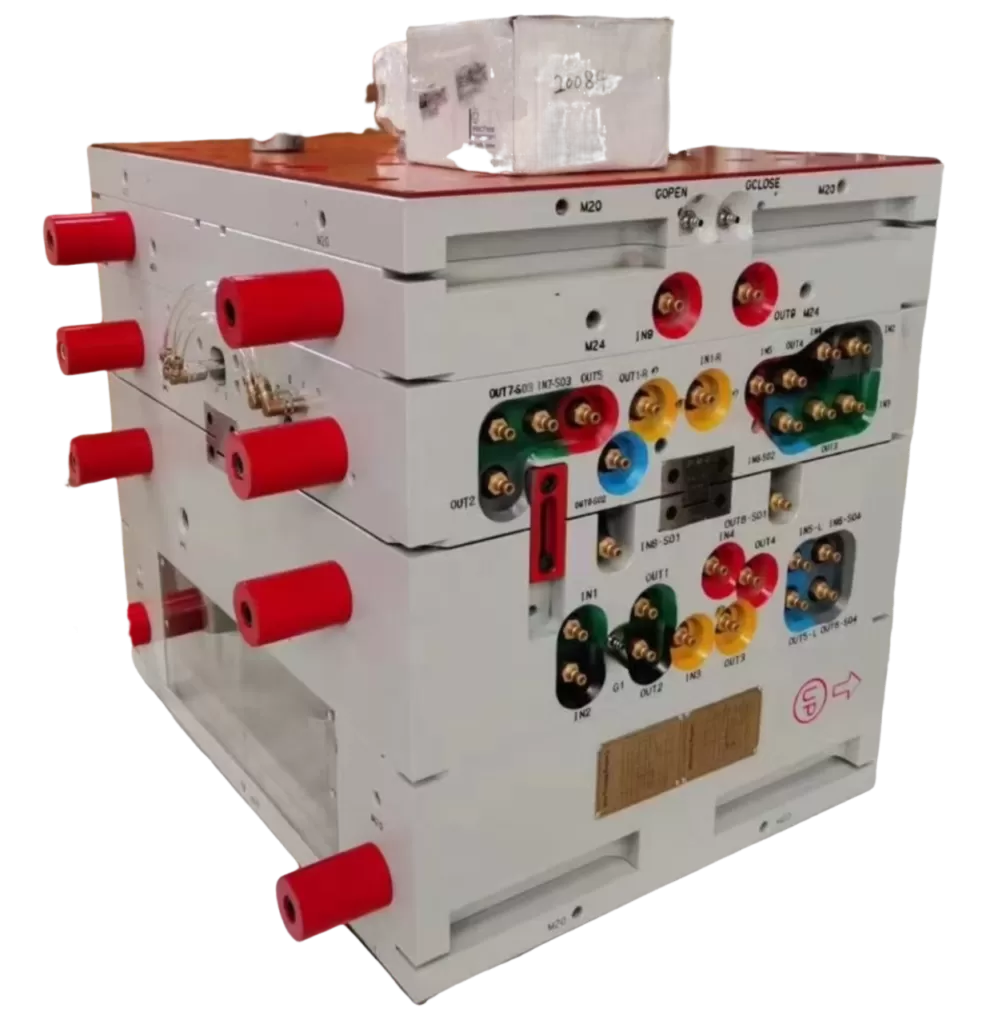
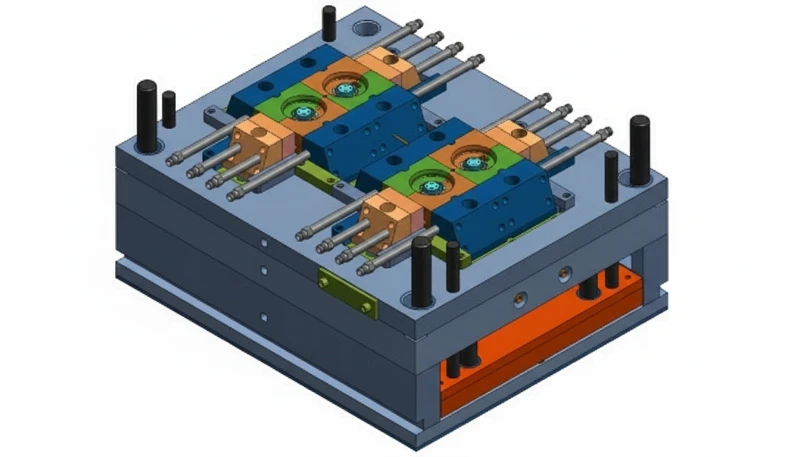
injection mold: An injection mold is a precision tool that defines part geometry, cooling behavior, ejection, gating, surface finish, and repeatability in plastic manufacturing. ↩
plastic: Plastic is a material family whose flow, shrinkage, strength, heat resistance, cosmetic quality, cycle time, and long-term performance shape molding decisions. ↩
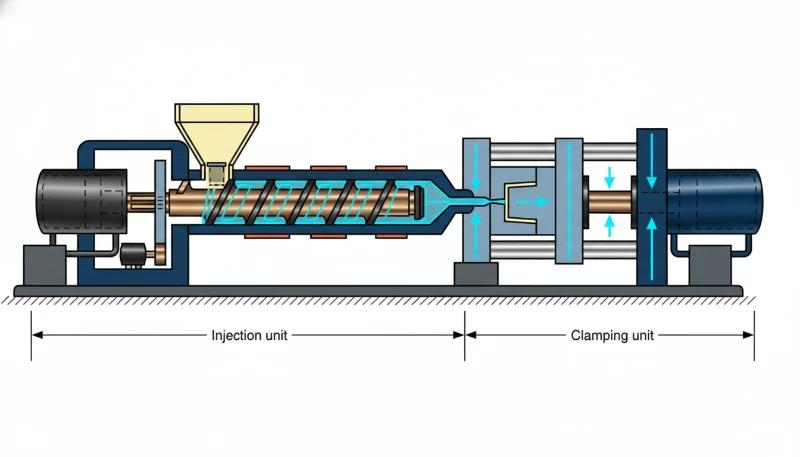
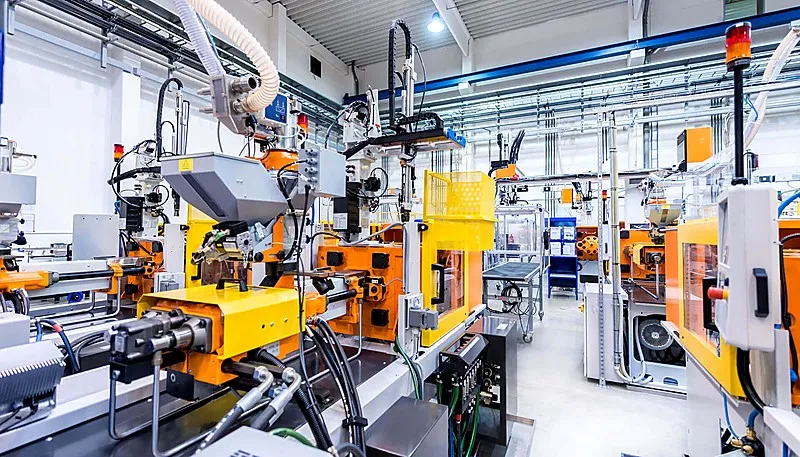
injection molding: Injection molding is an industrial process that melts plastic resin, injects it into a mold cavity under pressure, cools and ejects the solidified part, and repeats the cycle for high-volume manufacturing. ↩