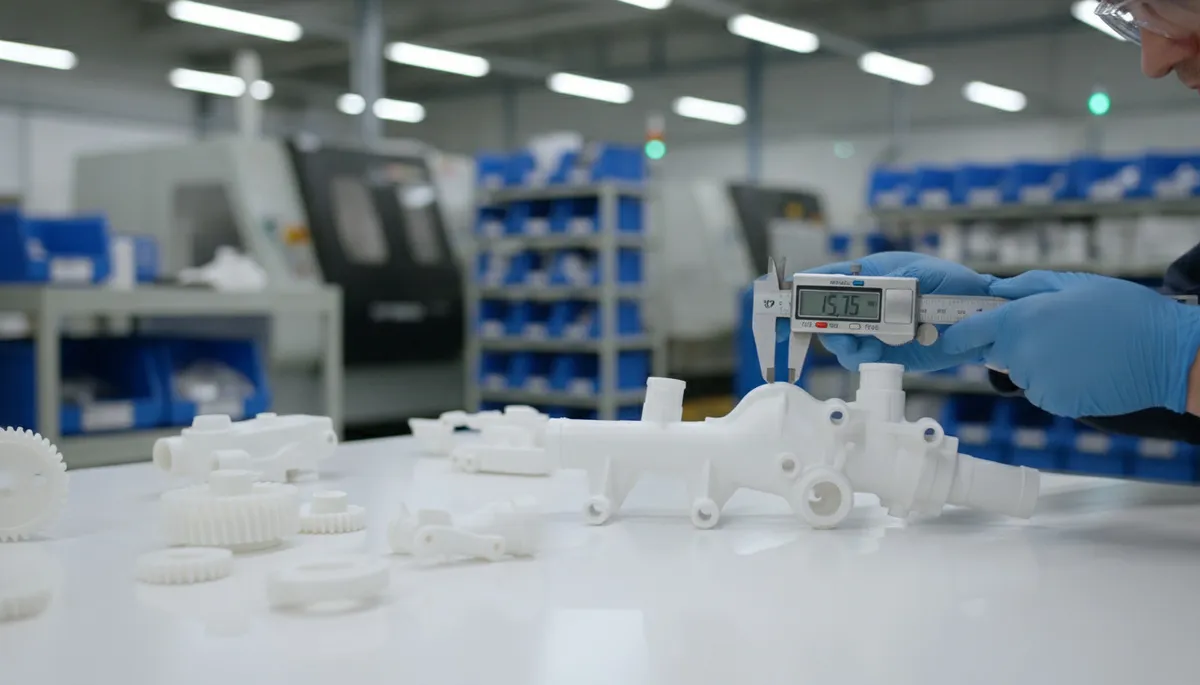
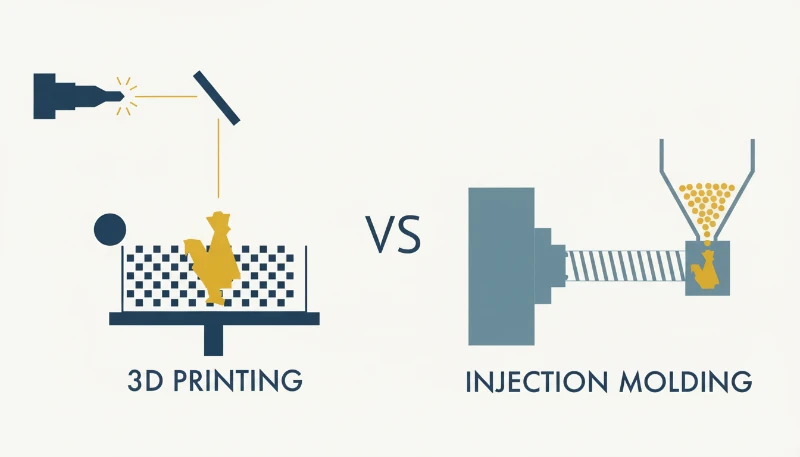
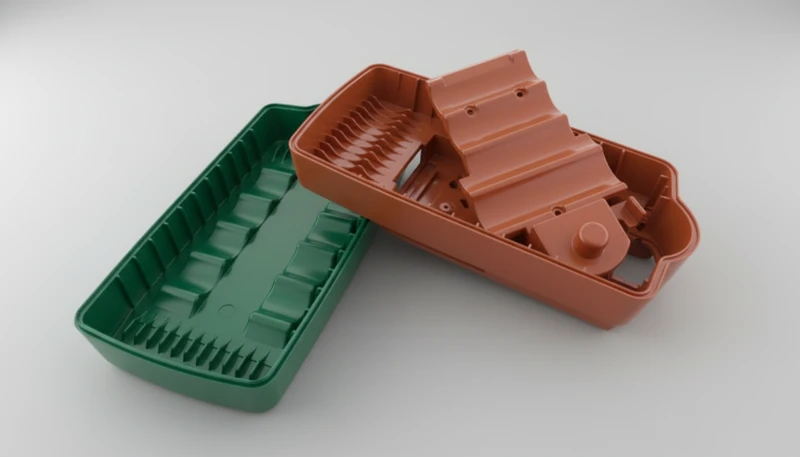
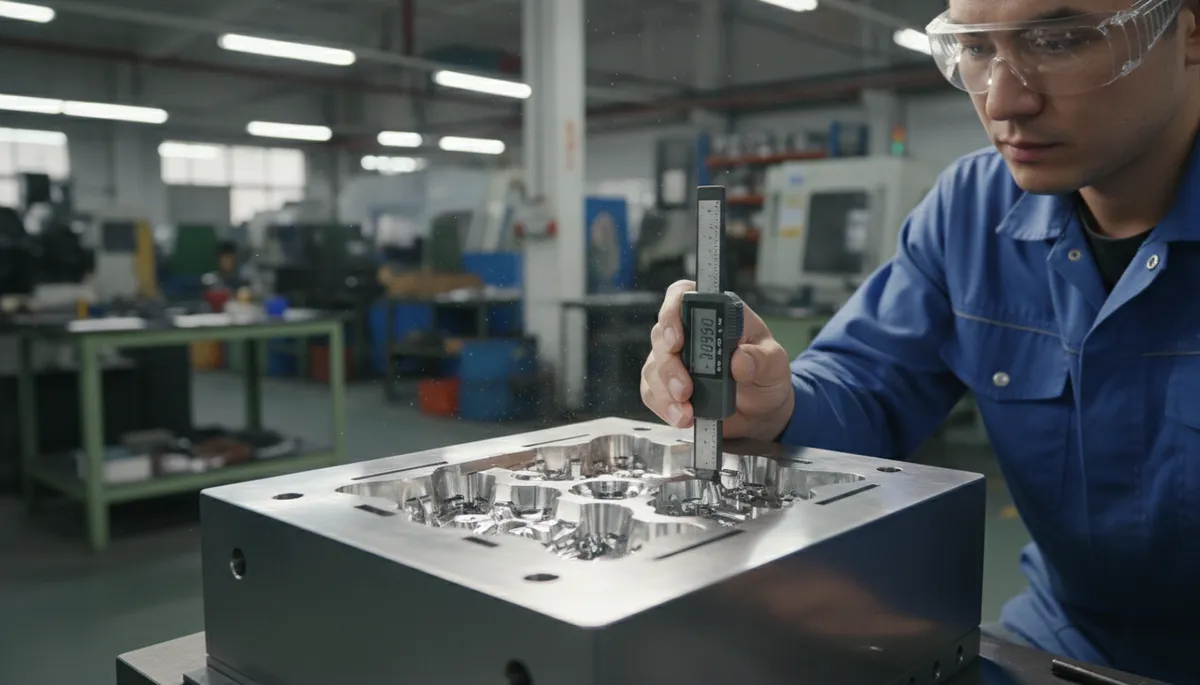
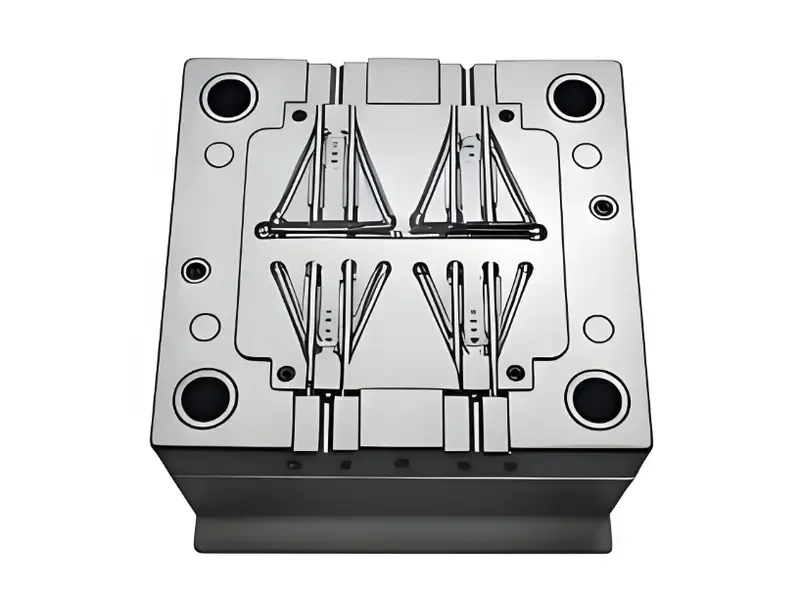
Choosing among injection molding companies in France requires a product-specific comparison of engineering, tooling, processing, quality, capacity, and supply-chain risk. A nearby supplier may offer fast communication and simple logistics, while an international partner may add tooling depth, broader machine capacity, or a different cost structure. The right answer depends on the part and program. Begin with our supplier sourcing guide, then convert requirements into evidence that every candidate must provide.
French buyers frequently manage regulated products, demanding cosmetics, recycled-material goals, traceability1, and short European delivery windows. Those needs should be translated into drawings, specifications, annual and peak volumes, approved materials, inspection methods, validation documents, packaging, forecast rules, and change control. A robust comparison follows the entire injection molding process rather than reducing the decision to mold price or part price.
This guide is for procurement, engineering, quality, and operations teams evaluating domestic, nearshore, or overseas options for the French market. It explains when proximity has real value, when international sourcing can be controlled, and which documents expose hidden gaps. Buyers should assess tool ownership and transferability through an injection mold design and build guide before authorizing steel or relying on a single production site.
Reference vocabulary used in this guide includes traceability, Incoterms2, measurement system3. Each term is defined in the references below.
- Define product and business risk before requesting quotations
- Compare equivalent tooling, validation, inspection, packaging, and logistics scope
- Audit technical evidence instead of relying on certificates or sales claims
- Model landed cost and disruption exposure under realistic demand
- Protect tool ownership, data, changes, and transfer rights in writing

What should French buyers define before contacting molding companies?
The practical answer is the following: French buyers should begin with one controlled request package.
Start with a controlled request package: current 3D and 2D files, revision, material specification, color and appearance standard, special characteristics, tolerance method, annual and peak volume, target machine or automation constraints, testing, validation, packaging, delivery point, and required records. Separate mandatory requirements from preferences. If candidates quote different assumptions, their prices are not comparable and later corrections will look like supplier failure even when the input was incomplete.
Add program context that affects risk: launch date, forecast confidence, service-life obligation, regulated use, customer approvals, recycled-content target, expected engineering changes, and whether the mold must transfer. Require an assumption and exclusion register with each quotation. Review that register across engineering, quality, procurement, and logistics before nomination. Clear inputs reduce commercial ambiguity and give technical reviewers a common basis for challenging gate, cooling, warpage, measurement, and capacity plans.
For this decision, record the approved requirement, current evidence, remaining gap, owner, due date, and release authority. This small discipline separates a verified conclusion from an assumption and gives the team a usable trail when design, demand, material, supplier, or timing changes.
"Supplier proximity can reduce response and logistics time for French buyers."True
The benefit is strongest when requirements change frequently, delivery windows are short, or rapid containment needs physical access.
"A supplier located in France is automatically lower risk for every molded part."False
Technical fit, capacity, tooling, material, measurement, subcontracting, and continuity still require evidence.
When does a France-based injection molder have an advantage?
The practical answer is the following: A France-based molder is strongest when proximity materially reduces response or logistics risk.
A France-based molder can have a real advantage when engineering iterations require frequent in-person work, demand is volatile, delivery windows are short, products are bulky relative to value, or the customer requires local service and rapid containment. Common language, time-zone overlap, European transport, and proximity to assembly may shorten response time. These benefits should be measured through lead time, minimum order, safety stock, response SLA, and cost of disruption rather than assumed from distance alone.
Domestic location does not automatically prove technical fit. Buyers must still inspect comparable parts, process windows, metrology, maintenance, material control, automation, traceability, cybersecurity, subcontractors, and capacity. Ask who owns DFM, tool design, machining, trials, and repairs if those activities occur at another site. A local sales and molding operation may depend on external tooling or specialized testing, so the complete operating chain must be visible before risk can be compared.
Validate the conclusion with a representative example and source records. Note the revision, sample basis, machine or tool involved, measurement method, result, exception, and approver so another qualified reviewer can reproduce the reasoning instead of depending on a sales statement or memory.
When can an international molding supplier be competitive for France?
The practical answer is the following: International sourcing works when verified capability outweighs its added coordination and logistics burden.
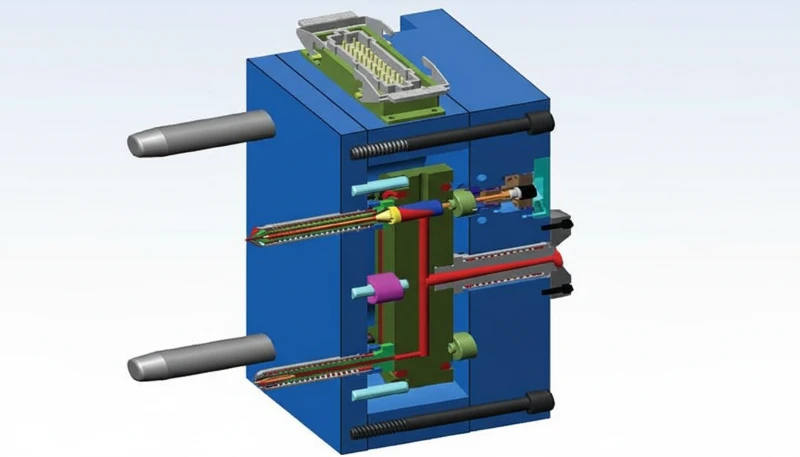
An international supplier may be competitive when tooling complexity, broad press capacity, integrated moldmaking, labor-intensive assembly, mature export management, or sustained volume outweighs added logistics. The comparison must include freight, duty, insurance, packaging, inventory, payment terms, travel, validation, communication overhead, buffer stock, and transfer contingency. Low quoted piece price is not a saving if it depends on unrealistic utilization, unapproved material substitutions, or frequent premium freight.
Use scenario analysis for normal demand, peak demand, quality containment, port or carrier disruption, engineering change, and tool transfer. Assign owners and response times. Confirm who is exporter and importer, how parts are classified, which documents accompany shipments, and how traceability survives repacking or consolidation. International supply works best when technical and logistical controls are designed together rather than added after the first late shipment.
Use a risk-based comparison across normal operation, peak demand, change, defect containment, and transfer. State which condition was tested and which remains an estimate. Assign a trigger and recovery action for any assumption that could affect safety, quality, delivery, cost, or customer approval.
| Decision area | France-based evidence | International evidence |
|---|---|---|
| Response | Travel and containment SLA | Time-zone coverage and local support |
| Tooling | In-house or subcontract map | Design, build, validation, transfer package |
| Cost | Delivered price and flexibility | Landed scenarios and inventory |
| Continuity | Local alternate capacity | Buffer, transfer, logistics contingency |
How should buyers compare mold design and tooling proposals?
The practical answer is the following: Compare tooling proposals line by line against the same approved requirements.
Compare mold proposals line by line: cavities, mold base, steel, hardness, hot or cold runner, gate, cooling, slides, lifters, ejection, sensors, interchangeability, texture, spare inserts, expected life, maintenance, validation, and included files. Require DFM evidence that connects geometry and resin behavior to these decisions. Review steel-safe strategy, dimensional adjustment, cosmetic zones, wear risk, and how tool changes are approved. A simple tooling total hides differences that later control cycle time and quality.
Clarify ownership at each payment milestone and identify the physical and digital asset. The contract should address serial marking, location, insurance, maintenance records, cycle count, unauthorized use, inspection access, release timing, packing, export support, and transfer data. Verify that native or neutral CAD, drawings, bill of materials, manuals, process sheets, trial history, and open issues will be usable by a receiving supplier. Tool ownership without access and data is weak continuity protection.
Keep commercial and technical scope aligned. If an option changes material, cavities, cycle, inspection, packaging, inventory, responsibility, or validation depth, show that difference explicitly before comparing price or lead time. Silent scope changes create false savings and late disputes.
Which quality and compliance evidence matters for the French market?
The practical answer is the following: Product-specific records matter more than a general certificate.
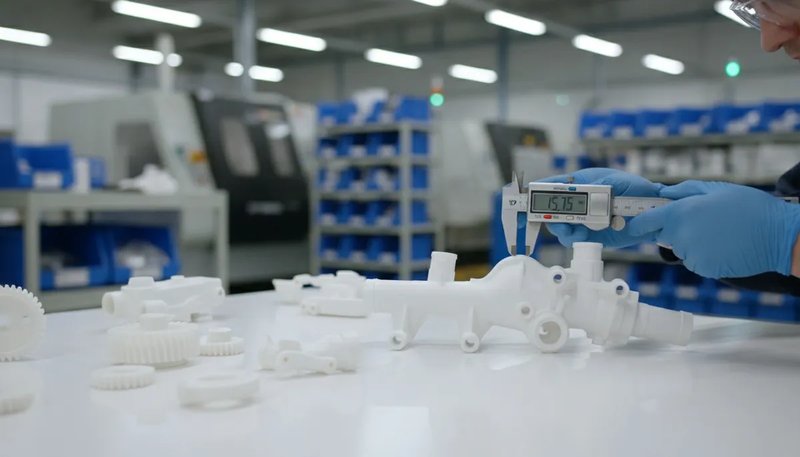
Quality evidence must match product risk. Review measurement-system capability, gauge calibration, material certificates, lot traceability, process parameters, cavity identity, nonconformance control, corrective action, change approval, and release records. For regulated or customer-specific programs, define the applicable standards and required validation with qualified specialists. A certificate shows that a system was audited at some point; it does not prove that the proposed mold, process, material, and measurement method are capable.
Ask candidates to trace one comparable job from order and material receipt through production, inspection, packing, and shipment. Reconcile quantities, lots, revisions, cavities, scrap, and disposition. Review a recent defect to see whether the supplier tested causes and verified effectiveness. During a factory audit, select samples rather than accepting only prepared examples. Reliable suppliers can explain both compliant records and the controls used when actual results fall outside the approved condition.
Approval should rely on objective closure evidence such as drawings, photographs, measurements, process records, capability results, maintenance history, test reports, or signed decisions. A verbal assurance can support follow-up, but it should not release a high-risk gate without the agreed record.
"Tool ownership terms should identify both physical and digital deliverables."True
A transferable mold needs asset identity, records, files, accessories, condition, and a defined release workflow.
"The lowest quoted part price is the same as the lowest landed business cost."False
Freight, duty, inventory, quality, change, downtime, payment, and disruption can outweigh the quoted unit difference.
How can buyers validate capacity, lead time, and logistics?
The practical answer is the following: Validate capacity with cycle, yield, uptime, staffing, maintenance, and peak-demand evidence.
Capacity validation should use the proposed cycle, cavities, yield, uptime, changeover, maintenance, staffing, and approved machine range. Compare average and peak demand, then test what happens when another program consumes the same press or operator. Ask for a time-phased launch plan covering DFM, design, steel, trials, corrections, validation, approval, production, and shipment. Milestones should identify inputs, outputs, owner, due date, and recovery action rather than report an unsupported percentage complete.
For delivery to France, model production lot size, transit, customs variability, receiving inspection, holidays, forecast freeze, and safety stock. Define shipment visibility and escalation points before launch. A dual-source or transfer plan may be justified for critical parts, but two unqualified suppliers do not create resilience. Preserve a controlled baseline, compatible data, approved material, measurement correlation, and a realistic period for transferring or duplicating the tool if continuity requires it.
Recheck the decision whenever the product revision, annual volume, peak mix, resin, manufacturing site, subcontractor, tool condition, process window, measurement method, or delivery route changes. Controlled change review keeps an initially sound decision from becoming stale during launch and production.

What should a French buyer verify before supplier nomination?
The practical answer is the following: Nominate a supplier only after material technical and commercial gaps are closed.
Before nomination, close open technical assumptions, commercial exclusions, audit findings, capacity gaps, and compliance questions. Confirm the final part revision, quoted tool and process, validation plan, inspection agreement, packaging, logistics, payment milestones, tool ownership, warranty, change control, and escalation contacts. Require objective closure evidence for major findings. Do not let schedule pressure convert unresolved risks into informal promises that disappear after the purchase order is placed.
Use a cross-functional nomination record showing why the selected supplier fits the part, what risks remain, who owns them, and which release gates prevent premature production. Keep at least one credible contingency for high-impact failure. The best sourcing decision is not necessarily the lowest cost or shortest distance; it is the option whose assumptions are transparent, capability is demonstrated, and commercial and technical controls remain workable through launch, volume changes, defects, and eventual program transfer.
Before final release, ask an independent reviewer to trace the requirement from source file through execution evidence and approval. Record unresolved risk honestly, define the containment, and confirm who can stop the next step if the promised evidence does not arrive.
In our Shanghai factory, our team supports French and European programs across 47 injection molding machines from 90T to 1850T. Our 8 senior engineers, more than 10 QC specialists, and over 30 English-speaking project managers connect DFM, tooling, process control, inspection, documentation, and export coordination. We recommend that French buyers compare the same risk and cost fields for domestic and international candidates; factory scale is useful only when the proposed machine, people, tool, records, and logistics are specifically reserved and verified.
What do French buyers often ask about injection molding suppliers?
The following answers summarize the practical decision points. Apply them to the current product, revision, evidence, supplier, and risk level, then preserve the resulting approval and open actions in the controlled program record.
Frequently Asked Questions
Is injection molding in France always more expensive?
Not necessarily. Cost depends on part design, resin, tool, cavities, cycle, yield, automation, volume, labor content, energy, logistics, inventory, payment terms, and risk. A French supplier may be competitive for short lead times, flexible quantities, bulky parts, or high coordination needs. An international supplier may be competitive for complex tooling or sustained volume. Compare equivalent scope and realistic landed scenarios instead of assuming a result from geography. Record the chosen requirement, source evidence, owner, due date, and approval in the controlled project file. Recheck the decision whenever the design, material, volume, process, supplier, or delivery assumption changes.
Should a French buyer own the injection mold?
Ownership is often appropriate for dedicated tooling, but the contract and local law determine the answer. Define the asset, title-transfer milestone, payment evidence, location, marking, maintenance, insurance, files, inspection rights, unauthorized-use restrictions, and release process. Obtain legal advice for material value or cross-border risk. Operational teams should also keep current photographs, cycle and maintenance records, accessories, open issues, and a usable technical-data package. Use a representative example and keep the revision, measurement or review method, result, exception, and approver together. This makes later verification possible and prevents a verbal assumption from becoming an uncontrolled release condition.
Which language should supplier documents use?
Use a language that the people approving and operating the process can reliably understand. Commercial contracts may require French, English, bilingual text, or a controlling-language clause. Technical drawings, work instructions, inspection plans, labels, certificates, and change notices must reach the correct users without ambiguity. Define translation ownership and approval, protect revision control, and verify critical terms with qualified reviewers. A bilingual file is unsafe if only one version receives later changes. Connect the answer to a practical release gate with objective evidence and a named decision maker. If material risk remains, document containment and the trigger for reopening the technical or commercial review.
How should buyers evaluate recycled material claims?
Define the polymer, grade, recycled-content method, source, certification or declaration, lot traceability, additives, color, contamination controls, and permitted variation. Test whether mechanical, cosmetic, dimensional, regulatory, and processing requirements remain capable. Confirm how substitutions and supplier changes are approved. Sustainability claims should be supported by applicable evidence and reviewed against current European and customer requirements; they should not rely only on a marketing description or an unspecified percentage. Compare the normal case with peak demand, engineering change, quality containment, and transfer. The written plan should state what was tested, what remains estimated, and which recovery action applies when an assumption fails.
How long does it take to qualify a new molding supplier?
Timing depends on part and tool maturity, required audit, DFM, tool build or transfer, material approval, trials, measurement, validation, customer approval, logistics, and corrective-action cycles. Build a critical-path schedule from actual deliverables and review it weekly. Qualification can be shorter for a proven transferred process and much longer for a new complex mold. Do not compress safety, measurement, material, or approval gates merely to preserve an optimistic launch date. Confirm the conclusion across engineering, quality, operations, procurement, and logistics as relevant. Preserve current files and approval history so the team can explain the decision and safely update it later.
traceability: traceability is a term used here as follows: Traceability is the ability to follow the history, application, or location of an item through recorded identification. ↩
Incoterms: Incoterms is a term used here as follows: Incoterms are standardized trade terms that allocate selected delivery responsibilities, costs, and risks. ↩
measurement system: measurement system is a term used here as follows: A measurement system combines people, equipment, methods, and environment used to obtain measurement results. ↩