Your tooling quote came back at $45,000. Your boss wants to know if that’s normal. You’re staring at the breakdown wondering if you’re getting ripped off or if this is just what injection molding costs these days. Here’s the truth: that number could be anywhere from 50% too high to actually reasonable, depending on what you’re asking for.
After 20 years running molds in Chinese factories, I’ve seen companies throw away tens of thousands on poorly planned tooling.
I’ve also watched smart engineers cut their injection mold cost by 40% without compromising a single spec. The difference isn’t luck—it’s understanding exactly what drives your tooling budget and making strategic decisions before you commit to steel.
- Part design changes can reduce mold cost by 30-50% through simplified geometry and relaxed tolerances
- Steel selection impacts both upfront cost ($3K-15K range) and part lifecycle—P20 for standard, H13 for high-volume
- Multi-cavity molds cost 2-3x more upfront but reduce per-part cost by 60-80% at volume
- Hidden costs like design changes ($500-5000 each) and hot runners ($3K-15K) often double initial quotes
- Getting detailed breakdowns from 3+ suppliers reveals 20-40% price variations for identical specifications
Contents
- What Are the Main Factors That Drive Injection Mold Cost?
- How Does Part Design Affect Your Mold Cost?
- Which Mold Steel Should You Choose for Cost Optimization?
- How Does cavity count1 Impact Mold Price and Per-Part Cost?
- What Hidden Costs Should You Watch Out For?
- How Can You Negotiate Better Mold Pricing with Suppliers?
- When Should You Consider a Mold Transfer Instead of a New Build?
What Are the Main Factors That Drive Injection Mold Cost?
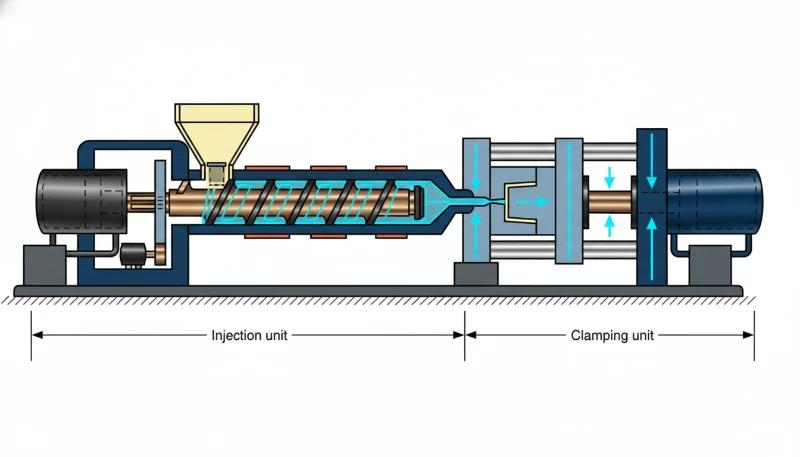
The main factors that drive injection mold cost are the main categories or options explained in this section. Let me break down where your money actually goes when you’re building an injection mold2. Steel type is your biggest variable cost driver. P20 steel runs $3,000-8,000 for a typical single-cavity mold base, while H13 bumps that up to $5,000-12,000. If you’re doing medical or optical parts and need S136, you’re looking at $8,000-15,000 just for the steel.
Cavity count multiplies everything.
A single-cavity mold might cost $15,000, but going to 4-cavity doesn’t just add $3,750 per cavity—you’re looking at $35,000-45,000 total because the mold base gets bigger, cooling becomes more complex, and machining time explodes. The math isn’t linear.
Part complexity kills your budget faster than anything else. Every undercut adds $2,000-5,000 for side actions or lifters.
Mold size drives your tonnage requirements, which affects everything downstream. A mold that needs 300 tons versus 150 tons changes your steel requirements, cooling design, and even which machines can run it. Bigger molds need beefier ejector systems, more robust cooling, and longer machining cycles.
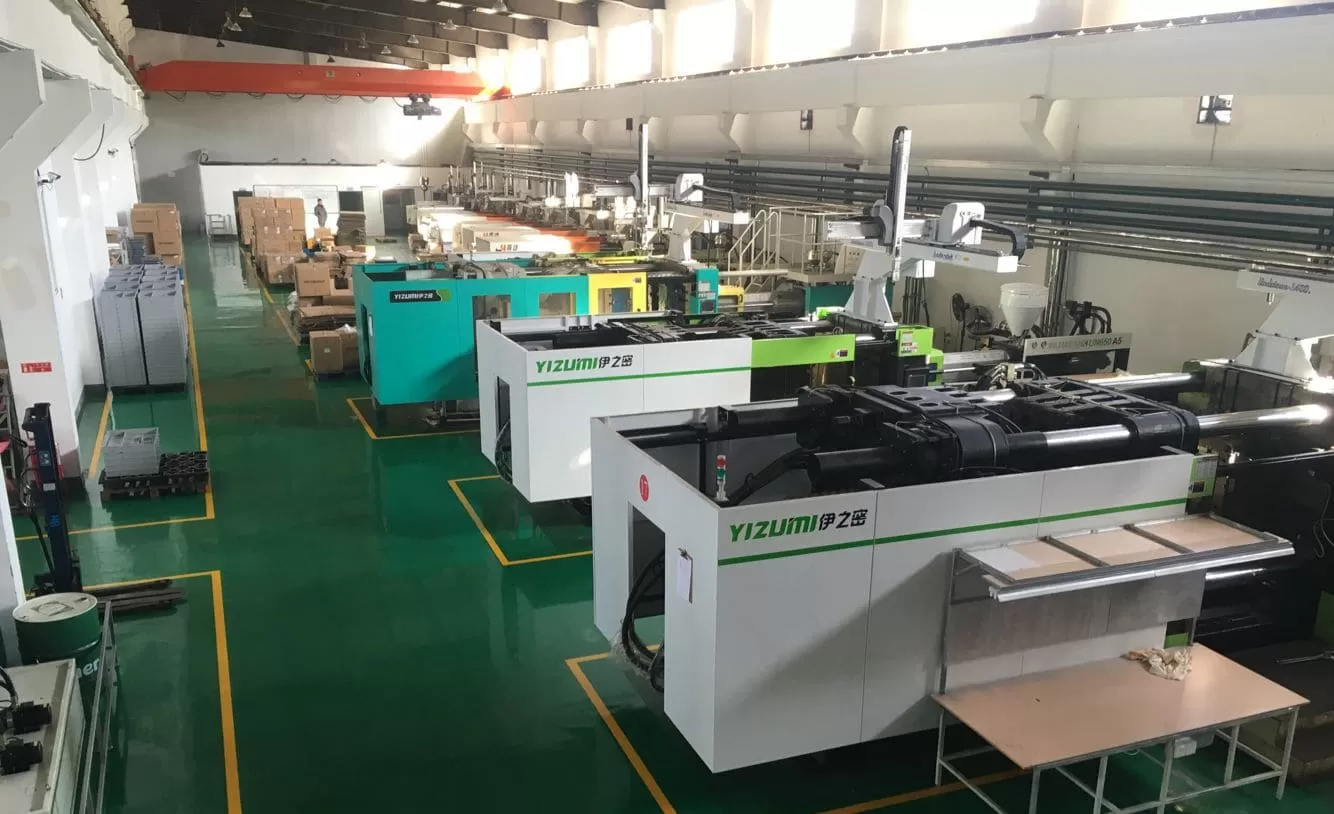
At ZetarMold, our 47 injection molding machines range from 90T to 1850T capacity. This range covers everything from small electronic housings to large automotive panels. When customers ask about tonnage requirements, we calculate based on projected area and material flow—oversizing the mold for a smaller machine often costs less than building for maximum tonnage.
Surface finish requirements add another layer of cost. Standard SPI-B2 texture costs nothing extra, but mirror polish can add $2,000-8,000 depending on surface area. Leather grain or custom textures run $1,000-3,000 per cavity face. These aren’t just cosmetic choices—they’re real machining and labor costs that show up in your quote.
The supplier’s location and capabilities matter more than you think. A shop with 5-axis machining can cut complex geometries in fewer setups, potentially saving money despite higher hourly rates. Shops without EDM capability will subcontract your fine features, adding markup and lead time.
How Does Part Design Affect Your Mold Cost?
Your part design decisions happen months before you get mold quotes, but they determine 70% of your final tooling cost3. Wall thickness is the easiest place to save money. Uniform 1.5-2.0mm walls let you use straight-pull tooling and simple cooling. Variable wall thickness from 0.8mm to 4.0mm forces complex cooling circuits and potentially side actions—that’s $3,000-8,000 in additional machining.
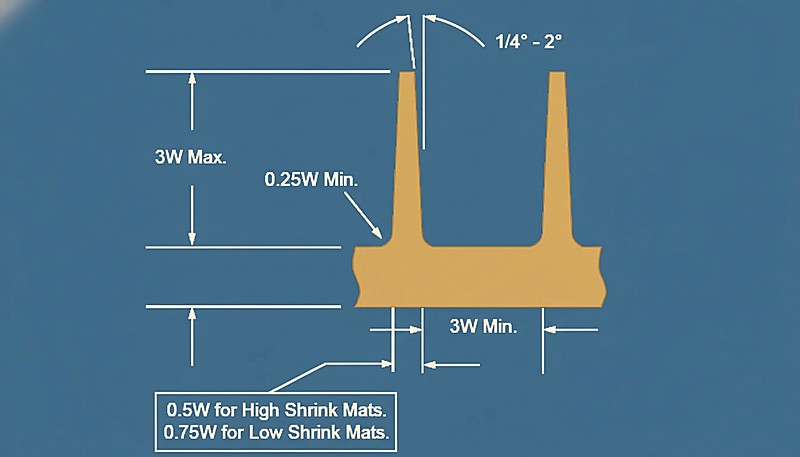
Draft angles are non-negotiable for cost control. 0.5° minimum draft eliminates ejection problems and reduces wear. Parts designed without draft need EDM polishing, custom ejector patterns, and often fail first article inspection. I’ve seen $20,000 molds need $5,000 in modifications just to get parts to eject cleanly.
Tolerances drive machining requirements exponentially. ±0.1mm features can be milled directly. ±0.05mm needs wire EDM. ±0.02mm requires multiple EDM passes and hand polishing. Going from ±0.1mm to ±0.02mm on a critical dimension can double your mold cost for that feature.
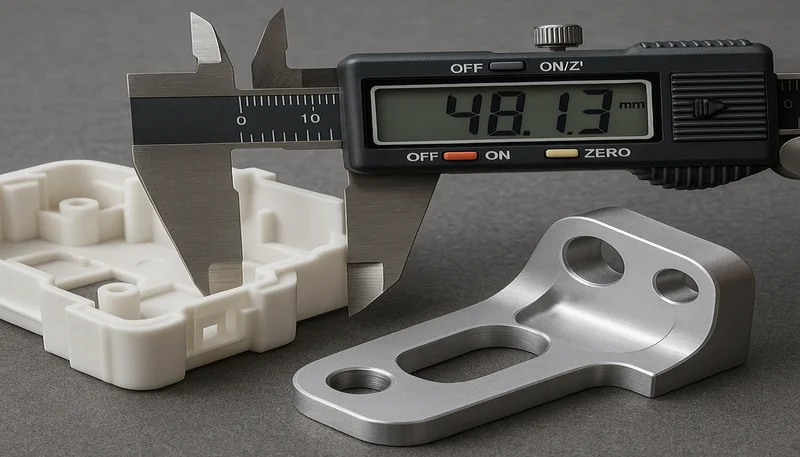
Part consolidation is where smart engineers save serious money. Instead of molding five separate pieces that get assembled later, design a single part with living hinges or snap-fit connections. Yes, the individual mold costs more, but you eliminate four molds entirely. I worked with a customer who reduced their assembly from 12 injection-molded components to 3, cutting their total injection molding cost by 60%.
Ribs and bosses need careful design to avoid thick sections that cause sink marks. Rib thickness should be 50-70% of wall thickness, and bosses need coring to maintain uniform walls. Poorly designed reinforcement features force you into longer cooling cycles and potentially gas venting solutions.
Which Mold Steel Should You Choose for Cost Optimization?
Steel selection is where I see the most money wasted. P20 steel handles 90% of applications and costs $3,000-8,000 for typical mold bases. It machines easily, takes texture well, and lasts 500,000+ cycles with proper maintenance. Unless you have specific requirements, P20 is your default choice.
718H is the budget option that works for under 300,000 parts. It costs 20-30% less than P20 but has lower hardness and wear resistance. I recommend 718H for prototype tooling, short-run production, or when you’re testing market demand. Don’t use it for abrasive materials like glass-filled nylon—you’ll regret it by cycle 50,000.
S136 is the premium choice for optical, medical, and cosmetic applications. It polishes to mirror finish and resists corrosion from PVC and other aggressive materials. At $8,000-15,000 for steel alone, only specify S136 when you actually need its properties.
My decision rule is simple: P20 for standard applications under 500K parts, H13 for high-volume or abrasive materials, 718H only when budget is critical and volume is low. Don’t over-spec steel—a $5,000 upgrade to handle 2M cycles when you’re planning 200K production is just wasted money.
Pre-hardened versus post-hardening affects both cost and lead time. Pre-hardened steel costs 15-25% more but eliminates heat treatment delays and distortion risks. For complex geometries or tight timelines, pre-hardened steel often saves money overall despite higher material costs.
How Does Cavity Count Impact Mold Price and Per-Part Cost?
This section is about es cavity count impact mold price and per-part cost and its impact on cost, quality, timing, or sourcing risk. Single-cavity molds give you the lowest upfront injection mold cost but highest per-part cost. A single-cavity tool might run $15,000 while the 4-cavity version costs $40,000. Sounds expensive until you calculate per-part costs: single-cavity at 30-second cycles gives you 120 parts/hour, while 4-cavity gives you 480 parts/hour on the same machine.
The break-even math is straightforward. If your per-part molding cost drops from $0.50 to $0.15 with multi-cavity tooling, you need 83,000 parts to recover the $25,000 mold cost difference. Below that volume, single-cavity makes financial sense. Above it, you’re throwing away money with single-cavity tooling.
Family molds offer a middle ground when you need multiple related parts. Instead of separate molds for a housing and cover, you can put both in one mold base. Family molds cost 60-80% more than single-cavity but less than separate tooling for each part. The catch is you’re locked into the production ratio—if you need twice as many covers as housings, family molds don’t work.
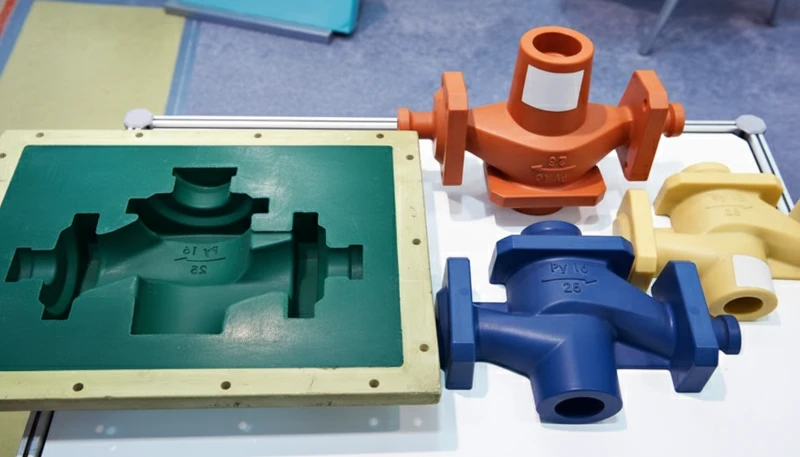
Cavity count affects quality control complexity. Single-cavity molds are easy to troubleshoot—if there’s a problem, you know exactly where it is. With 8-cavity molds, you need to track which cavity produced each part, balance injection pressures, and potentially adjust individual cooling circuits. Quality inspection becomes more complex when you’re sampling from multiple cavities.
Machine tonnage requirements scale with cavity count, but not linearly. A single-cavity part needing 100 tons might need 300 tons in 4-cavity configuration due to larger projected area and runner pressure losses. Higher tonnage machines cost more per hour to operate, affecting your per-part economics.
What Hidden Costs Should You Watch Out For?
Design changes after steel cutting are the fastest way to blow your mold budget. Minor geometry changes cost $500-2,000. Adding or relocating features runs $2,000-5,000. Major redesigns can hit $8,000-15,000 because you’re essentially rebuilding sections of the mold. I’ve seen $25,000 molds end up costing $40,000 because marketing decided they needed different snap-fit locations after first samples.
Surface finish requirements hide massive cost variations. Standard SPI-B2 texture costs nothing extra, but mirror polish adds $2,000-8,000 depending on surface area and complexity. Custom leather grains or logos run $1,000-3,000 per application. Optical-quality surfaces need diamond turning or specialized polishing that can double your mold cost.
"H13 steel costs 50-80% more than P20 but lasts 2-3x longer in abrasive applications"True
H13 steel has higher hardness and wear resistance, making it cost-effective for high-volume production or abrasive materials like glass-filled plastics. The higher upfront cost is offset by extended mold life and reduced maintenance.
"P20 steel is suitable for all injection molding applications regardless of material type"False
P20 steel wears rapidly with abrasive materials like glass-filled nylon or mineral-filled plastics. For these applications, P20 molds may need rebuilding after 100,000-200,000 cycles, while H13 can handle 1M+ cycles.
Testing and sampling cycles aren’t free. First article inspection runs $500-1,500 depending on part complexity. Dimensional reports, material certification, and capability studies add another $1,000-3,000. If your parts fail first article and need mold modifications, you’re paying for additional sampling cycles.
Shipping and customs add 5-15% to your total project cost when sourcing internationally. A $30,000 mold from China might cost $3,000-5,000 to ship and clear customs. Factor this into your supplier comparisons—a slightly higher quote from a domestic supplier might be cheaper all-in.
Mold trials and process development take 2-5 days of machine time at $50-150/hour depending on tonnage. Complex parts with tight tolerances need more trial time to dial in processing parameters. Overmolding and multi-material parts can require extensive trials to optimize adhesion and minimize flash.
How Can You Negotiate Better Mold Pricing with Suppliers?
This section is about negotiate better mold pricing with suppliers and its impact on cost, quality, timing, or sourcing risk. Get quotes from at least three suppliers, but make sure they’re quoting identical specifications. Send the same 3D files, material requirements, and quality standards to everyone. I’ve seen 40% price variations for identical molds simply because one supplier included hot runners while another quoted cold runner tooling.
Demand detailed cost breakdowns, not lump-sum quotes. You want to see steel costs, machining hours, design time, and testing separately. This shows you where your money goes and gives you leverage to negotiate specific line items. A supplier charging $8,000 for steel when market price is $5,000 is either marking up materials or doesn’t understand your requirements.
Volume commitments give you serious negotiating power. A supplier might quote $25,000 for a single mold but offer $22,000 each for three molds or $20,000 each for five. Even if you don’t need multiple molds immediately, committing to future projects can reduce current costs by 15-25%.
ZetarMold employs 8 senior mold design engineers and 30+ English-speaking project managers to ensure clear communication throughout the quoting and build process. We complete 100+ molds monthly, giving us economies of scale in steel purchasing and machining efficiency that we pass through to customers.
Payment terms affect pricing more than most buyers realize. Suppliers offer 5-15% discounts for full payment upfront versus standard 30/30/40 terms. If you have cash flow flexibility, upfront payment can save thousands on large molds. Just make sure you’re working with established suppliers—don’t prepay unknown vendors.
Timing flexibility saves money when suppliers have capacity gaps. Mold shops offer 10-20% discounts for flexible delivery when they need to keep their machinists busy. If you can wait an extra 2-4 weeks, you might save $3,000-8,000 on a $30,000 mold.
When Should You Consider a Mold Transfer Instead of a New Build?
Mold transfers can cut your tooling costs by 30-50% compared to new builds, but they come with risks you need to understand. If you’re switching suppliers for better pricing or service, transferring existing molds makes sense when the tooling is under 200,000 cycles and was properly maintained.
The cost savings are real. Transfer fees run $2,000-8,000 depending on mold complexity and shipping requirements. Compare that to $20,000-50,000 for new tooling. You’re looking at 60-80% savings if the existing mold is in good condition and meets your quality requirements.
Mold condition assessment is critical before transfer. Get a detailed inspection report covering wear patterns, cooling efficiency, and ejection system condition. Look for signs of poor maintenance like rust in cooling channels, worn ejector pins, or damaged parting lines. A $5,000 transfer that needs $12,000 in repairs isn’t a bargain.
Consider transfers when you’re switching suppliers for better service or geographic convenience, not just lower pricing. The best mold transfer candidates are recent builds (under 3 years) with complete documentation and proven production history. Avoid transfers for molds over 500,000 cycles unless you’re planning major refurbishment anyway.
"Multi-cavity molds always reduce per-part cost compared to single-cavity tooling"True
Multi-cavity molds increase production efficiency by molding multiple parts per cycle, reducing machine time and labor cost per part. While upfront tooling cost is higher, the per-part cost reduction is mathematically certain.
"Single-cavity molds are always more cost-effective for low-volume production"False
The break-even point depends on total volume, not just initial production plans. Even low initial volumes can justify multi-cavity tooling if total lifetime production exceeds 50,000-100,000 parts, depending on part complexity and cycle time.
Frequently Asked Questions
Ready to optimize your injection mold costs? ZetarMold combines 19 years of manufacturing experience with advanced equipment and competitive pricing. Our team of 8 senior engineers and 30+ English-speaking project managers ensures clear communication throughout your project. With ISO 9001, ISO 13485, ISO 14001, and ISO 45001 certifications, we deliver quality tooling that meets your specifications and budget.
Get detailed mold cost breakdowns and expert recommendations for your specific application. Our sourcing guide approach ensures you understand all cost factors before committing to tooling. Contact us today for a comprehensive quote that covers all aspects of your injection molding project.
Get Your Free Mold Quote Today
cavity count: cavity count refers to the number of identical part-forming cavities within a single mold base. ↩
injection mold: injection mold refers to a hollow metal block used in injection molding to shape molten plastic into a specific part geometry. ↩
tooling cost: tooling cost refers to the total cost of designing, machining, and assembling molds required for production. ↩
How much does an injection mold cost?
Injection molds typically cost between $5,000-$100,000 depending on complexity and production volume requirements. Simple single-cavity molds for basic parts range from $5,000-$15,000, while complex multi-cavity molds with intricate geometries can exceed $50,000-$100,000. Prototype molds cost significantly less at $1,000-$5,000 but have limited lifespans of 100-1,000 shots. Material choice impacts pricing: aluminum molds cost 30-50% less than steel but offer shorter lifespans. High-volume production molds with 32+ cavities and hardened steel construction represent the highest investment but deliver the lowest per-part costs for runs exceeding 100,000 units.
What is the cheapest injection mold option?
Aluminum prototype molds represent the most affordable option, costing $1,000-$5,000 compared to $15,000+ for production steel molds. These molds work well for initial testing and low-volume runs of 500-10,000 parts. Single-cavity designs reduce costs by 40-60% versus multi-cavity alternatives. Simplified part geometries without undercuts, threads, or complex features can cut mold costs by 25-35%. Offshore manufacturing in countries like China offers 30-50% savings but requires careful quality control. Standard mold bases and components cost significantly less than custom-engineered solutions, making them ideal for budget-conscious projects with flexible design requirements.
Why are injection molds so expensive?
Injection molds require precision machining to tolerances of ±0.0005 inches, demanding expensive CNC equipment and skilled labor costing $75-150 per hour. High-grade tool steels like H13 or P20 cost $15-25 per pound, with large molds requiring 2,000-5,000 pounds of material. Complex cooling systems with conformal channels add $5,000-$15,000 to mold costs. Engineering design takes 40-120 hours at $100-200 per hour. Multi-cavity molds multiply machining time exponentially - an 8-cavity mold takes 3-4 times longer than single-cavity. Quality inspection, heat treatment, and testing add another 15-20% to total costs, making precision tooling a significant upfront investment.
How long does an injection mold last?
Production injection molds typically last 500,000-1,000,000 cycles when properly maintained, with some high-end steel molds reaching 2-3 million shots. Aluminum molds have shorter lifespans of 10,000-100,000 cycles but cost 50% less initially. Mold life depends heavily on material: hardened steel (HRC 50-60) lasts 5-10 times longer than soft aluminum. Abrasive materials like glass-filled plastics reduce mold life by 30-50%. Regular maintenance every 10,000-25,000 shots, including cleaning, lubrication, and wear component replacement, can extend mold life by 25-40%. Proper storage and handling prevent corrosion and damage that could reduce lifespan significantly.
Can you reduce mold cost with 3D printing?
3D printing can reduce initial tooling costs by 60-80% for low-volume production under 1,000 parts annually. Additive manufacturing creates mold inserts for $500-$2,000 versus $5,000-$15,000 for machined alternatives. However, 3D printed molds typically last only 50-500 shots compared to 100,000+ for traditional steel molds. Metal 3D printing using tool steels offers better durability at 5,000-25,000 shots but costs 2-3 times more than polymer printing. Conformal cooling channels created through 3D printing can improve cycle times by 15-30%, reducing per-part costs. This technology works best for prototyping, bridge tooling, and specialized applications requiring complex internal geometries impossible with conventional machining.
How many cavities should my mold have?
Optimal cavity count depends on annual volume: single-cavity for under 25,000 parts, 2-4 cavities for 25,000-100,000 parts, and 8+ cavities for volumes exceeding 250,000 annually. Each additional cavity increases mold cost by $3,000-$8,000 but reduces per-part costs proportionally. A 4-cavity mold costs 2.5-3 times more than single-cavity but produces parts 75% faster. Part size limitations apply: cavities must fit within standard mold base dimensions of 12”x18” to 24”x36”. Balance is crucial - an 8-cavity mold requiring 500-ton press capacity costs more in machine time than a 4-cavity mold running on 200-ton equipment, potentially negating per-part savings.
What is the difference between a prototype mold and production mold?
Prototype molds cost $1,000-$5,000 and produce 100-10,000 parts for testing, while production molds cost $15,000-$100,000 and handle 500,000+ cycles. Prototype molds use aluminum or soft steel construction with simplified cooling systems, achieving 60-90 second cycle times versus 15-45 seconds for production tools. Production molds feature hardened steel (HRC 50-60), precision ejection systems, and optimized runner layouts for maximum efficiency. Prototype tooling accepts design changes easily through welding and re-machining, while production molds require expensive modifications costing $2,000-$10,000 per change. Lead times differ significantly: 2-4 weeks for prototypes versus 8-16 weeks for production molds requiring extensive engineering and testing.
Should I get mold quotes from multiple suppliers?
Obtaining 3-5 quotes reveals price variations of 30-70% between suppliers for identical mold specifications. Domestic suppliers typically charge $50-150 per hour for engineering versus $15-40 per hour offshore, creating significant cost differences. Quote comparison identifies hidden costs like shipping ($500-$3,000), customs duties (6-25%), and modification charges ($100-300 per hour). Regional specialists often provide 15-25% better pricing for specific industries or part types. Quality standards vary dramatically - some suppliers offer molds lasting 1 million cycles while others deliver 100,000-cycle tools at similar prices. Documentation quality, warranty terms (6-24 months), and post-delivery support differ substantially, making thorough quote comparison essential for optimal value.