warpage1 in injection molded products is influenced by various factors, which affect the final quality and functional performance of the products.
Warpage is primarily influenced by mold design, material selection, cooling rates2, and process conditions in injection molding. Controlling these factors can reduce defects and improve the geometric precision of molded parts. If you are comparing suppliers for a new tool, use our injection molding supplier sourcing guide to ask about warpage prevention before quote approval.
- Warpage starts with uneven shrinkage and cooling.
- Gate and cooling design matter more than slogans.
- Crystalline resins need tighter process control.
- Demolding stress can ruin a good mold.
- Validate fixes with sampling, not guesswork.
Understanding the key factors affecting warpage is essential for producing high-quality injection molded products. Dive deeper into each aspect to enhance your product consistency and performance.
“Optimizing cooling rates can reduce warpage.”True
Proper cooling ensures even solidification, minimizing stress and preventing deformation in the final product.
“Material choice is the most critical factor in preventing warpage.”False
While material choice is important, factors like mold design and cooling rates significantly contribute to warpage as well.
In our factory in Shanghai, our team starts warpage troubleshooting by checking the machine, mold, and resin together. In our experience, warpage is rarely a single-cause defect. We run 47 injection molding machines from 90T to 1850T and have experience with 400+ plastic materials, so cooling balance, gate shear, resin shrinkage, and demolding stress all need to be checked before changing steel.
What is the Effect of Mold Structure on Warpage Deformation of Injection Molded Products?
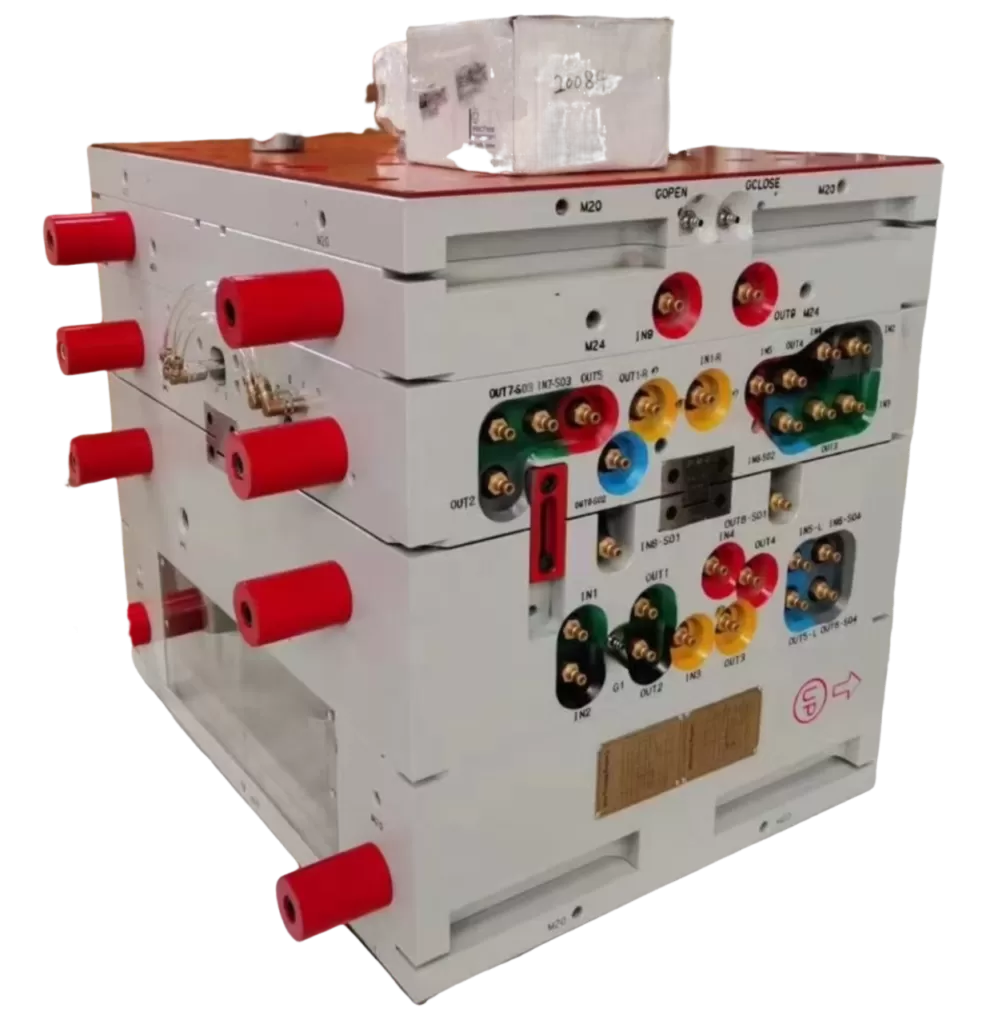
Mold structure impacts warpage in injection molding by influencing cooling rates and material flow. A stable injection mold controls gate location, cooling channels, ejector layout, and cavity rigidity so the part shrinks evenly instead of twisting after ejection.
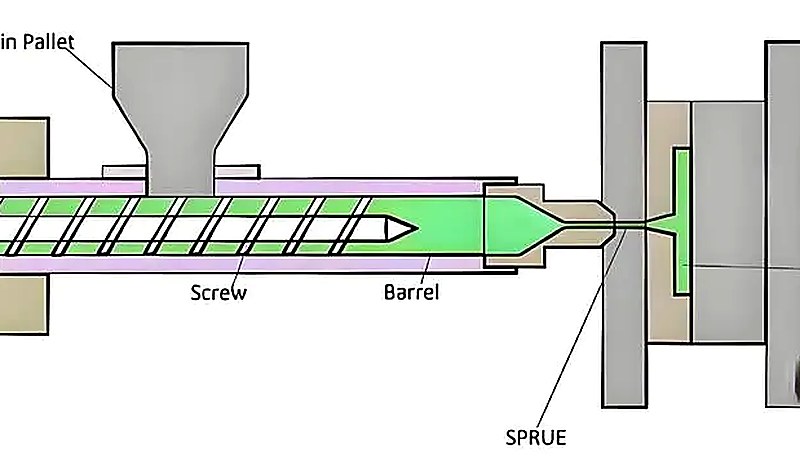
Mold structure impacts warpage in injection molding by influencing cooling rates and material flow. Key factors are mold design, gate location, and cooling channel placement. Proper design minimizes warpage, enhancing dimensional stability crucial for automotive and electronics industries.
Large Shrinkage Rate
Different plastic materials have different shrinkage rates. Some materials have large shrinkage rates, which will produce large volume changes during the cooling process after injection molding and easily cause warpage deformation. For example, crystalline plastics undergo significant volume contraction during the crystallization process and are more prone to warpage problems than non-crystalline plastics.
Gating System
The position, shape, and number of gates in the injection mold will affect the filling state of the plastic in the mold cavity, which will cause the plastic part to warp.
The longer the flow distance, the greater the internal stress caused by the flow and shrinkage between the frozen layer and the central flow layer; conversely, the shorter the flow distance, the shorter the flow time from the gate to the end of the part flow, the thinner the frozen layer is during the mold filling process, the lower the internal stress, and the resulting warping deformation will be greatly reduced.
The number, shape, and location of gates in the mold will affect how the plastic fills the mold cavity, which can cause the plastic part to warp. The longer the flow length, the more internal stress there will be from flow and shrinkage between the frozen layer and the center of the flow; conversely, the shorter the flow length, the shorter the time it takes for the plastic to flow from the gate to the end of the part, the thinner the frozen layer is during the filling process, the lower the internal stress, and the resulting warping will be greatly reduced.
Also, using more gates can make the plastic flow ratio (L/t) shorter, which makes the melt density in the mold cavity more even and the shrinkage more even. It can also fill the whole part at a lower injection pressure.
Cooling System
When you inject the plastic, the part cools unevenly, which causes the part to shrink unevenly.
If the temperature difference between the mold cavities and cores used in injection molding of flat shaped parts (such as cell phone battery shells) is too large, the melt close to the cold mold cavity surface cools down quickly, while close to the hot cavity surface of the material layer will continue to contract, the uneven contraction will cause the part to warp.
So, when the injection mold is cooled, it is necessary to pay attention to temperature control during each injection molding process step between the cavity and the core, and the temperature difference between the two cannot be too large. In this situation, you can consider using a two-mold thermostat to stabilize heat removal.
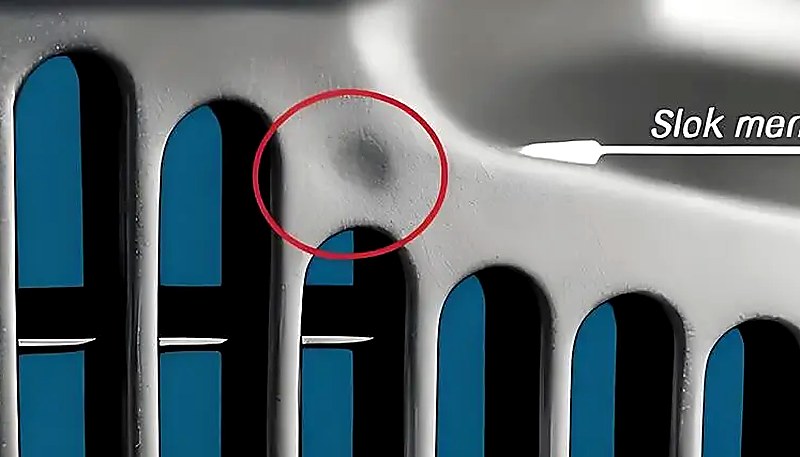
In addition to considering the temperature balance between the inner and outer surfaces of the plastic parts, it is also necessary to consider that the temperature of the plastic parts on all sides is the same, that is, the mold cooling should try to maintain the temperature balance of the cavity and the core everywhere, so that the cooling speed of the plastic parts is balanced everywhere, so that the shrinkage of each place is more uniform, and the generation of deformation can be effectively prevented.
Unreasonable Location and Number of Gates
The gate is where the plastic melt goes into the mold, and where and how many gates you have affects how the melt flows and fills. If you put the gate in the wrong place, the melt might not flow evenly in the mold, and that can make different parts of the injection molded part have different density and shrinkage, and then the part warps. If you don’t have enough gates, the melt might not fill the whole cavity evenly, and that can also make the part warp.
Irrational Mold Structure
The mold’s structure also affects how much injection molded parts warp and deform. For example, if a mold’s release mechanism is poorly designed, it might put uneven pressure on the injection molded part when it’s released from the mold, causing warping.
Also, if the mold isn’t rigid enough, the high-pressure melted plastic can deform it during the injection process, which can indirectly cause the injection molded parts to warp. Material Characteristics
Unreasonable Design of the Ejector System of the Mold
The design of the ejector system also directly affects the deformation of the molded part. If the arrangement of the ejector system is not balanced, it will cause an imbalance of the ejector force and deformation of the molded parts. Therefore, in the design of the ejector system, you should strive to balance it with the demolding resistance.
Also, the cross-sectional area of the ejector rod should not be too small, because that would cause too much pressure per unit area on the plastic part (especially if the demolding temperature is too high) and deform the plastic part. The ejector rod should be placed as close as possible to the part that is hard to demold.
If it doesn’t affect the quality of the plastic part (including its use, size, and appearance), you should add a top rod to reduce the overall deformation of the plastic part (that’s why the top rod is on top of the mold).
“Proper mold structure reduces warpage in injection molded products.”True
By optimizing mold design and cooling channels, warpage deformation is minimized, leading to better dimensional accuracy and stability.
“Mold structure has no impact on the cooling rate of injection molded products.”False
The mold structure directly affects cooling rates by determining how heat is dissipated, influencing the final product’s warpage and quality.
What are the Effects of Filling and Crystalline Plastics on the Warpage and Deformation of Products?
Filling behavior and crystalline plastics are major warpage drivers. Uneven filling changes flow orientation, cooling speed, and shrinkage balance. If the melt fills unevenly or the resin crystallizes at different rates across the part, one area contracts more than another, and the molded product bends after ejection.
Filling materials and crystalline plastics impact warpage by altering thermal expansion and shrinkage rates during cooling. Proper material selection and design adjustments are essential to maintaining product dimensional stability.
Filling Stage
The melted plastic is injected into the mold under pressure and cooled in the mold to solidify. This process is the most important step in injection molding. During this process, temperature, pressure, and speed are all interrelated and have a significant impact on the quality and productivity of the molded part.
Increasing the pressure and flow rate will increase the shear rate, which causes the difference between the molecular orientation parallel to the flow direction and perpendicular to the flow direction, at the same time, the “freezing effect”. The “freezing effect” produces freezing stresses, which form internal stresses in the molded part.
The influence of temperature on warpage deformation is: the temperature difference between the upper and lower surfaces of the plastic part will cause thermal stress and thermal deformation; the temperature difference between different areas of the plastic part will cause non-uniform contraction between different areas; different temperature states will affect the shrinkage of the plastic part.
Crystalline Plastics
Crystalline resins (like paraformaldehyde, nylon, polypropylene, polyethylene, and PET resins) generally deform more than non-crystalline resins (like PMMA resins, polyethylene, polystyrene, ABS resins, and AS resins, etc.) with large shrinkage. They also deform more because of the fiber directionality of the glass fiber reinforced resins.
Most of the deformations happen because the melting point temperature range is narrow, and it’s hard to fix them. The crystallinity of crystalline plastics changes depending on how fast they cool. If they cool fast, the crystallinity goes down and the molding shrinkage goes down. If they cool slow, the crystallinity goes up and the molding shrinkage goes up. We use this property to fix deformations in crystalline plastics.
In practice, the correction method used is to make the moving and static molds have a certain temperature difference. It is to take the temperature that makes the other side of the warpage to produce strain, and then it can correct the deformation. Sometimes this temperature difference is as high as 20°C or more, but it must be very evenly distributed.
It must be pointed out that in the design of crystalline plastic molding parts and molds, such as not in advance to take special means of preventing deformation, the parts will be deformed and can not be used, only to make the molding conditions to meet the requirements of the above, the majority of cases still can not correct the deformation.
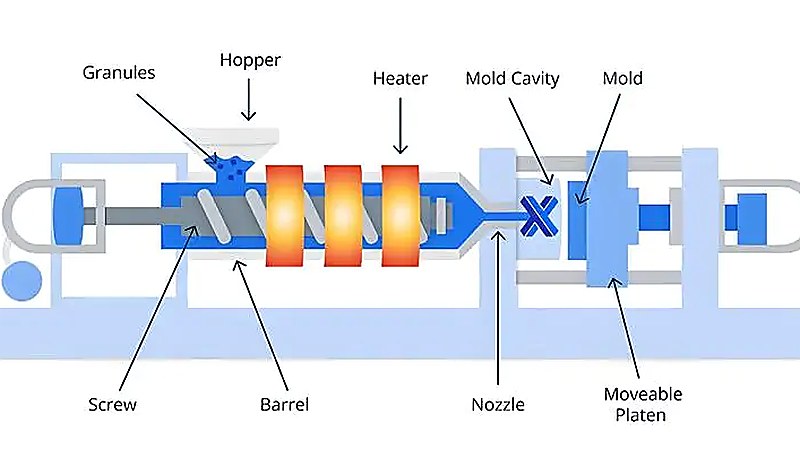
“Filling materials can modify the shrinkage rate3 of plastics, reducing warpage.”True
Fillers can alter a plastic’s shrinkage behavior, minimizing variations that lead to warpage.
“Crystalline plastics reduce warpage in products.”False
Crystalline plastics can cause non-uniform shrinkage, potentially increasing risk of warpage.
What are the Effects of the Demolding Stage and Shrinkage of the Molded Part on Warpage Deformation?
The demolding stage and shrinkage significantly affect warpage deformation in molded parts, impacting their dimensional stability and performance.
Warpage deformation results from uneven shrinkage during cooling and demolding. Managing mold temperature and cooling rates can minimize warpage, ensuring better part quality and precision.
Demolding Stage
When you take the part out of the mold and let it cool down to room temperature, it’s mostly a glassy polymer. If you don’t get the part out of the mold right, or if you don’t get it out of the mold right and you don’t get it out of the mold right, you can warp the part.
At the same time, when the part is filling the mold and cooling down, the stress that’s “frozen” into the part is released as “deformation” because it’s not being held in place anymore, and that’s what causes the warping and the deformation.
Shrinkage of Injection Molded Products
The main reason for the warpage deformation of injection molded products is the uneven shrinkage of the molded parts. If the shrinkage effect during the filling process is not considered in the mold design stage, the shape of the product will be very different from the design requirements, and serious deformation will lead to product scrap (that is, shrinkage problem).
In addition to the filling stage, the temperature difference between the upper and lower walls of the mold will also cause differences in the shrinkage of the upper and lower surfaces of the molded part, resulting in warpage deformation.
When analyzing warpage, it’s not the shrinkage itself that matters, but rather the difference in shrinkage. During the injection molding process, the molten plastic in the mold fills up and the polymer molecules align themselves in the direction of flow. This causes the plastic to shrink more in the flow direction than in the vertical direction, resulting in warped parts (also known as anisotropy).
Normally, uniform shrinkage only affects the volume of plastic parts, only uneven shrinkage will cause warpage deformation. Crystalline plastic has a larger shrinkage rate than non-crystalline plastic in the flow direction and the vertical direction, and its shrinkage rate is also larger than non-crystalline plastic.
“Controlled demolding reduces warpage deformation.”True
When ejection timing, mold temperature, and ejector layout are controlled together, the part releases with less frozen-in stress. Demolding can still create deformation, but it is not automatically a source of extra warpage.
“Shrinkage does not affect warpage.”False
Shrinkage can cause uneven stress distribution, leading to warpage if not properly managed.
What are the Effects of Residual Thermal Stress and Molding Strain on Warpage of Products?
Residual thermal stress and molding strain significantly affect the warpage of molded products, impacting their dimensional accuracy and performance.
Residual thermal stress and molding strain lead to warpage in molded products, impacting shape stability. Proper management is crucial for accurate geometrical conformity in automotive and electronics industries.
Residual Thermal Stress
When the plastic melt is molded, the uneven orientation and shrinkage of the plastic melt cause uneven internal stress, so after the product comes out of the mold, it will warp and deform under the action of uneven internal stress.
Therefore, the internal stress and warpage of the product are analyzed and calculated from the mechanical point of view. In some foreign literature, warpage is considered to be caused by residual stress generated by uneven shrinkage.
During the cooling stage of injection molding, when the temperature is higher than the glass transition temperature, the plastic is a viscoelastic fluid, and it will experience stress relaxation. When the temperature is lower than the glass transition temperature, the plastic becomes solid.
The plasticity of the liquid-solid phase transition and stress relaxation during cooling has a significant effect on the accurate prediction of the residual stress and deformation of the product. The plasticity of the liquid-solid phase transition and stress relaxation during cooling.
In the uncured region, the plastic acts like a thick liquid, which we describe with the thick liquid model. In the cured region, the plastic acts like a thick liquid and a spring, which we describe with the spring and thick liquid model. We use the spring and thick liquid model and a computer program to predict the thermal stresses and the warping.
Molding Strain
The deformation caused by molding strain is mainly due to the difference in molding shrinkage in the direction and the change in wall thickness.
Therefore, increasing the mold temperature, increasing the melt temperature, reducing the injection pressure, and improving the flow conditions of the pouring system can reduce the difference in the direction of shrinkage. However, it is mostly difficult to correct the problem by changing only the molding conditions, and then it is necessary to change the location and number of gates, such as injecting from one end when molding a long rod.
Sometimes you have to change the cooling waterway configuration; longer sheet parts are more prone to deformation, and sometimes you have to change the local design of the part to set up reinforcement bars on the back of the upturned side. The use of cooling aids to correct this deformation is mostly effective. If it can’t be corrected, you have to amend the mold design.
“Residual thermal stress contributes to product warpage.”True
Thermal stress arises from temperature differentials during cooling, leading to deformation in the final product.
“All warpage issues are solely due to molding strain.”False
While molding strain is a factor, warpage is often caused by a combination of thermal stresses and material properties.
What is the Effect of Injection Molding Process Factors on Product Warpage Deformation?
Process settings are direct warpage drivers. Mold temperature, melt temperature, injection speed, holding pressure, holding time, and cooling time change pressure history, cooling balance, molecular orientation, and final shrinkage.
Key factors affecting product warpage in injection molding include mold temperature, injection speed, and cooling time. Adjusting these parameters optimizes material flow and minimizes deformation in automotive, electronics, and packaging products, improving both quality and functionality.
Improper Injection Pressure and Holding Time
If the injection pressure is too high, the molded part will have large residual stress, and the release of this stress after demolding will cause warpage and deformation.
If the holding time is too long or too short, it will also affect the quality of the product. If the holding time is too long, the injection part will be over-compacted, and it will be easy to rebound and warp after demolding; if the holding time is too short, the product will not have enough shrinkage, and it will warp due to uneven shrinkage.
Too Fast Injection Speed
If the injection speed is too fast, the flow of melted plastic in the mold will be unstable, causing uneven filling, and then different degrees of shrinkage will occur after cooling, resulting in warpage and deformation.
“Adjusting cooling time can reduce warpage in injection molded products.”True
Optimizing cooling time ensures uniform solidification, which helps in reducing product warpage.
“Mold temperature is the only factor affecting warpage in injection molding.”False
While mold temperature is crucial, injection speed and cooling time also play significant roles in managing warpage.
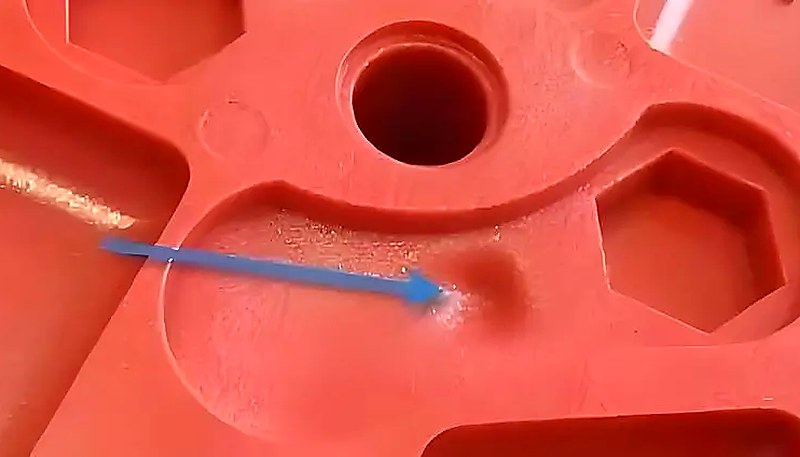
The warpage of injection molded products is mainly affected by the mold structure, material properties, cooling balance, ejector system, filling process, and shrinkage. Unreasonable mold design, such as the inappropriate location and number of gates, will cause uneven melt flow, density differences, and warpage. These checks should be built into the project schedule, not left until after sampling, because they can change realistic injection molding production time.
High shrinkage materials (such as crystalline plastics) are prone to warpage due to uneven cooling shrinkage. Uneven cooling and mold temperature differences can cause stress concentration and increase the risk of warpage. The unreasonable ejector system may cause uneven force, which will further affect the shape stability.
In addition, the temperature, pressure, and flow rate during the filling stage will affect the molecular orientation, resulting in internal stress and warpage. See our Injection Molding Complete Guide for a comprehensive overview.
What is the Conclusion on Warpage Factors in Injection Molding?
Frequently Asked Questions
What causes warpage in injection molded products?
Warpage is caused by uneven shrinkage, which usually comes from a combination of mold design, material behavior, cooling imbalance, gate location, and process settings. One factor rarely explains the whole defect. In production, we first compare wall thickness, gate position, cooling layout, resin shrinkage rate, and ejection marks before changing parameters. If you only adjust injection pressure without checking cooling or mold structure, you may hide the symptom for one trial and see the deformation return in mass production. Ask for sampling evidence before cutting steel.
How do cooling rates affect injection molding warpage?
Cooling rates affect warpage because plastic areas that cool at different speeds shrink by different amounts. A thick rib, boss, or corner stays hot longer than a thin wall, so it continues shrinking after the outer skin has already frozen. That mismatch pulls the part out of shape. Balanced cooling channels, proper mold temperature control, and uniform wall thickness are usually more effective than simply extending cooling time. Longer cooling can help, but it does not fix a badly balanced mold.
Can material choice alone solve warpage?
Material choice can reduce warpage risk, but it cannot solve the problem by itself. Crystalline plastics, high-shrinkage resins, and glass-filled grades all behave differently, so resin selection matters. However, the same material can still warp if the gate is wrong, the wall thickness changes sharply, the mold cooling is uneven, or the part is ejected under stress. Treat material as one part of the control plan, not as a magic correction after the mold is already wrong. Ask for sampling evidence before cutting steel.
How can mold design reduce warpage before production starts?
Mold design reduces warpage by controlling how the plastic fills, packs, cools, and releases. The best prevention happens before steel cutting: use balanced gates, avoid extreme flow length, place cooling near thick zones, support the part during ejection, and avoid abrupt wall-thickness changes. For flat or long parts, simulation and DFM review are worth the time because they reveal flow hesitation and cooling imbalance before sampling. Fixing warpage after the mold is cut is usually slower and more expensive. Ask for sampling evidence before cutting steel.
Why does demolding sometimes create deformation?
Demolding creates deformation when the part is still too hot, the ejector layout is unbalanced, or the part sticks to the cavity and releases unevenly. The plastic may look solid, but residual stress can still be trapped inside. If ejector pins push too hard on a small area, the part bends or twists as it leaves the mold. Good demolding control uses proper draft, smooth polish, balanced ejectors, stable mold temperature, and enough cooling time for the part to support itself.
What should buyers ask suppliers about warpage before ordering a mold?
Buyers should ask how the supplier will prevent warpage before the mold is built, not only how they will fix it after trial. Ask for DFM comments on wall thickness, gate location, cooling layout, resin shrinkage, expected flatness risk, and inspection method. For critical parts, request mold-flow analysis or a clear sampling plan. A serious injection molding supplier should explain the likely root causes and tradeoffs in plain language before quoting production tooling. Ask for sampling evidence before cutting steel.
Need a Quote for Your Injection Molding Project?
Get competitive pricing, DFM feedback, and production timeline from ZetarMold’s engineering team.
Request a Free Quote →
-
warpage: Warpage is a deformation condition in which a molded plastic part twists, bows, or loses flatness after cooling. ↩
-
cooling rates: Cooling rates describe how quickly different areas of a molded part lose heat; uneven cooling is a common driver of warpage. ↩
-
shrinkage rate: Shrinkage rate is a percentage dimensional contraction that occurs as molten plastic cools and solidifies inside the mold. ↩