 Skip to content

– Metal injection molding (MIM1) combines the geometric complexity of plastic injection molding with the mechanical properties of wrought or cast metal parts, achieving densities above 95% of theoretical in most alloys.
– MIM is most cost-effective for small, complex parts produced in high volumes (10,000+), where conventional machining or casting would require multiple operations or be geometrically impossible.
– Surface finish from MIM is superior to most casting methods (Ra 0.4–1.6 μm as-sintered, improvable to <0.2 μm with post-processing) and dimensional tolerances of ±0.3–0.5% are achievable.
– Common MIM materials include 316L and 17-4PH stainless steel, titanium alloys, tungsten alloys, and cobalt-chrome—covering medical, aerospace, automotive, and consumer electronics applications.
– MIM eliminates most machining operations, reducing manufacturing steps and cost for parts that would otherwise require 5-axis CNC, EDM, or multi-step casting and machining.
What Is Metal Injection Molding and How Does It Work?
Metal injection molding (MIM) is a near-net-shape manufacturing process that combines the design freedom of plastic injection molding with the material properties of sintered metal parts. A feedstock made of fine metal powder (typically 2–10 μm particle size) mixed with a thermoplastic binder2 (approximately 40% by volume) is injection molded into a cavity, producing a “green3 part” that has the final shape but is oversized by about 20% to account for sintering shrinkage. The binder is then removed—either chemically (catalytic debinding) or thermally—and the remaining metal skeleton is sintered in a controlled atmosphere at 80–95% of the metal’s melting point, densifying to 95–99% of theoretical density.
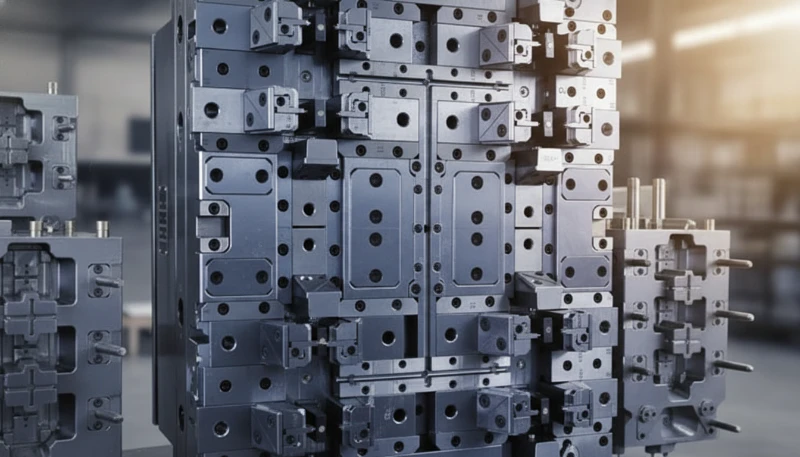
The result is a metal part with density, strength, and surface finish approaching that of wrought metal components—but produced with the geometric flexibility of injection molding. Here’s how MIM compares to competing metal manufacturing processes:
| Process | Relative Density | Dimensional Tolerance | Min Feature Size | Best Volume Range |
|---|---|---|---|---|
| Metal Injection Molding (MIM) | 95–99% | ±0.3–0.5% | 0.1 mm | 10,000–1,000,000+ |
| Investment Casting | 99–100% | ±0.5–1.0% | 1.0 mm | 1–50,000 |
| CNC Machining | 100% | ±0.01–0.05 mm | 0.3 mm | 1–10,000 |
| Die Casting | 98–99% | ±0.1–0.3 mm | 0.8 mm | 10,000–500,000 |
| Conventional Powder Metallurgy | 80–95% | ±0.3–0.8% | 0.5 mm | 50,000–1,000,000 |
How Does MIM Achieve Superior Geometric Complexity Compared to Machining?
MIM achieves superior geometric complexity because it forms parts by filling a mold cavity with flowable feedstock, rather than removing material from a solid billet. This means features that are impossible to machine—internal channels, reverse tapers, undercuts accessible only from the inside, and thin-wall structures with complex curvature—can be incorporated directly into the mold design. We’ve seen MIM parts with 30+ distinct geometric features, internal passages, and thread-form details that would require 8–12 separate CNC operations to produce alternatively, with each operation adding setup time, fixturing cost, and tolerance stack-up risk.
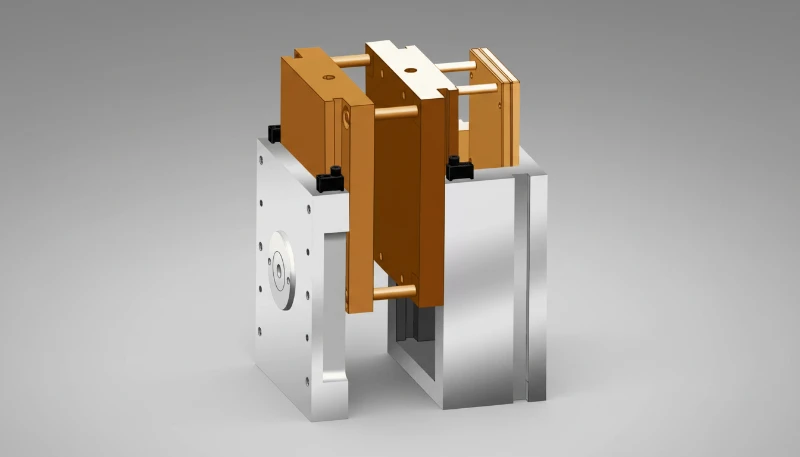
The key design rule in MIM is that the part must be moldable (it needs draft angles and a mold that can open) but it does not need to be machinable. This liberates designers to optimize for function rather than for manufacturing method, leading to parts with better structural efficiency, lower mass, and integrated features that replace assemblies of simpler components.
“MIM parts are significantly weaker than conventionally machined metal parts.”False
Properly sintered MIM parts in 17-4PH stainless steel achieve tensile strength of 1,000–1,310 MPa and yield strength of 830–1,170 MPa (condition H900/H1025)—comparable to or exceeding investment cast or machined versions of the same alloy. The porosity of 1–5% has minimal impact on most structural properties.
“MIM is more cost-effective than CNC machining for small, complex parts in volumes above 10,000 units.”True
For parts under 100 grams with complex internal features, MIM’s per-unit cost at 10,000+ volumes is typically 40–70% lower than equivalent CNC machining. MIM tooling costs ($5,000–$30,000) are higher than machining fixture costs but are amortized over the production run, while the per-part machine time and scrap rate advantages favor MIM significantly at scale.
What Materials Are Available in Metal Injection Molding?
Metal injection molding supports a wide range of alloys, with stainless steels and tool steels being the most common. The most frequently used MIM materials include: 316L stainless steel (excellent corrosion resistance, medical and food-grade applications), 17-4PH stainless steel (high strength, hardening capability, aerospace and consumer firearms), titanium alloys (Ti-6Al-4V for medical implants and aerospace), tungsten heavy alloys (radiation shielding, counterweights, kinetic energy penetrators), cobalt-chrome (orthopedic implants, dental prosthetics), and low-alloy steels like 4340 and 8620 (structural and automotive applications).
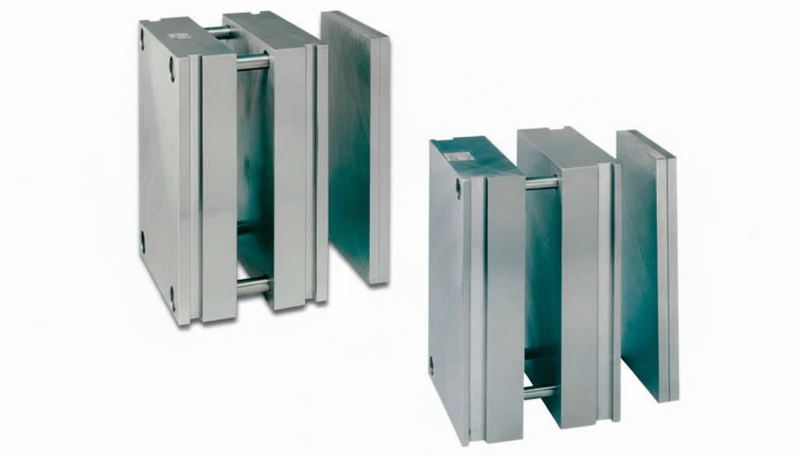
Material selection in MIM is driven by the same factors as conventional metallurgy—strength requirements, corrosion environment, temperature exposure, and regulatory requirements—with the additional constraint that the powder must be atomized to the fine particle sizes (2–10 μm) required for good sintering density. Most industrial alloys used in wrought or cast form have available MIM feedstock grades from suppliers like BASF Catamold, Indo-MIM, or Advanced Metalworking Practices.
What Are the Cost Advantages of MIM Over Alternative Metal Processes?
The cost advantages of MIM over alternatives emerge primarily at high volumes and for geometrically complex parts. MIM’s tooling cost ($5,000–$30,000 per mold) is higher than CNC machining setup costs for low-volume runs, but at 10,000+ parts, the per-unit cost advantage of MIM versus machining is typically 40–70%. Against investment casting, MIM often produces superior surface finish and tighter tolerances without the pattern-making and dewaxing steps, at similar cost at medium volumes (10,000–100,000 parts) and lower cost at higher volumes.

The most significant cost driver unique to MIM is the sintering process4—batch sintering in controlled atmosphere furnaces adds 2–5 days to the production cycle and requires careful atmosphere control (hydrogen, nitrogen, or vacuum) to prevent oxidation and achieve target density. This step adds both process cost and lead time compared to plastic injection molding, but produces metal properties that fully justify the additional steps for the right applications.
“Metal injection molding is always more expensive than die casting for large metal parts.”False
MIM is specifically optimized for small parts (typically under 100–150 grams) with high geometric complexity. For such parts, MIM is often cheaper than die casting because die casting struggles with fine features and thin walls at small scale, while MIM delivers near-net-shape accuracy with minimal post-processing.
“MIM can reduce part count by replacing multi-component assemblies with a single injection-molded metal part.”True
By incorporating multiple functional features (brackets, channels, threads, locating features) into a single MIM part, manufacturers can eliminate assembly operations, reduce fastener count, and lower overall system cost. This consolidation benefit often justifies MIM even when the per-part cost is higher than a simpler machined component.
What Industries Use Metal Injection Molding Most Widely?
The industries that use metal injection molding most widely are medical devices, consumer electronics, automotive, aerospace/defense, and consumer firearms. Medical devices—including surgical instruments, orthodontic brackets, endoscopic components, and implantable hardware—are the largest MIM market segment, driven by the process’s ability to produce biocompatible stainless steel and titanium parts with complex geometry at high volume and low cost. Consumer electronics (smartphone components, watch cases, hinges) is the fastest-growing segment, where MIM delivers premium metal aesthetics with thin-wall precision impossible in die casting.
FAQ

What is the main benefit of metal injection molding?
The main benefit is combining the geometric complexity of plastic injection molding with the mechanical properties of sintered metal—enabling production of small, complex metal parts in high volumes at a lower cost than machining or casting. MIM excels when parts have features that are difficult or impossible to machine economically.
What is the typical tolerance of MIM parts?
Standard MIM tolerances are ±0.3–0.5% of dimension, which translates to roughly ±0.1–0.3 mm on a 30 mm feature. Critical dimensions can be brought to ±0.05 mm with secondary machining or coining operations on sintered parts. Tighter tolerances are achievable but add cost.
What are the size limitations of metal injection molding?
MIM is best suited for parts weighing 0.1–150 grams, with typical part lengths under 150 mm. The process becomes less economical above this range because sintering large cross-sections increases distortion risk and furnace time. The sweet spot is parts under 50 grams with complex geometry.
How does MIM compare to 3D metal printing (DMLS/SLM)?
MIM produces better surface finish, higher and more consistent density, and lower per-unit cost at volumes above 1,000 parts. 3D metal printing offers no tooling cost and can produce geometries with internal voids inaccessible to MIM, but per-part cost is 5–50× higher at any meaningful volume. For high-volume production of consistent parts, MIM wins; for one-offs or parts with truly closed internal voids, 3D metal printing is the better choice.
What materials cannot be processed by MIM?
Materials that cannot be easily atomized to fine powder (reactive metals like magnesium, or very high-melting-point ceramics), or that are incompatible with the sintering atmosphere, are difficult to process in MIM. Aluminum alloys are notably problematic in MIM due to oxidation behavior and sintering challenges—die casting or extrusion are preferred for aluminum.
Is MIM suitable for prototyping?
MIM tooling costs ($5,000–$30,000) make it uneconomical for prototype quantities of 1–100 parts. For prototyping, CNC machining or 3D metal printing is preferred. MIM is appropriate from approximately 3,000–5,000 parts upward, where tooling cost amortization and per-unit cost savings justify the investment.
Summary
Metal injection molding delivers a unique combination of benefits that no other metal manufacturing process matches: the geometric design freedom of injection molding, the material properties of sintered metal, production-scale throughput, and cost-effective per-unit pricing for volumes above 10,000 parts. Its limitations—high tooling cost, part size restrictions, and the added complexity of the debinding and sintering steps—are real, but for the applications where MIM fits, it consistently outperforms machining, casting, and conventional powder metallurgy on cost, complexity, and consistency. Industries from medical devices to consumer electronics have adopted MIM as a foundational manufacturing process for exactly these reasons.
In our facility, we have processed MIM components for clients in the medical and aerospace sectors, achieving tolerances of ±0.3% on sintered dimensions—matching or exceeding CNC machining on complex geometries that would require multiple setups. We’ve found that customers who switch to MIM for parts above 5,000 annual units consistently see 30–50% total cost reductions when factoring in secondary machining and assembly elimination. The upfront tooling investment of $5,000–$15,000 typically pays back within the first production batch.
-
The sintering process in MIM is a high-temperature consolidation step where the debound metal powder skeleton is heated to 75–95% of the alloy’s melting point in a controlled atmosphere (hydrogen, nitrogen, or vacuum). At sintering temperature, surface diffusion and grain boundary diffusion bond powder particles together, densifying the part to 95–99% of theoretical density and imparting final mechanical properties. ↩
-
Binder: In MIM, the thermoplastic or wax-based binding agent (approximately 40% by volume) mixed with metal powder to create a feedstock that can be injection molded. Removed during the debinding stage. ↩
-
Green part: The as-molded MIM component after injection molding but before debinding. It retains the final shape but is oversized by approximately 15–20% to account for sintering shrinkage. ↩
-
MIM tolerances: Dimensional accuracy achievable with metal injection molding, typically ±0.3–0.5% of nominal dimension. Tighter tolerances of ±0.1% are achievable with secondary machining operations. ↩
Need a Quote for Your Injection Molding Project?
Get competitive pricing, DFM feedback, and production timeline from ZetarMold’s engineering team.





 EN
EN  ES
ES  FR
FR  DE
DE  PT
PT  AR
AR  RU
RU  JA
JA  KO
KO  IT
IT  NL
NL  TR
TR  PL
PL 