 Skip to content

- High tooling costs ($15K-200K+) require minimum 5,000+ parts for economic viability
- Exceptional repeatability maintains ±0.002″ tolerances across millions of production cycles
- Complex geometries enable features impossible with machining or other manufacturing methods
- Volume threshold determines cost-effectiveness – sweet spot begins around 10,000+ annual pieces
- Design optimization through DFM analysis prevents costly mold modifications and production delays
What Makes Injection Molding So Widely Used?
Injection molding dominates manufacturing because it delivers unmatched production efficiency, precision, and cost-effectiveness for high-volume plastic parts. This process accounts for over 80% of all plastic products manufactured worldwide, from medical devices to automotive components.
The numbers tell the story: modern injection molding complete guide systems can produce parts with cycle times as low as 10-15 seconds, tolerances within ±0.002 inches, and virtually unlimited repeatability. In our Shanghai facility, we’ve consistently seen this technology evolve over two decades, making complex geometries achievable that were impossible with traditional manufacturing methods.
The global injection molding market reached $365 billion in 2023, driven by industries demanding high-precision, cost-effective solutions. When you need thousands or millions of identical parts, nothing beats the combination of speed, consistency, and material versatility that injection molding provides.
What Are the Key Advantages of Injection Molding?
High-volume production speed stands as injection molding’s greatest advantage. Our machines at ZetarMold produce parts with cycle times ranging from 15 seconds for simple components to 120 seconds for complex assemblies. A single machine running 24/7 can easily output 50,000-100,000 parts monthly, depending on part complexity.
Exceptional repeatability ensures every part meets identical specifications. Once your mold is dialed in, dimensional variations typically stay within ±0.001-0.002 inches across millions of cycles. This consistency eliminates the quality variations you’d see with manual processes or even some automated alternatives.
Complex geometric capabilities allow features impossible with machining or other methods. Undercuts, threads, logos, textures, and intricate internal passages can all be molded simultaneously. We’ve produced parts with wall thickness variations from 0.5mm to 25mm in a single component, with multiple materials co-injected.
Material versatility spans from commodity plastics like PP and PE to engineering grades like PEEK and PEI. You can incorporate additives for UV resistance, flame retardancy, conductivity, or biocompatibility. provide metal-like strength at plastic weight.
Minimal post-processing requirements mean parts often come out production-ready. Surface finishes range from mirror polish to complex textures. Colors are molded-in rather than painted, eliminating secondary operations and improving durability.
Automation compatibility reduces labor costs and human error. Modern cells integrate robotics for part removal, quality inspection, assembly, and packaging. Our fully automated lines require minimal operator intervention once running.
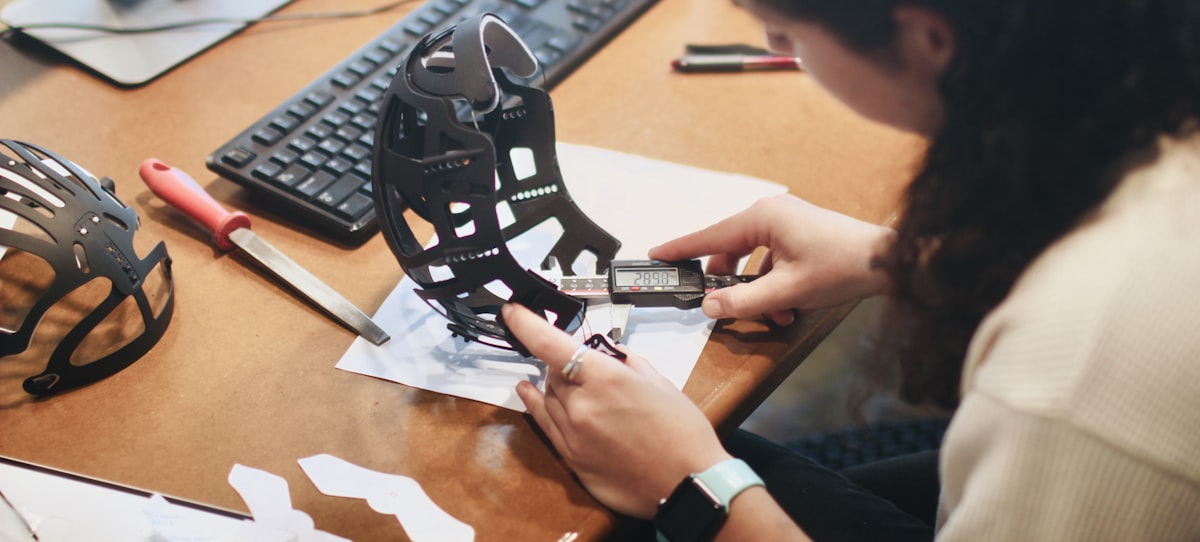
Draft angles of 0.5-2.0 degrees per side enable easy part ejection and extend mold life. Textured surfaces need 1 degree per 0.001″ texture depth. Deep cavities or tall ribs require more draft. Zero draft is possible but increases molding difficulty and mold wear.
Rib design should follow 60% rule – rib thickness should not exceed 60% of adjacent wall thickness to prevent sink marks. Space ribs at least 2x wall thickness apart. Round rib bases reduce stress concentrations compared to sharp corners.
Gate placement affects appearance, strength, and weld lines. Position gates in non-critical areas where witness marks are acceptable. Multiple gates on large parts require to predict weld line locations and optimize filling balance.
Radius requirements eliminate sharp corners that create stress concentrations and machining difficulties. Use minimum 0.5mm radius on inside corners, 0.25mm on outside corners. Larger radii improve mold filling and part strength but may affect assembly fit.
Material selection impacts design rules. Glass-filled grades require larger radii and more draft. Semi-crystalline materials like PP shrink more than amorphous grades like PC. Chemical resistance, operating temperature, and mechanical requirements all influence optimal resin choice.
How Can You Minimize the Disadvantages?
Aluminum prototype molds reduce initial investment for design validation. These tools cost 40-60% less than production steel molds and deliver first parts in 4-6 weeks. While limited to 1,000-5,000 shots, aluminum molds let you test fit, function, and market response before committing to production tooling.
spread tooling costs across multiple parts when producing related components in lower quantities. We’ve built family molds3 housing 4-8 different parts sharing similar material and cycle time requirements. This approach works well for product variations, left/right handed parts, or complete assembly sets.
Optimize Design and Engineering
Design for Manufacturing (DFM) analysis prevents costly mold modifications by identifying problems before steel cutting begins. Professional injection mold design review catches issues like inadequate draft, impossible undercuts, or problematic gate locations. The $2,000-5,000 DFM investment typically saves 10-20x that amount in mold changes.
Mold flow simulation2 optimizes gate placement, predicts weld lines, and identifies potential short shots or warpage issues. This computer analysis costs $3,000-8,000 but prevents trial-and-error mold adjustments that can add weeks to project timelines and thousands to costs.
Phased tooling approach starts with single-cavity molds for initial production, then builds multi-cavity tools as volumes increase. This strategy minimizes upfront risk while preserving scalability options. Many successful products begin with 1+1 cavity molds (production + spare) before progressing to 4, 8, or 16-cavity production tools.
Material optimization balances performance requirements with cost considerations. Many applications can use less expensive resins with appropriate additives rather than premium engineering grades. Glass-filled grades provide metal-like strength at plastic costs, while recycled content reduces material expenses without sacrificing performance.
Reduce Lead Time and Risk
Local supplier partnerships reduce lead times and communication barriers. Working with experienced regional moldmakers familiar with your industry requirements often delivers better results than distant low-cost options that lack application expertise or responsive support.
In our Shanghai factory with 45 injection molding machines ranging from 90T to 1850T, we’ve seen dramatic improvements in injection molding capabilities over the past 20 years. Our ISO 9001, 13485, 14001, and 45001 certifications reflect the quality standards necessary for medical, automotive, and precision industrial applications we produce daily.
Based on two decades of experience, the most successful projects combine realistic volume expectations with optimized part design. We’ve produced everything from 0.1-gram micro-components for electronics to 2-kilogram automotive housings, each requiring different approaches to tooling, materials, and process optimization.
The key insight from processing millions of parts: injection molding’s advantages truly shine when you embrace its strengths while designing around its limitations. Clients who understand the volume threshold, invest in proper DFM analysis, and plan for 12-16 week tooling lead times consistently achieve the best results in cost, quality, and production efficiency.
Frequently Asked Questions
What is the minimum volume that makes injection molding cost-effective?
The break-even point for injection molding typically starts around 2,000-5,000 parts, depending on part complexity and tooling costs. Simple parts with $15,000-25,000 molds become cost-competitive with machining or 3D printing at lower volumes. Complex multi-cavity tools costing $50,000+ require 10,000-20,000 parts to justify the investment. The key factor is amortizing tooling costs across sufficient production volume to achieve competitive per-part pricing below alternative manufacturing methods. In our Shanghai factory, we typically recommend injection molding for orders of 1,000 units or more. Below that threshold, the per-part tooling amortization becomes prohibitive, and methods like 3D printing or CNC machining become more cost-effective for small batches.
How long does injection molding tooling typically last?
Production injection molding tools made from hardened steel typically last 500,000-1,000,000+ cycles with proper maintenance. Tool life depends on material abrasiveness, part geometry, production conditions, and maintenance quality. Glass-filled resins reduce mold life by 30-50% compared to unfilled materials. Aluminum prototype molds last 1,000-10,000 shots. Regular maintenance including cleaning, lubrication, and component replacement extends tool life significantly. Well-maintained production molds often exceed design life expectations when operated within specifications. The timeline also depends on mold complexity—a simple single-cavity aluminum mold might be ready in 2-3 weeks, while a complex multi-cavity steel mold with side actions and hot runners can take 12-16 weeks. Rush orders are possible but add 20-30% to the total cost.
What tolerances can injection molding achieve consistently?
Standard injection molding tolerances range from ±0.002″ to ±0.005″ (±0.05mm to ±0.13mm) for most dimensions, depending on part size and material. Smaller parts under 2 inches can achieve ±0.001″ (±0.025mm) with proper mold design and process control. Across-parting-line dimensions are typically looser at ±0.004-0.008″ due to mold separation effects. Semi-crystalline materials like nylon and polypropylene have higher shrinkage variation than amorphous materials like polycarbonate, affecting achievable tolerances. Critical dimensions may require secondary operations for tighter control. For critical dimensions, we recommend specifying geometric tolerances separately and discussing them with your mold maker during the DFM review. Achieving tighter tolerances consistently requires well-maintained equipment, proper process monitoring, and stable material supply.
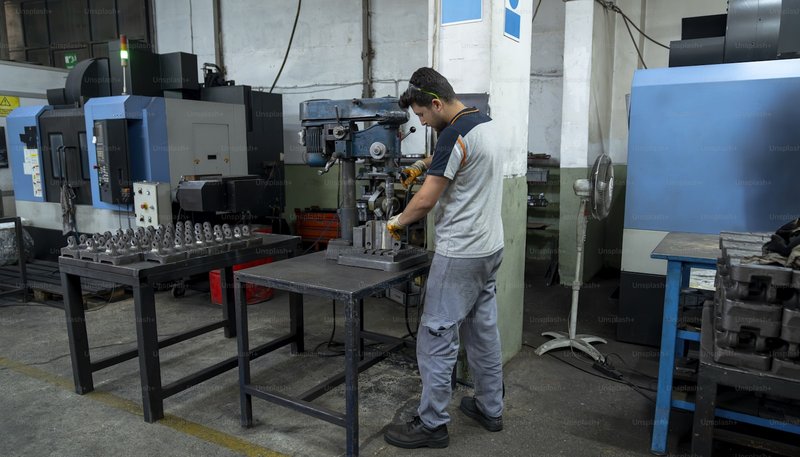
Can injection molding produce parts with metal inserts or multiple materials?
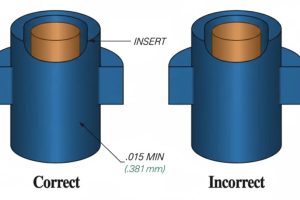
Yes, injection molding excels at insert molding and multi-material applications. Insert molding permanently encapsulates metal threaded inserts, pins, contacts, or structural reinforcements during the molding process. Two-shot injection molding produces parts with multiple materials or colors in a single operation, enabling soft-touch grips, colored logos, or multi-durometer seals. Co-injection creates parts with different materials in core and skin layers for cost optimization or performance enhancement. These advanced techniques require specialized tooling and equipment but eliminate assembly operations while improving part integrity.
What are the main causes of injection molding defects and how can they be prevented?
Common injection molding defects include short shots (incomplete filling), flash (excess material), sink marks, warpage, and weld lines. Short shots result from inadequate pressure, low melt temperature, or restricted flow paths – solved by process optimization or gate relocation. Flash occurs with worn molds, excessive injection pressure, or poor mold clamping – requiring mold maintenance or parameter adjustment. Sink marks appear over thick sections or ribs – prevented by uniform wall thickness design. Warpage stems from uneven cooling or internal stresses – addressed through balanced cooling and optimized process conditions.
How does injection molding cycle time affect production costs and what factors influence it?
Injection molding cycle time directly impacts production costs since machines charge hourly rates of $25-75 depending on size and complexity. Cycle time consists of injection (2-10 seconds), cooling (60-80% of total cycle), and ejection/reset (5-15 seconds). Wall thickness is the primary factor – doubling thickness can triple cooling time. Part geometry, material thermal properties, mold cooling efficiency, and production tolerances all influence cycle duration. Optimizing cooling through conformal cooling channels, balanced layouts, and proper process parameters can reduce cycles by 20-40%, significantly improving part economics and production capacity.
-
glass-filled resins: A glass-filled resin is a polymer composite where short glass fibers are added to a base plastic, typically increasing tensile strength by 30–50% and improving stiffness compared to unfilled grades. ↩
-
mold flow simulation: Mold flow simulation refers to computer simulation software that models how molten plastic fills an injection mold cavity, allowing engineers to optimize gate locations and cooling channels before cutting steel. ↩
-
family molds: A family mold is a type of multi-cavity injection mold where different part geometries—typically components of the same assembly—are molded simultaneously in a single tool, reducing tooling cost and cycle time. ↩




 EN
EN  ES
ES  FR
FR  DE
DE  PT
PT  AR
AR  RU
RU  JA
JA  KO
KO  IT
IT  NL
NL  TR
TR  PL
PL 