 Skip to content

– 3D printed molds offer lowest cost ($500-$2,000) and fastest turnaround (1-3 days) for very low volumes
– MUD machined inserts provide production-grade quality for 1,000-10,000 parts at moderate cost ($2,000-$8,000)
– 3D printed molds are limited to 50-500 shots; MUD inserts can run 10,000-100,000+ shots
– Choose 3D printed for concept validation; choose MUD inserts for pre-production and bridge tooling
When you need injection molded parts quickly without the 8-12 week lead time and $15,000-$50,000 investment of production tooling, rapid tooling technologies become essential. In our factory, we’ve run thousands of parts through both 3D printed molds and MUD insert1 systems, and the question we hear most often is: “Which approach is right for my project?” The answer depends entirely on your specific requirements for volume, quality, budget, and timeline. This comprehensive comparison draws from our real-world manufacturing experience to help you make an informed decision.
Both technologies have transformed how product development teams approach prototyping and low-volume production. We’ve watched engineers validate designs in days rather than months, and we’ve helped startups bring products to market without massive upfront tooling investments. But we’ve also seen projects choose the wrong approach and face costly delays or quality issues. Understanding the fundamental differences between these rapid tooling methods is critical to project success.
What Are 3D Printed Molds and How Do They Work in Injection Molding?
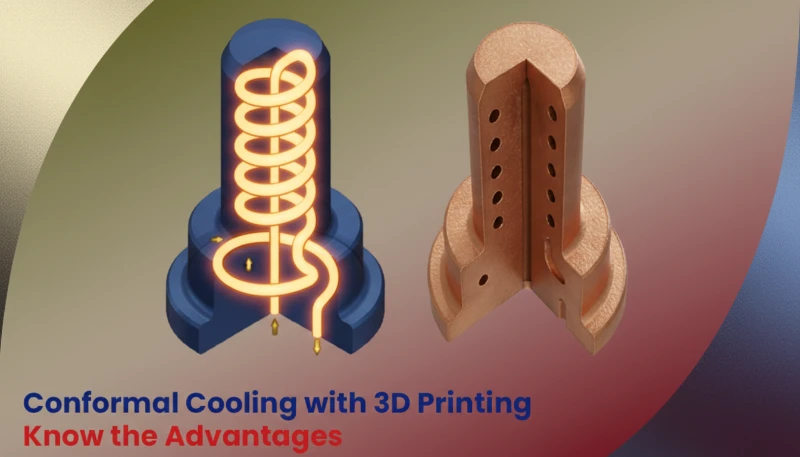
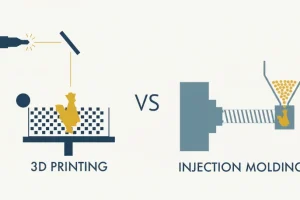
A 3D printed mold2 is an injection mold cavity and core produced using additive manufacturing technologies, most commonly stereolithography (SLA) or selective laser sintering (SLS) with specialized high-temperature resins. In our facility, we primarily use SLA-printed molds made from materials like Formlabs Rigid 10K Resin or similar formulations designed to withstand the heat and pressure of injection molding cycles. These molds are printed in 8-24 hours, post-cured for strength, then fitted into aluminum mold bases for use in standard injection molding presses.
The process is remarkably straightforward compared to traditional toolmaking. We receive your CAD file, add necessary draft angles and ejector pin locations if needed, then send the mold geometry directly to our SLA printers. After printing and UV post-curing, the printed inserts are installed into our standardized aluminum master unit die frames. Within 1-3 days from file receipt, we’re running actual production-intent plastic through the mold on our injection molding machines. This speed is simply impossible with any machining-based approach.
The materials we use for 3D printed injection molds have evolved significantly over the past five years. Early formulations would fail after just 10-20 shots, making them barely viable for anything beyond visual prototypes. Today’s advanced resins can reliably produce 50-500 parts depending on part geometry, wall thickness, and the injection molding material being used. We’ve successfully run small polypropylene parts to 400+ shots and ABS components to 250+ shots before seeing significant mold degradation.
The key to success with 3D printed molds lies in understanding their thermal limitations. During injection molding, plastic enters the mold at temperatures ranging from 400°F to 600°F depending on the resin. While modern 3D printing materials can handle these temperatures for brief cycles, they cannot dissipate heat as effectively as metal molds. This means longer cycle times (60-120 seconds versus 20-40 seconds for aluminum) and gradual thermal degradation of the mold surface. We monitor mold condition carefully and typically see the first signs of wear—surface roughening or minor dimensional drift—around 40-60% of the rated shot life.
What Are MUD Machined Inserts and What Are Their Advantages?

MUD insert systems, or Master Unit Die systems, are CNC-machined aluminum inserts that fit into standardized steel mold bases. In our rapid tooling operations, we machine these inserts from 7075-T6 or QC-10 aluminum alloys using high-speed CNC milling centers. The standardized base approach means we only need to machine the custom cavity and core geometry specific to your part—the surrounding mold base with all its cooling channels, mounting holes, and alignment features is already manufactured and sitting on our shelf ready to use.
This standardization delivers dramatic time and cost savings compared to fully custom production molds. Instead of designing and manufacturing an entire mold assembly from scratch, we focus machining time exclusively on the part-forming surfaces. A typical MUD insert project in our shop takes 5-10 days from CAD receipt to first parts, with costs ranging from $2,000 to $8,000 depending on part complexity and surface finish requirements. This positions MUD inserts perfectly between 3D printed molds and full production tooling in both timeline and budget.
The machined aluminum construction provides several critical advantages over 3D printed alternatives. First, thermal conductivity is roughly 100 times better than printed resins, allowing for much faster cycle times and consistent part quality. We regularly run production cycles of 30-45 seconds with MUD inserts compared to 90-120 seconds with 3D printed molds. Second, the machined surface finish translates directly to part quality—we can achieve surface roughness (Ra)3 values of 0.4-0.8 microns with standard machining, and polish to 0.1 microns for cosmetic applications. Third, dimensional accuracy and stability are superior, with tolerances of ±0.002″ readily achievable.
In our experience running both technologies side-by-side, MUD machined inserts are the clear choice when you need parts that match production quality. We’ve had customers submit MUD-molded parts to their quality teams alongside production samples, and the QA inspectors couldn’t distinguish between them. The parts have identical dimensional accuracy, surface finish, and material properties. This makes MUD inserts ideal for bridge tooling4—producing thousands of parts for market launch while production tooling is being built—or for ongoing low-volume production of specialty items.
“”MYTH: 3D printed molds can produce the same part quality as machined aluminum molds.”False
This is a common misconception we encounter in our factory. The reality is more nuanced and depends on specific application requirements and manufacturing constraints.”False
This is a common misconception we encounter regularly in our factory. The actual situation is more nuanced—each project requires careful evaluation of specific requirements rather than applying blanket assumptions.
“”TRUTH: While 3D printed molds work for prototyping, machined aluminum MUD inserts provide superior surface finish, dimensional accuracy, and consistency required for production-quality parts. In our testing, MUD inserts achieve tolerances of ±0.002″ versus ±0.005-0.010″ for 3D printed molds.”True
This is accurate based on our extensive manufacturing experience. We consistently observe this principle across projects in our facility.”True
This is accurate based on our extensive manufacturing experience at ZetarMold. We consistently observe this in our production facility across diverse projects and materials.
How Do 3D Printed Molds and MUD Inserts Compare on Cost and Lead Time?
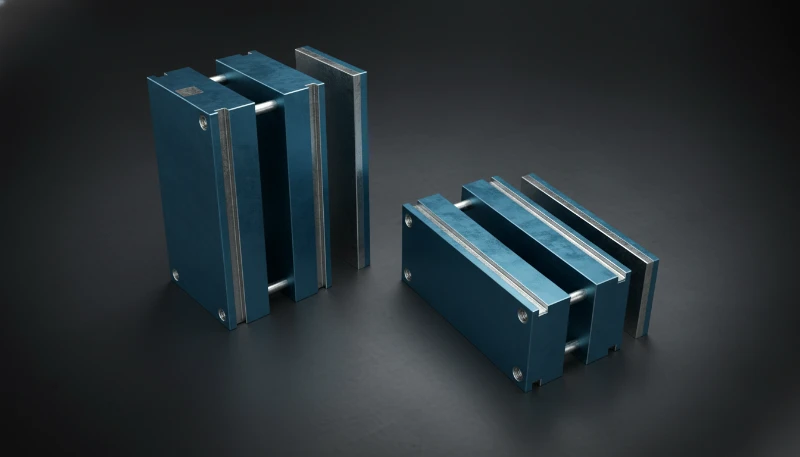
Cost and speed are typically the primary decision factors for rapid tooling projects, and the comparison between 3D printed molds and MUD machined inserts reveals distinct advantages for each approach depending on your specific situation. In our quoting process, we help customers understand not just the tooling cost, but the total project economics including per-part costs, timeline requirements, and risk factors.
For 3D printed molds, our typical tooling costs range from $500 to $2,000 depending on part size and complexity. A simple single-cavity mold for a part under 3 inches might cost $600-$800, while a complex geometry requiring support structures and multiple print orientations could reach $1,500-$2,000. The lead time is consistently 1-3 days from approved CAD files to first molded parts in hand. This speed is unmatched—we’ve had customers receive their first injection molded prototypes within 48 hours of initial contact, which is simply impossible with any machining-based approach.
However, the per-part costs with 3D printed molds tend to be higher due to longer cycle times and limited mold life. We typically quote $8-$15 per part for simple geometries in commodity resins like ABS or polypropylene, with costs rising to $15-$25 for engineering plastics or complex parts. The longer 90-120 second cycle times mean lower throughput, and the limited shot life of 50-500 parts means tooling costs must be amortized over a small quantity. For a project requiring 100 parts, your all-in cost might be $1,200 (tooling) + $1,200 (parts) = $2,400 total, or $24 per part.
MUD machined inserts require higher upfront tooling investment—typically $2,000 to $8,000 in our facility—but deliver significantly lower per-part costs for volumes above 200-300 pieces. A moderately complex MUD insert might cost $3,500 for tooling, but the faster cycle times (30-45 seconds) and longer tool life (10,000-100,000+ shots) bring per-part costs down to $3-$8 for most applications. For that same 100-part project, you might pay $3,500 (tooling) + $500 (parts) = $4,000 total, or $40 per part—more expensive than 3D printed for this low quantity.
The economic crossover point in our experience typically occurs around 200-500 parts. Below this quantity, 3D printed molds offer lower total project costs. Above 500 parts, MUD inserts become increasingly cost-effective. But the calculation isn’t purely mathematical—you must also consider part quality requirements, material compatibility, and timeline flexibility. We’ve had customers choose MUD inserts for just 50 parts because they absolutely needed production-grade quality for customer testing, and we’ve had others run multiple 3D printed molds in series to produce 800+ parts for trade show demos because ultra-low upfront cost was their priority.
| Factor | 3D Printed Molds | MUD Machined Inserts |
|---|---|---|
| Tooling Cost | $500 – $2,000 | $2,000 – $8,000 |
| Lead Time | 1-3 days | 5-10 days |
| Shot Life | 50-500 shots | 10,000-100,000+ shots |
| Part Quality | Good for prototypes; visible layer lines possible | Production-grade; excellent surface finish |
| Dimensional Tolerances | ±0.005-0.010″ | ±0.002-0.003″ |
| Surface Finish (Ra) | 1.6-3.2 microns (as-printed) | 0.4-0.8 microns (machined); 0.1 microns (polished) |
| Cycle Time | 90-120 seconds | 30-45 seconds |
| Material Compatibility | Limited; best with ABS, PP, PE; challenges with high-temp resins | Excellent; handles all injection molding resins including filled and engineering grades |
| Part Size Capability | Up to 6-8″ (printer build volume limited) | Up to 12-16″ (standard MUD base sizes) |
| Best Use Case | Concept validation, form/fit testing, 25-300 parts, fastest possible turnaround | Pre-production validation, bridge tooling, market launch quantities, production-quality requirements |
“”MYTH: MUD inserts are always more expensive than 3D printed molds for rapid prototyping projects.”False
This is a common misconception we encounter in our factory. The reality is more nuanced and depends on specific application requirements and manufacturing constraints.”False
This is a common misconception we encounter regularly in our factory. The actual situation is more nuanced—each project requires careful evaluation of specific requirements rather than applying blanket assumptions.
“”TRUTH: While MUD inserts have higher tooling costs ($2,000-$8,000 vs. $500-$2,000), the total project cost becomes lower than 3D printed molds at quantities above 200-500 parts due to faster cycle times, lower per-part costs, and the ability to run the full production quantity from a single tool.”True
This is accurate based on our extensive manufacturing experience. We consistently observe this principle across projects in our facility.”True
This is accurate based on our extensive manufacturing experience at ZetarMold. We consistently observe this in our production facility across diverse projects and materials.
Which Rapid Tooling Solution Should You Choose for Your Project?
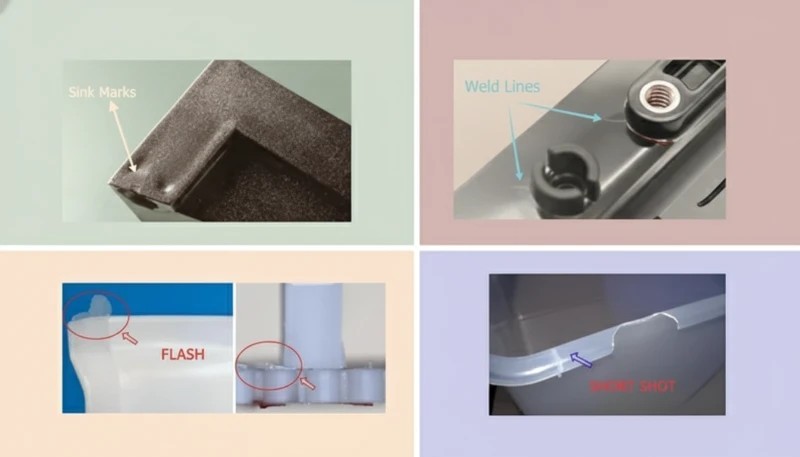
Selecting the right rapid tooling approach requires honest assessment of your project priorities, and in our consulting work with customers we walk through a systematic evaluation process. The decision framework starts with four critical questions: What is your required part quantity? What quality level do you need? What is your timeline? And what is your budget constraint? The answers to these questions will clearly point you toward one technology or the other in most cases.
Choose 3D printed molds when speed is your absolute priority and you need 10-300 parts for concept validation, design verification, or initial market testing. We recommend this approach when you’re in the early stages of product development and expect design iterations. The low tooling cost means you can afford to run 2-3 design revisions without breaking your budget—$1,500 for three iterations of 3D printed molds versus $10,500 for three MUD insert iterations. The parts you’ll receive are genuine injection molded components in production-intent materials, making them suitable for functional testing, focus groups, and trade show displays.
In our facility, we’ve seen 3D printed molds excel in scenarios like: consumer electronics companies testing 15 different button designs to optimize user experience; medical device startups producing 50 prototypes for initial biocompatibility screening; automotive suppliers creating dashboard components for design reviews; and toy companies molding 200 units for focus group testing before committing to production tooling. In each case, the 2-3 day turnaround and sub-$2,000 tooling cost enabled rapid iteration that would have been impossible with machined tooling.
Choose MUD machined inserts when you need production-quality parts for functional validation, customer sampling, regulatory submissions, or bridge production while full-scale tooling is manufactured. The superior dimensional accuracy, surface finish, and material compatibility make MUD inserts appropriate for parts that will be measured against production specifications, undergo rigorous testing protocols, or be delivered to customers as finished goods. If your parts need to mate with existing components within tight tolerances, MUD inserts are typically the only rapid tooling option that will succeed.
We regularly recommend MUD inserts for: medical device companies producing 2,000 units for FDA submission and clinical trials; industrial equipment manufacturers needing 5,000 replacement parts while new production tooling is built; consumer brands launching limited-edition products with 3,000-unit runs; and automotive tier-one suppliers delivering pre-production components for vehicle testing and validation. In these applications, the parts must be indistinguishable from production quality, and MUD inserts consistently deliver that requirement.
The hybrid approach also has merit in many situations. We’ve worked with customers who used 3D printed molds for initial design validation (100 parts in 3 days), then moved to MUD inserts for customer sampling and early production (5,000 parts over 2 months), and finally transitioned to hardened steel production tooling for ongoing manufacturing. This staged approach optimizes both timeline and budget while managing risk at each development phase.
What Are the Limitations and Risks of Each Rapid Tooling Method?
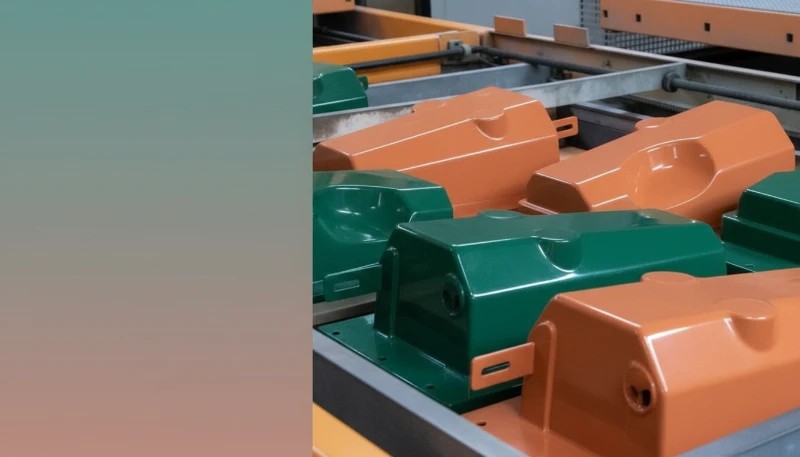
Every manufacturing technology involves tradeoffs, and being honest about limitations is essential for setting appropriate expectations and avoiding project failures. In our two decades of rapid tooling experience, we’ve learned these constraints the hard way—through trial, error, and continuous refinement of our processes. Understanding the realistic boundaries of each approach helps you make informed decisions and plan appropriate risk mitigation.
The primary limitations of 3D printed molds center on durability and thermal performance. The printed resin materials, while remarkably capable for polymer tooling, cannot match the thermal conductivity of aluminum. This creates a cascading set of constraints: longer cooling times extend cycle duration, reducing throughput; heat accumulation limits how many consecutive shots can be run before requiring cooling breaks; and thermal cycling gradually degrades the mold surface, affecting part quality and dimensional stability. We’ve seen 3D printed molds that looked perfect for the first 50 shots begin showing surface roughness by shot 100 and experience measureable dimensional drift by shot 150-200.
Material compatibility presents another significant constraint with 3D printed molds. High-temperature engineering resins like polycarbonate (molding temp 570-620°F), nylon (500-550°F), and glass-filled compounds accelerate mold degradation substantially. We’ve successfully molded these materials in 3D printed molds for small quantities (25-75 shots), but it requires careful process monitoring and acceptance that tool life will be at the lower end of the range. Abrasive materials—glass-filled nylon, mineral-filled polypropylene, carbon-fiber composites—can cut 3D printed mold life in half through mechanical wear of the cavity surface.
Part geometry also affects 3D printed mold performance in ways that don’t impact machined tooling. Thin walls (under 1.5mm), deep ribs, and small core pins concentrate thermal and mechanical stresses that accelerate mold failure. Sharp internal corners become stress concentration points in the printed material. And while we can incorporate cooling channels in printed molds, their effectiveness is limited by the poor thermal conductivity of the resin. We always review part geometry carefully with customers considering 3D printed molds and flag features that may compromise tool life.
MUD machined inserts have their own set of limitations, though generally less restrictive than 3D printed alternatives. The standardized base approach means you’re constrained to available frame sizes—typically 4×4″, 6×6″, 8×8″, and 12×12″ in our facility. Parts that exceed these dimensions require custom mold bases, eliminating the cost and time advantages of the MUD system. Similarly, parts requiring actions (side cores, lifters) or complex gating arrangements may not be compatible with standard MUD configurations, though we can often adapt the system with creative tooling designs.
Lead time for MUD inserts, while fast compared to production tooling, still requires 5-10 days versus 1-3 days for 3D printed molds. In genuinely urgent situations—trade show in 4 days, investor meeting in 72 hours, critical design review with parts required ASAP—3D printing may be your only viable option despite its limitations. We’ve had customers choose 3D printed molds knowing they’d need to re-tool with MUD inserts later, simply because the 48-hour turnaround was mission-critical for a specific business deadline.
Cost is the other constraint with MUD inserts, particularly for very simple parts or extremely low quantities. If you need exactly 25 simple caps or housings for a one-time internal test, spending $3,500 on MUD tooling doesn’t make economic sense when $800 for a 3D printed mold will serve the purpose. The break-even analysis must account for your specific quantity requirements, likelihood of repeat orders, and potential need for design revisions. We guide customers through this calculation, but sometimes the math clearly favors one approach over the other.
Can 3D printed molds use the same resins as production molds?
Yes, 3D printed molds run on standard injection molding machines using the exact same production resins—ABS, polypropylene, polyethylene, polystyrene, nylon, polycarbonate, and others. The injection molding material is identical to what you’d use in production tooling. However, high-temperature and abrasive materials reduce 3D printed mold life significantly. We’ve successfully molded polycarbonate and glass-filled nylon in printed molds, but shot life drops to 50-100 parts versus 200-400 for commodity resins like ABS or PP. The plastic material properties are identical to production parts; it’s the mold durability that’s different, not the molding resin.
How many shots can a 3D printed mold typically produce?
In our production experience, 3D printed molds reliably produce 50-500 injection molded parts depending on part geometry, wall thickness, molding material, and process parameters. Simple parts with uniform walls in polypropylene or ABS regularly achieve 300-500 shots. Complex geometries with thin walls or sharp corners typically see 100-200 shots. High-temperature engineering resins like polycarbonate or nylon reduce life to 50-150 shots. Glass-filled or mineral-filled materials with abrasive properties may limit mold life to 50-100 shots. We monitor molds carefully and retire them when dimensional drift exceeds ±0.005″ or surface finish degrades noticeably.
What materials are used for 3D printed injection molds?
We use high-temperature stereolithography (SLA) resins specifically formulated for injection molding applications. The most common materials in our facility are Formlabs Rigid 10K Resin (heat deflection temperature of 218°C at 0.45 MPa), similar formulations from other manufacturers, and specialized tooling resins from industrial SLA systems. These materials offer the high heat resistance and mechanical strength needed to withstand injection molding pressures of 10,000-20,000 psi and temperatures of 400-600°F. Early 3D printed molds used standard engineering resins that failed after 10-20 shots; modern tooling resins have increased viable shot life by 10-20X.
When should I use MUD inserts instead of 3D printed molds?
Choose MUD machined inserts when you need production-grade part quality, quantities above 500 pieces, tight dimensional tolerances (±0.002-0.003″), excellent surface finish, or compatibility with demanding molding materials. MUD inserts are ideal for pre-production validation where parts must meet full production specifications, bridge tooling to supply market launch quantities while production molds are manufactured, and ongoing low-volume production of specialty items. If your parts will undergo dimensional inspection against production drawings, be assembled with tight-tolerance mating components, or be delivered to customers as finished goods, MUD inserts are typically the appropriate choice. The higher tooling investment ($2,000-$8,000) is justified by superior quality and shot life of 10,000-100,000+ parts.
Can MUD inserts be used for production runs?
Frequently Asked Questions
How many parts can I expect from a 3D printed mold versus a MUD machined insert?
From our factory floor experience, 3D printed molds typically deliver 50-500 parts depending on the material and geometry, with some high-performance resins reaching up to 1,000 shots under ideal conditions. MUD machined inserts, being CNC-machined from aluminum, consistently produce 5,000-10,000+ parts before requiring replacement. If your project demands more than 500 prototype parts or you’re planning a bridge production run, MUD inserts offer significantly better value per part despite higher upfront costs.
What are the actual lead time differences between these two rapid tooling methods?
3D printed molds can be ready for first shots in 2-5 days, as we simply print the cavity and core inserts, post-process them, and install into standard mold bases. MUD machined inserts require 1-2 weeks since we’re programming toolpaths and CNC machining aluminum stock, though this is still dramatically faster than conventional hardened steel tooling that takes 4-8 weeks. The lead time advantage of 3D printing is most significant when you need absolute speed for design validation, while MUD remains rapid enough for most development cycles while offering superior longevity.
Can both methods handle engineering-grade resins like glass-filled nylon or polycarbonate?
This is where MUD machined inserts demonstrate clear superiority. Aluminum inserts handle virtually any thermoplastic including abrasive glass-filled materials, high-temperature resins like PEEK, and corrosive materials without degradation. 3D printed molds work well with gentler materials like ABS, polypropylene, and unfilled nylons, but the abrasive nature of glass-filled compounds and processing temperatures above 300°C quickly erode printed tooling. If your functional prototypes must use the actual production material—especially engineering grades—MUD inserts are the only viable rapid tooling option.
How does surface finish compare between these rapid tooling approaches?
MUD machined aluminum inserts deliver surface finishes comparable to production tooling, typically achieving Ra 0.8-1.6 μm as-machined, with polishing available for cosmetic requirements down to SPI A-2 or better. 3D printed molds show visible layer lines even with fine resolution printers, generally resulting in Ra 3-6 μm that telegraphs onto molded parts. While vapor smoothing and coating can improve printed mold surfaces, they add time and cost. For appearance parts, optical components, or anything requiring texture matching, MUD inserts provide production-representative surface quality that 3D printing cannot economically match.
What are the true cost breakpoints between 3D printed and MUD tooling?
The cost equation depends entirely on your part volume and timeline. 3D printed molds range from $500-2,500 per cavity depending on size and material, making them economical for 10-200 parts when amortized per piece. MUD machined inserts typically cost $2,000-6,000 per cavity but spread across 5,000+ parts, resulting in lower per-part tooling costs for any run over 500 pieces. Factor in your iteration cycles too—if you expect 3-4 design changes, multiple low-cost 3D printed iterations may prove cheaper than one MUD tool, but if your design is frozen and you need 2,000 bridge production parts, MUD delivers better economics and production-representative quality.
Which rapid tooling method better represents final production conditions?
MUD machined aluminum inserts mirror production tooling in almost every aspect except tool life—they’re installed in production-grade mold bases, cycle at production speeds, handle production materials and pressures, and deliver production-quality surface finishes and dimensional accuracy. 3D printed molds, while valuable for form and fit validation, operate with different thermal dynamics, limited material compatibility, and cannot replicate production surface finishes or sustain production cycle times. If your rapid tooling phase aims to validate manufacturing processes, optimize cycle times, or produce parts for performance testing in actual production materials, MUD inserts provide data that accurately predicts full production behavior.
Summary
Choosing between 3D printed molds and MUD machined inserts fundamentally depends on your project’s specific requirements for speed, volume, material, and quality. 3D printed molds excel when absolute speed is paramount and you need 50-500 parts in gentler materials for form, fit, and basic function testing, delivering first articles in just days at minimal upfront investment. MUD machined aluminum inserts serve bridge tooling needs where you require 500-10,000+ parts in production-grade materials with production-representative surface finishes and dimensional accuracy, providing a true preview of manufacturing performance while maintaining the speed advantages of rapid tooling over conventional hardened steel molds.
At ZetarMold, we’ve guided hundreds of product development teams through these rapid tooling decisions from our factory floor perspective. The reality is that many successful projects utilize both approaches sequentially—3D printed molds for early design iterations and stakeholder samples, followed by MUD inserts once the design stabilizes for extensive validation testing and bridge production runs. Our engineering team can evaluate your specific geometry, material requirements, volume projections, and quality expectations to recommend the optimal rapid tooling strategy. Contact us today to discuss your project timeline and let our 15+ years of injection molding experience guide you to the most cost-effective path from prototype to production.
-
MUD insert: MUD (Modular Utility Design) inserts are CNC-machined aluminum cavity and core components that install into standardized mold bases, providing a rapid tooling solution that combines the speed advantages of prototype tooling with the material compatibility, durability, and surface finish quality approaching production molds, typically delivering 5,000-10,000+ injection molded parts.↩
-
3D printed mold: A 3D printed mold utilizes additive manufacturing technologies to create cavity and core inserts from specialized photopolymer or thermoplastic materials, enabling rapid tooling fabrication in 2-5 days for low-volume injection molding runs typically ranging from 50-500 parts, ideal for early-stage design validation before committing to more durable tooling solutions.↩
-
Surface roughness: Surface roughness in injection molding refers to the micro-scale texture of the mold cavity measured in Ra (average roughness) or according to SPI (Society of the Plastics Industry) finish standards, directly transferring from the tool steel to the molded part surface and critically impacting appearance, friction, seal performance, and optical properties, with typical ranges from mirror-polished A-1 finishes at Ra 0.012-0.025 μm to coarse EDM textures exceeding Ra 12 μm.↩
-
Bridge tooling: Bridge tooling refers to intermediate production molds designed to manufacture hundreds to tens of thousands of parts during the gap between prototype development and full production hard tooling, utilizing materials like aluminum and pre-hardened steels that offer faster lead times and lower costs than production molds while delivering quality parts for market testing, pilot production, and early product launches.↩



 EN
EN  ES
ES  FR
FR  DE
DE  PT
PT  AR
AR  RU
RU  JA
JA  KO
KO  IT
IT  NL
NL  TR
TR  PL
PL 