 Skip to content

Introduction
Injection molding is a widely utilized manufacturing process in the production of plastic parts. It has gained significant importance and prevalence due to its ability to achieve high precision, efficiency, and cost-effectiveness. The process involves injecting molten plastic material into a mold cavity, allowing it to cool and solidify into the desired shape.
The popularity of injection molding can be attributed to several factors. Firstly, it enables the production of complex and intricate part designs with consistent quality and dimensional accuracy. The process is highly efficient, allowing for high-volume production and fast cycle times. Additionally, injection molding offers versatility in material selection, accommodating a wide range of plastics with varying properties.
However, despite its advantages, injection molding can encounter various issues that can affect the quality of the final product, disrupt production efficiency, and lead to increased costs. These issues include poor mold filling, sink marks, warpage, short shots, flash, and more. Therefore, it is essential to understand and address these common problems through effective troubleshooting techniques.
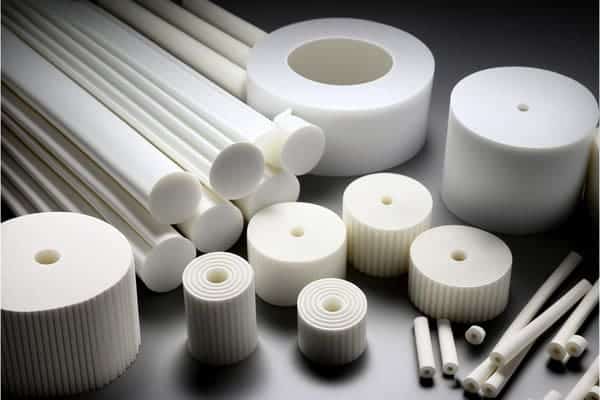
Troubleshooting plays a crucial role in ensuring the success of the injection molding process. By identifying and resolving issues promptly, manufacturers can minimize defects, optimize production yields, and enhance overall product quality. In this article, we will delve into common injection molding issues and provide comprehensive troubleshooting guidance to help you overcome these challenges effectively. By mastering troubleshooting techniques, you can achieve reliable and efficient injection molding processes, leading to high-quality plastic parts that meet your desired specifications.
II. Five Common Problems with Injection Molding of Plastic Parts
A. Poor Mold Filling
Poor mold filling is a common in injection molding defects that results in incomplete or malformed parts. Several factors can contribute to this problem, including:
1.Causes:
Inadequate injection speed and pressure settings.
Improper gate design or size.
Clogged nozzles or runners.
2.Troubleshooting Tips:
Adjust the injection speed and pressure to optimize plastic flow into the mold cavity.
Verify the gate design and ensure it is suitable for the part and resin being used.
Regularly inspect and clean the nozzle and runners to prevent clogging.
B. Sink Marks
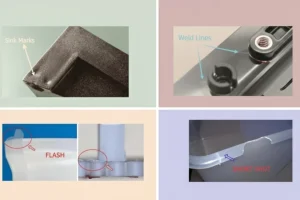
Sink marks are depressions or indentations on the surface of the molded part, caused by uneven cooling or insufficient packing. To troubleshoot sink marks, consider the following:
1.Causes:
Inadequate cooling time.
Insufficient packing pressure and time.
Part design with thick sections.

2.Troubleshooting Tips:
Optimize cooling time to achieve uniform cooling.
Increase packing pressure and prolong the packing time.
Modify part design to minimize thick sections or use ribbing to distribute material evenly.
C. Warpage
Warpage refers to the distortion or bending of molded parts after ejection. Address warpage by considering the following causes and troubleshooting tips:
1.Causes:
Improper mold temperature control.
Differential cooling.
Material selection with high shrinkage characteristics.

2.Troubleshooting Tips:
Adjust the mold temperature, especially in critical areas, to prevent differential cooling.
Optimize the cooling system to ensure balanced cooling across the part.
Evaluate molding material selection and choose resins with lower shrinkage properties.
D. Short Shots
Short shots occur when the mold is not completely filled, resulting in incomplete parts. Troubleshoot short shots using the following tips:
1.Causes:
Insufficient injection pressure and time.
Gate blockage.
Inadequate venting.

2.Troubleshooting Tips:
Increase injection pressure and adjust the injection time.
Check for gate blockage and clean the gate area.
Improve venting by adding or modifying vents in the mold.
E. Flash
Flash is excess material that protrudes from the parting line of the mold. It is often caused by excessive clamping force or poor mold alignment. Follow these troubleshooting tips:
1.Causes:
Excessive clamping force.
Improper mold alignment.
2.Troubleshooting Tips:
Ensure proper mold alignment and check for any misalignment issues.
Adjust the clamping force to prevent excessive pressure.
By addressing these common injection molding issues and implementing the suggested troubleshooting techniques, you can improve the quality and efficiency of your injection molding process, resulting in defect-free and high-quality plastic parts.

III. What May Cause Injection Molding Machine Not to Inject Fully?
During the injection molding process, there are several potential causes that can result in incomplete injection, where the molten plastic fails to fill the mold cavity fully. It is crucial to identify these causes and address them appropriately. The following factors are significant contributors to incomplete injection:
1.Insufficient Injection Pressure:
Low injection pressure can impede the proper flow of molten plastic into the mold cavity.
Solution: Increase the injection pressure to ensure adequate plastic flow and complete filling of the mold cavity.
2.Inadequate Injection Time:
Insufficient injection time may not allow enough material to be injected into the mold cavity.
Solution: Adjust the injection time to provide adequate duration for the machine to deliver the required amount of material.
3.Malfunctioning Check Valve:
A faulty or worn-out check valve can lead to material degradation, leakage or improper plastic flow.
Solution: Regularly inspect and maintain the check valve. Replace it if necessary to ensure proper functionality and prevent material loss or flow disruption.
Injection pressure, injection time, and check valve functionality are crucial elements in ensuring complete and successful injection during the molding process. By maintaining optimal injection pressure and adjusting the injection time based on the requirements of the part and material, you can promote proper material flow and achieve complete mold filling. Additionally, regularly monitoring and maintaining the check valve helps prevent any hindrance to the plastic flow, ensuring a successful injection molding process.
By addressing these factors and maintaining their proper functionality, you can enhance the overall efficiency and quality of your injection molding machine, leading to consistent and fully injected plastic parts.
IV. Major Factors Affecting an Injection Molding Process
The injection molding process is influenced by several key factors that play a significant role in determining the quality and success of the final product. Understanding and effectively managing these factors are crucial for achieving optimal results. The following factors have a substantial impact on the injection molding process:
1.Mold Design:
Mold design directly affects the part’s quality, functionality, and manufacturability.
Factors such as gate location, runner system, cooling channels, and ejection mechanism influence the filling, cooling, and ejection stages.
A well-designed mold promotes proper material flow, efficient cooling, and easy part ejection.
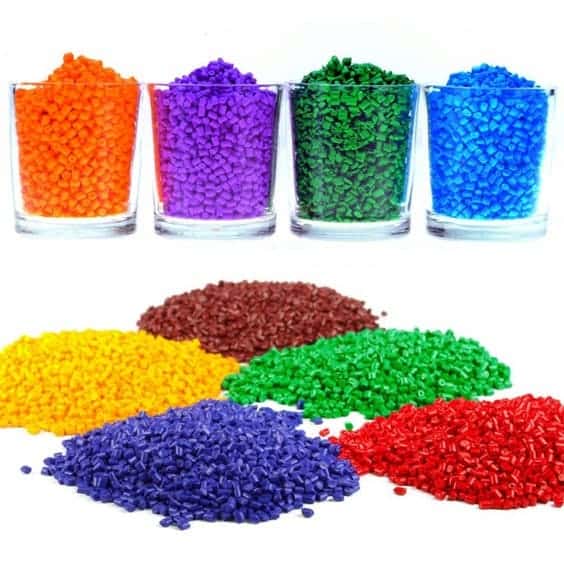
2.Material Selection:
The selection of plastic material for injection molding is essential for achieving the desired properties and characteristics in the final product.
Different materials have unique flow properties, shrinkage rates, and temperature requirements during the molding process.
Proper material selection ensures compatibility with the mold design and helps achieve the desired part quality and performance.
3.Processing Parameters:
Various processing parameters, including injection speed, temperature, pressure, and cooling time, directly impact the molding process and part quality.
Injection speed and pressure influence the material flow, filling pattern uniform wall thickness, and packing of the mold cavity.
Optimal barrel melt temperature ensures proper melt viscosity and flow characteristics.
Cooling time affects material temperature, part solidification and dimensional stability.
4.Machine Maintenance:
Regular maintenance and calibration of the injection molding machine are crucial for consistent and reliable operation.
Proper lubrication, inspection of components, and cleaning ensure optimal machine performance.
Maintaining machine condition and functionality helps prevent issues such as nozzle clogging, leakage, or inconsistent injection.
By effectively managing these major factors, you can optimize the injection molding process, enhance part quality, and increase production efficiency. It is important to collaborate with mold designers, material suppliers, and machine technicians to ensure the best outcomes. Continuous monitoring, adjustment, and maintenance of the mold, material, processing parameters, and machine contribute to a successful injection molding operation.
Remember, each factor is interconnected, and any changes or adjustments made should consider their impact on other aspects of the process. By maintaining a balance between mold design, material selection, processing parameters, and machine maintenance, you can achieve consistent and high-quality injection molded parts.
V. How to Validate an Injection Molding Process
Validating an injection molding process is crucial to ensure its reliability, repeatability, and consistency. Proper validation helps in achieving high-quality parts and minimizing production issues. The following steps outline the process of validating an injection molding process:
1.Design a Mold with Appropriate Dimensions and Specifications:
Collaborate with mold designers to create a mold that meets the desired part requirements, including dimensions, features, and tolerances.
Ensure that the mold design accounts for proper gating, cooling channels, and ejection mechanisms.

2.Establish Process Parameters:
Set up the injection molding machine with appropriate parameters, such as injection speed, temperature, pressure, and cooling time.
Consult material specifications and guidelines to determine the optimal processing conditions.
3.Perform Initial Trial Runs:
Conduct trial runs with the designed mold and established process parameters.
Produce sample parts in controlled conditions to assess their quality and performance.
4.Inspect Sample Parts:
Thoroughly inspect the sample parts for dimensional accuracy, surface finish, and other quality criteria.
Use measurement tools, visual inspection, and other testing methods to ensure the parts meet the desired specifications.
5.Make Necessary Adjustments:
Analyze the results of the inspection and identify any issues or deviations from the desired outcomes.
Make adjustments to the process parameters, mold design, or material selection as needed.
Iteratively repeat the trial runs and inspection until the desired quality and consistency are achieved.
5.Document and Maintain Records:
Document the validated process parameters, including the injection speed, temperature, pressure, and other relevant settings.
Maintain detailed records of adjustments made, inspection results, and any troubleshooting steps taken during the validation process.
These records serve as a reference for future production runs and troubleshooting efforts.
Validation of the injection molding process ensures that it is robust, reliable, and capable of consistently producing high-quality parts. Through trial runs, meticulous inspection, necessary adjustments, and comprehensive documentation, you can establish a validated process that meets the desired specifications. This validation process provides a solid foundation for efficient production, reduced defects, and improved overall quality control.

Conclusion
Following the provided tips and guidelines in this comprehensive guide can significantly improve the injection molding process. However, it is important to note that every manufacturing setup is unique, and seeking expert advice and assistance is highly recommended. Consulting with mold designers, material suppliers, and experienced professionals can provide comprehensive insights tailored to your specific requirements.
By troubleshooting injection molding issues and optimizing the process, manufacturers can unlock the potential for producing high-quality parts consistently. Addressing factors such as mold design, material selection, processing parameters, and machine maintenance ensures reliable and efficient operations. The ability to identify and resolve common issues leads to increased production efficiency, reduced waste, and improved overall product quality.



 EN
EN  ES
ES  FR
FR  DE
DE  PT
PT  AR
AR  RU
RU  JA
JA  KO
KO  IT
IT  NL
NL  TR
TR  PL
PL 