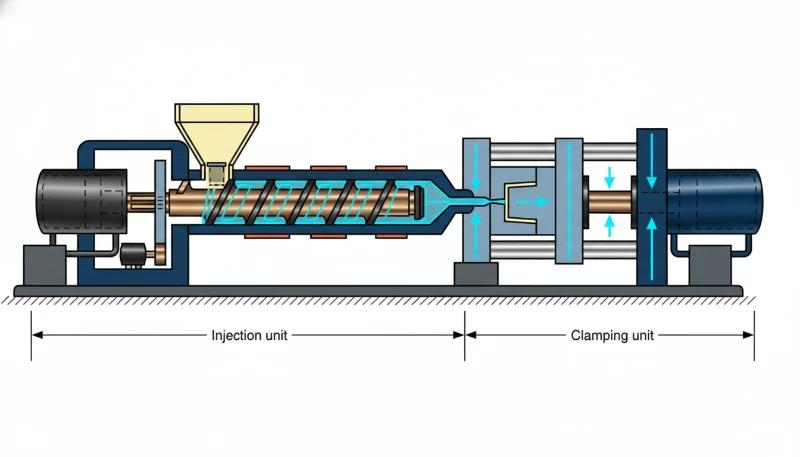
Yes, you can absolutely overmold the same material — and it’s often the smartest approach for many applications. When you inject molten polymer onto a substrate of identical material, thermal bonding1 creates molecular chain entanglement that delivers excellent adhesion without compatibility headaches. injection molding2 with same-material overmolding3 eliminates delamination risks while giving you design flexibility for color, texture, and structural variations.
- Same-material overmolding creates molecular bonding without adhesives or compatibility issues
- Perfect for color variation, texture changes, and structural reinforcement applications
- Thermoplastics like PP, TPU, and nylon bond exceptionally well to themselves
- Simplifies material sourcing and creates fully recyclable single-polymer parts
- Requires precise substrate temperature control for optimal bond strength
What Is Same-Material Overmolding?
Same-material overmolding is defined by the function, constraints, and tradeoffs explained in this section. Same-material overmolding is a two-shot injection mold4 process where you inject identical polymer materials in separate shots to create a single part. The first shot forms your substrate — the base geometry that gets ejected and transferred to the second cavity. Then you inject the same thermoplastic5 material over specific areas of that substrate to add features, colors, or structural reinforcement.
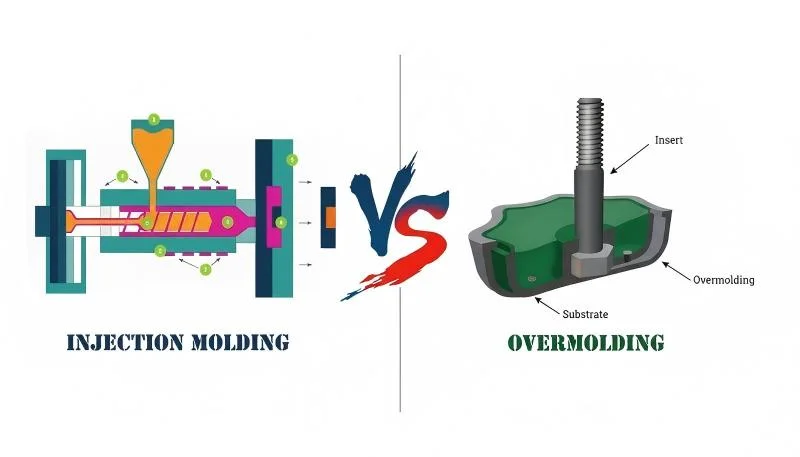
This differs from traditional multi-material overmolding where you’re bonding different polymers like rigid ABS with soft TPU. It’s also distinct from insert molding, where you’re encapsulating pre-formed components. In same-material overmolding, you’re working with one polymer chemistry throughout the entire part.
We see this technique everywhere in consumer products. Multi-color toothbrush handles use same-material overmolding to create colorful grip zones over a base handle — all polypropylene, just different colors. Power tool grips often use this approach too, building up thickness in specific areas for ergonomics while maintaining uniform material properties. Electronic enclosures frequently employ same-material overmolding for cable strain reliefs, where you need extra thickness and different geometry but identical chemical resistance and electrical properties.
How Does Thermal Bonding Work Between Identical Polymers?
This section is about es thermal bonding work between identical polymers and its impact on cost, quality, timing, or sourcing risk. Thermal bonding between identical polymers works through molecular chain entanglement at the melt interface — no adhesive required. When you inject molten polymer onto a substrate of the same material, you’re creating what we call thermal bonding⁵. The process relies on molecular chain entanglement at the interface between the hot melt and the substrate surface. No adhesive layer exists — the polymer chains literally interweave as the melt penetrates and fuses with the substrate.
The magic happens in the processing parameters. Your melt temperature needs to be hot enough to create good flow and surface wetting — typically 20-40°C above normal processing temperature. For PP, we’re talking 240-260°C instead of the usual 220-240°C range. Injection speed matters too; too slow and you get poor surface contact, too fast and you create air traps or burn the material.
Hold pressure is critical because you need sustained contact while the interface cools and solidifies. We typically run 10-15% higher hold pressure than single-shot molding. The substrate temperature when you make the second shot determines everything — too cold and you get poor fusion, too hot and you might remelt the substrate geometry.
In our experience, when you nail these parameters, the bond strength approaches 85-95% of the parent material strength. The cooling rate affects crystallinity in semi-crystalline materials like nylon or PP, so cycle time optimization becomes part of bond strength development.
"When identical thermoplastics are overmolded together, the bond strength can approach that of the parent material."True
Because the same polymer chains intermingle at the molecular level during the melt phase, the interface becomes nearly indistinguishable from the bulk material.
"Same-material overmolding always produces a weaker bond than the original substrate."False
With proper temperature control and adequate hold pressure, the bond can reach 90-95% of the base material strength — the key is managing the substrate surface temperature.
What Materials Work Best for Same-Material Overmolding?
Polypropylene, TPU, polyethylene, nylon, and polycarbonate are among the thermoplastics that bond best when overmolded onto themselves. Polypropylene absolutely dominates same-material overmolding applications. PP bonds beautifully to itself across the 220-260°C processing range, and its semi-crystalline structure creates excellent mechanical interlocking. We’ve run thousands of PP overmolding jobs — toothbrushes, automotive clips, food containers — with consistent results.
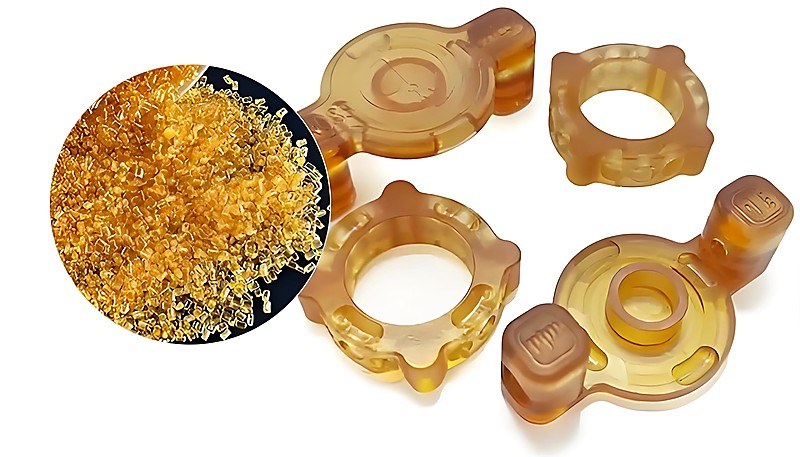
TPU performs exceptionally well too, especially in the 190-220°C range. The thermoplastic⁴ elastomer nature means you get some chemical welding along with mechanical bonding. Nylon (PA6 and PA66) works great but requires more precise control — you’re processing at 260-290°C, and the hygroscopic nature means moisture content affects bond quality significantly.
ABS and PC both overmold well onto themselves. ABS gives you that nice balance of processability and bond strength around 240-260°C. PC requires higher temperatures — 280-320°C — but delivers excellent optical clarity for applications where you need transparent overmolded features.
The difference between semi-crystalline and amorphous materials shows up in bond strength development. Semi-crystalline materials like PP and nylon rely more on mechanical interlocking as crystals form across the interface. Amorphous materials like ABS and PC create more molecular entanglement without crystalline structure interference.
Materials that give us headaches include PEEK — the processing temperature is so high (380-400°C) that controlling substrate temperature becomes extremely challenging. POM has a narrow processing window and tends to degrade if you overheat it trying to get good bonding.
What Are the Advantages of Overmolding the Same Material?
The advantages of overmolding the same material are the main categories or options explained in this section. Perfect chemical compatibility tops the list — you’ll never get delamination from coefficient of thermal expansion mismatches or chemical incompatibility. When both materials are identical, they expand and contract at exactly the same rate through temperature cycles. We’ve seen multi-material overmolded parts fail at the bond line after thermal cycling, but same-material overmolding eliminates that failure mode completely.
Material sourcing becomes incredibly simple. You’re managing one resin type, one supplier relationship, one set of material certifications. No compatibility testing between different polymer grades, no worries about contamination if materials mix in the hopper or during changeovers.
Recyclability is perfect — you’ve got a uniform material stream at end-of-life. Mixed-material overmolded parts often end up in landfills because separating the materials for recycling isn’t economically viable. Same-material parts go straight into the recycling stream with their material code.
You can achieve dramatic color and texture variations on a single part. Imagine a black PP base with bright red PP overmolded grip zones, or smooth surfaces with overmolded textured areas for ergonomics. The design possibilities are extensive when you’re not constrained by material compatibility.
Tooling costs stay lower than multi-material overmolding because you don’t need specialized features for bonding dissimilar materials. No chemical etching, no mechanical undercuts for TPU adhesion — just clean geometry and proper gating.
What Are the Limitations of Same-Material Overmolding?
The limitations of same-material overmolding are the main categories or options explained in this section. Bond line visibility can be a cosmetic nightmare, especially with transparent or light-colored materials. Even with perfect processing, you often see a slight line where the second shot interfaces with the substrate. This isn’t a structural problem, but it kills the aesthetics for high-end consumer products where you want seamless appearance.
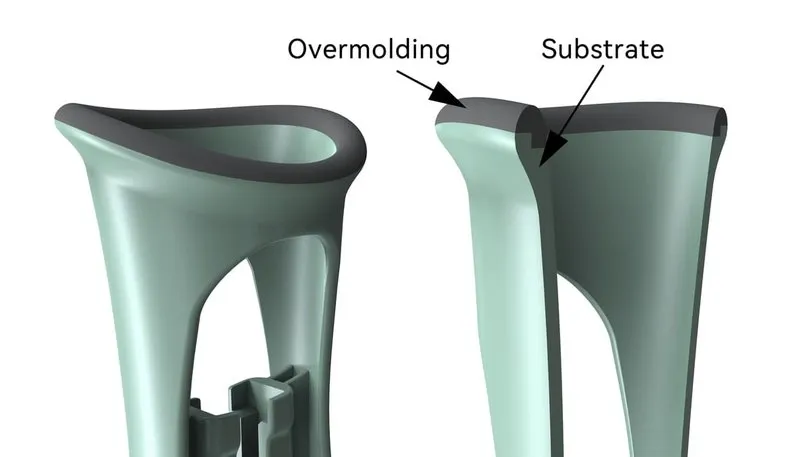
You cannot combine rigid and soft properties in the same part. If your application needs a hard structural core with soft-touch grip zones, same-material overmolding won’t deliver. You’re stuck with the mechanical properties of your base polymer — all rigid or all flexible, just in different thicknesses or configurations.
Process control becomes extremely critical, particularly substrate temperature management. The window between “too cold for good bonding” and “too hot, causing substrate deformation” can be narrow. We’ve seen parts where the substrate temperature varied 10°C across the part, creating inconsistent bond strength that led to field failures.
Second-shot cooling can warp or stress the substrate if you don’t control it properly. The volumetric shrinkage of the second shot creates internal stresses that can pull the substrate out of specification. This is especially problematic with thin-walled substrates or parts with tight dimensional requirements.
Complex geometry with deep undercuts or internal features may not achieve uniform bonding. The second shot needs to flow and contact all intended bond surfaces at proper temperature — geometries that create cold spots or flow restrictions will have weak zones that fail prematurely.
"Same-material overmolding eliminates the risk of chemical incompatibility between the substrate and overmold layers."True
Since both layers use the same polymer chemistry, there is no risk of delamination from material mismatch — a common failure mode in multi-material overmolding.
"Same-material overmolding requires no process adjustments compared to single-shot injection molding."False
The second shot must be carefully timed and temperature-controlled. Substrate temperature, injection speed, and cooling rate all affect bond quality significantly.
When Should You Choose Same-Material Over Multi-Material Overmolding?
Choose same-material overmolding when your goal is cosmetic differentiation or structural reinforcement without changing mechanical properties. If you need color zones, texture variations, or thickness build-up while maintaining uniform chemical resistance, thermal properties, and recyclability, same-material is your answer.
Same-material wins for applications like multi-color consumer electronics, textured grip zones on rigid tools, or structural reinforcements in automotive clips. Think about a PP automotive door handle where you need extra thickness in stress concentration areas — same-material overmolding lets you add material exactly where needed.
Multi-material overmolding wins when you need fundamentally different material properties. Soft grips over rigid cores, sealing applications, vibration damping, or electrical isolation all require different polymers with different characteristics.
From a cost perspective, same-material overmolding is almost always cheaper to tool and run. Simpler material handling, no compatibility testing, lower tooling complexity, and easier process development. What we find in practice is that same-material jobs typically have 15-25% lower tooling costs and 10-15% lower piece part costs compared to equivalent multi-material applications.
How Do You Design Parts for Same-Material Overmolding?
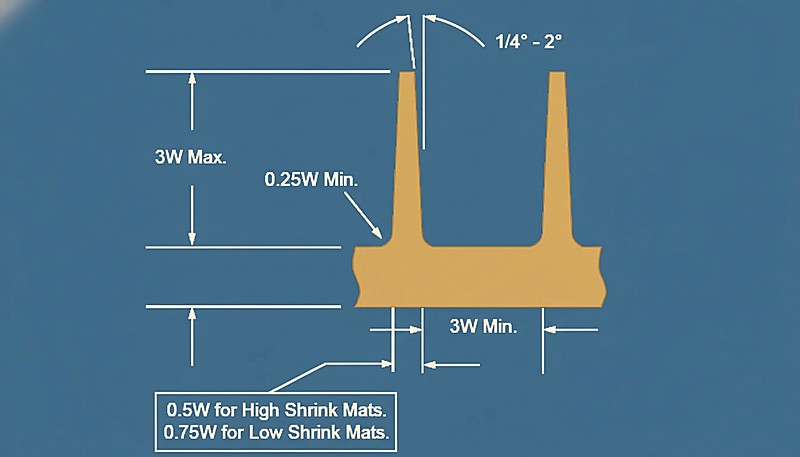
This section is about design parts for same-material overmolding and its impact on cost, quality, timing, or sourcing risk. To design parts for same-material overmolding, focus on wall thickness ratios, adequate bond area, and gate placement for the second shot. Wall thickness ratios matter tremendously in same-material overmolding design. Keep your second-shot wall thickness between 50-150% of the substrate wall thickness. Too thin and you get incomplete filling or weak bonds, too thick and you get excessive shrinkage that warps the substrate. For most applications, we target the second shot at 80-120% of substrate thickness.

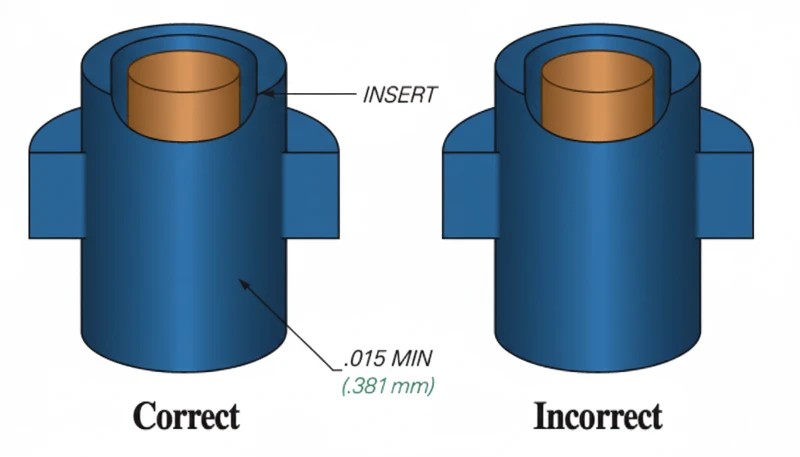
Bond area design requires careful attention to flow patterns and contact pressure. Avoid sharp internal corners where the second shot meets the substrate — these create stress concentrations and often trap air. Use radii of at least 0.5mm at all bond transitions. Design adequate bond overlap — minimum 2mm in the flow direction for reliable adhesion.
Gating strategy for the second shot determines bond quality more than any other single factor. Gate location affects how the melt contacts the substrate and what temperature it maintains during filling. We typically gate as close to the bond area as possible while avoiding cosmetic issues on visible surfaces.
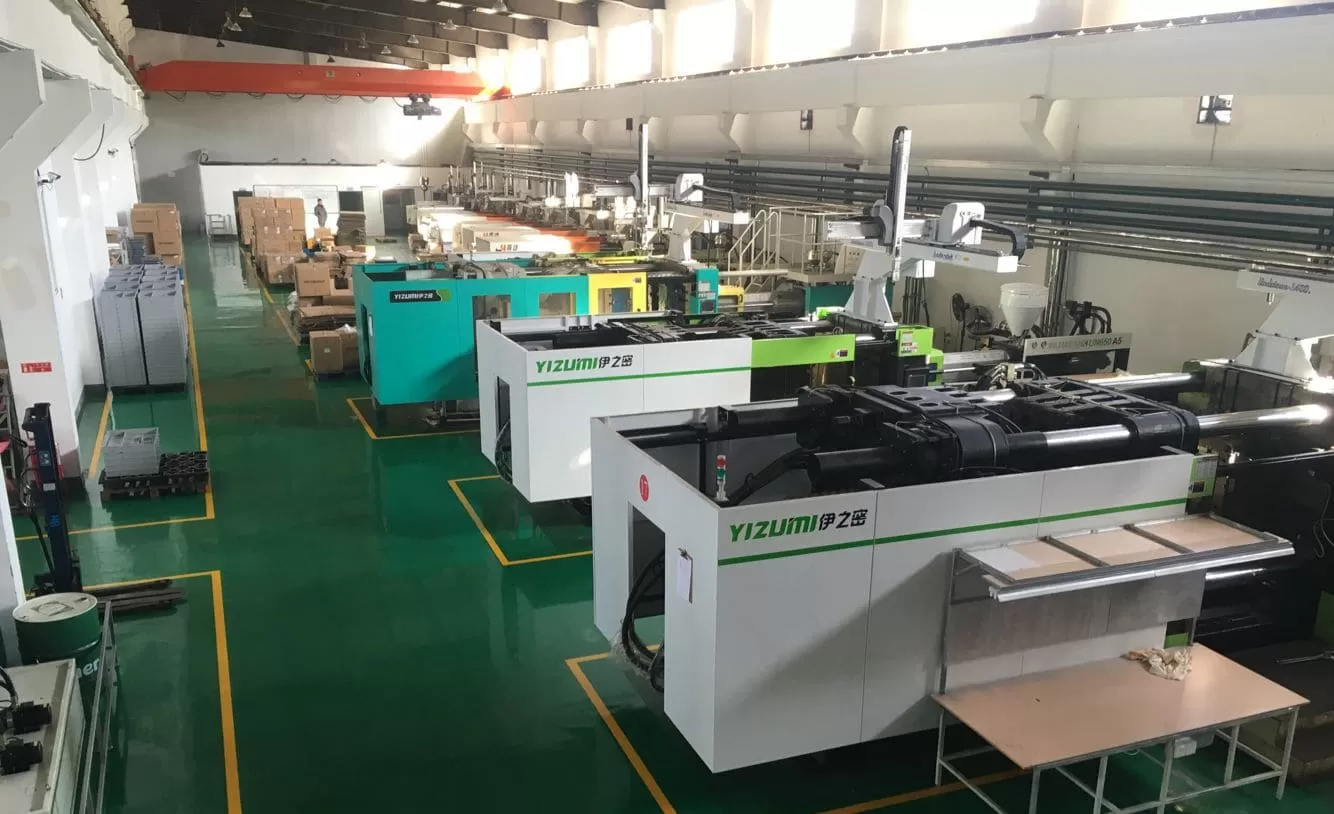
In our Shanghai factory, we run 47 injection molding machines from 90T to 1850T, with experience across 400+ plastic materials — including same-material overmolding projects for consumer and industrial applications.
Tolerance stack-up across two shots requires careful analysis. Each shot introduces dimensional variation, and the second shot can shift or distort the substrate. Build tolerance budgets that account for both shots, and specify critical dimensions to be controlled by the final shot when possible. Venting becomes critical — trapped air at the bond line creates weak spots that look fine initially but fail under stress.
Frequently Asked Questions
Can you overmold the same material without using an adhesive?
Absolutely — that’s the beauty of same-material overmolding. When you inject molten polymer onto a substrate of identical material, thermal bonding occurs naturally through molecular chain entanglement at the interface. No adhesive, primer, or surface treatment is required. The hot melt literally fuses with the substrate surface as polymer chains interweave during cooling. This creates bond strengths approaching 85-95% of the parent material strength when processing parameters are optimized correctly. The key is maintaining proper melt temperature, substrate temperature, and contact pressure during the bonding phase.
What is the difference between same-material overmolding and two-shot molding?
Same-material overmolding is actually a subset of two-shot molding. Two-shot molding is the broader category that includes any process where you inject two separate shots to create one part — this could be different materials like rigid ABS over soft TPU, or identical materials like PP over PP. Same-material overmolding specifically refers to two-shot processes using identical polymer chemistry in both shots. The tooling, transfer mechanisms, and basic process are the same, but same-material overmolding eliminates compatibility concerns and creates fully recyclable single-polymer parts. Processing is often simpler because you don’t need specialized bonding features for dissimilar materials.
Which thermoplastics bond best when overmolded onto themselves?
Polypropylene leads the pack — it bonds exceptionally well to itself across a wide processing window and dominates consumer applications like toothbrushes and food containers. TPU performs excellently too, with its elastomeric nature creating both chemical and mechanical bonding. Nylon (PA6/PA66) delivers strong bonds but requires precise moisture control. ABS offers good processability and bond strength for engineering applications. PC works well for optical parts requiring transparency. Materials that challenge us include PEEK (extremely high processing temperatures) and POM (narrow processing window prone to degradation). Semi-crystalline materials like PP and nylon rely on mechanical interlocking, while amorphous materials like ABS focus on molecular entanglement.
Is same-material overmolding more cost-effective than multi-material overmolding?
Yes, typically by a significant margin. Same-material overmolding eliminates compatibility testing, simplifies material sourcing to one supplier relationship, and reduces tooling complexity since you don’t need specialized bonding features. In our experience, tooling costs run 15-25% lower and piece part costs are 10-15% lower compared to equivalent multi-material applications. Material handling is simpler — no contamination concerns during changeovers, no separate drying systems for different polymers. Quality control is easier since you’re not monitoring bond strength between dissimilar materials. The main trade-off is functional limitation — you can’t achieve rigid/soft combinations that multi-material overmolding delivers, but for color, texture, and structural applications, same-material wins on cost every time.
Can you achieve different colors when overmolding the same material?
Absolutely — color differentiation is one of the most common applications for same-material overmolding. You can create striking multi-color effects using identical base polymers with different colorants. Think black PP substrates with bright red PP overmolded grip zones, or clear PC bases with colored PC accent features. The polymer chemistry remains identical, so bonding is excellent, but visual impact can be dramatic. You need separate hoppers and hot runners for each color, and changeover between colors requires purging, but the process is straightforward. We’ve produced everything from multi-color toothbrushes to automotive interior trim using this approach. The key is planning your color sequence to minimize material waste during transitions and ensuring colorant compatibility within the base polymer system.
Does same-material overmolding require special tooling?
Yes, but less specialized than multi-material overmolding. You need two-shot or rotary tooling to transfer the substrate between shots, separate injection units, and precise temperature control systems. However, you don’t need the specialized bonding features required for dissimilar materials — no chemical etching stations, no mechanical undercut geometries for TPU adhesion, no complex surface treatments. The tooling focuses on clean transfer mechanisms, proper gating for both shots, and thermal management to control substrate temperature during the second shot. Core rotation or slide mechanisms handle the transfer, and hot runner systems manage independent injection timing. What we find in practice is that same-material tooling is 15-25% less complex than multi-material equivalents, translating directly to lower tooling costs and shorter development cycles.
How does same-material overmolding affect part recyclability?
Same-material overmolding creates perfectly recyclable parts since the entire component consists of one polymer type. Unlike multi-material overmolded parts that often end up in landfills due to separation challenges, same-material parts go directly into standard recycling streams with their material identification code. There are no compatibility issues in the recycling process — the ground regrind behaves like virgin material of that polymer type. This is becoming increasingly important as manufacturers face sustainability requirements and extended producer responsibility regulations. Many of our automotive customers specifically choose same-material overmolding for interior components to meet end-of-life vehicle recycling targets. The environmental impact is significantly lower than multi-material alternatives, and recycling facilities don’t need to invest in separation technologies for mixed-polymer components.
Need a Reliable Partner for Your Overmolding Project?
ZetarMold’s engineering team can help you evaluate whether same-material or multi-material overmolding is right for your application — with DFM feedback, tooling design, and production support under one roof. Get a free quote and process recommendation →
thermal bonding: thermal bonding refers to is the process where two layers of the same molten polymer fuse together at the molecular level through interfacial chain entanglement. ↩
injection molding: Injection molding is a manufacturing process that injects molten plastic into a mold cavity to produce shaped parts at high volume. ↩
overmolding: Overmolding is a two-shot injection molding process where a second material layer is applied over a previously molded substrate. ↩
injection mold: An injection mold is a precision tool that defines the geometry, surface finish, and structural features of a molded plastic part. ↩
thermoplastic: A thermoplastic is a polymer that becomes pliable above a specific temperature and solidifies upon cooling, allowing repeated melting and reshaping. ↩