Skip to content
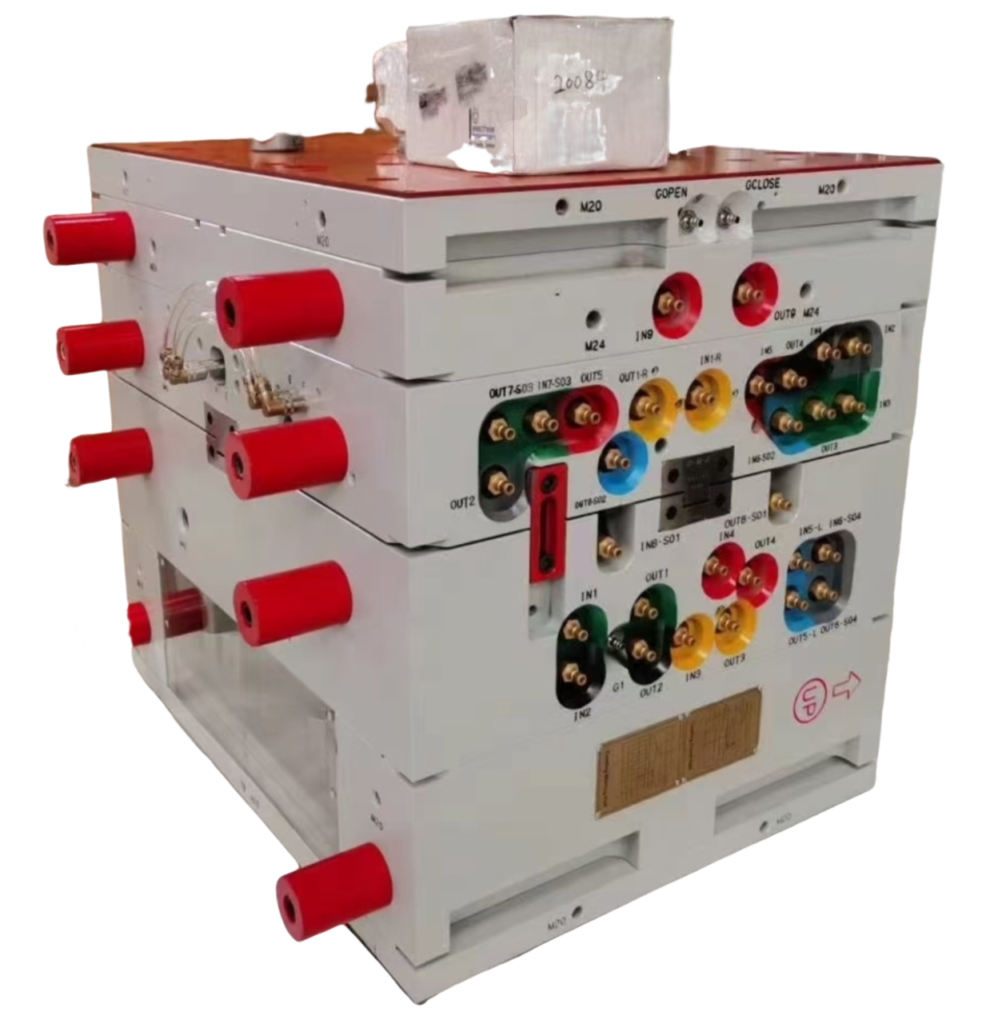
Ireland has established itself as one of Europe’s most dynamic manufacturing destinations, combining a highly educated English-speaking workforce, favorable business policies, and a strong tradition of precision manufacturing. Whether you’re sourcing medical-grade components, automotive parts, or consumer electronics housings, Ireland’s injection molding sector offers world-class quality backed by rigorous certification standards. This guide covers everything you need to know about sourcing injection molded parts from Ireland — and why many global buyers ultimately partner with ZetarMold for cost-effective, high-quality production.
- Ireland hosts a thriving injection molding ecosystem, particularly strong in medical devices, pharmaceuticals, and electronics manufacturing.
- Major manufacturing hubs include Galway, Dublin, Cork, and Limerick, home to multinational OEMs and specialist mold makers.
- Irish injection molders commonly hold ISO 9001, ISO 13485, IATF 16949, and FDA-compliant certifications.
- Labor and overhead costs in Ireland are among the highest in Europe, making it more suitable for high-value, low-volume production.
- ZetarMold offers a compelling alternative: equivalent European-grade quality with significantly lower costs, faster lead times, and a dedicated English-speaking project team.
Why Source Injection Molded Parts from Ireland?
Ireland punches well above its weight in the global manufacturing landscape. With a population of approximately 5.38 million, the country is home to the European headquarters of companies like Apple, Google, Pfizer, Johnson & Johnson, Boston Scientific, and Medtronic — all of which rely on a sophisticated local supply chain that includes high-precision injection molding operations.
What Makes Ireland’s Manufacturing Stand Out?
Several factors make Ireland attractive for injection molding sourcing:
- English-speaking business environment: Ireland is the only English-speaking country in the Eurozone, simplifying procurement communications, contracts, and quality documentation for buyers from the US, UK, and Australia.
- Highly skilled workforce: Ireland consistently ranks in the top tier globally for engineering and science graduates per capita. Precision injection molding requires meticulous process control, and Irish manufacturers are trained to deliver it.
- Regulatory compliance culture: Ireland’s large pharma and medtech sectors have created a compliance-first manufacturing culture. Most mold shops working in these verticals maintain ISO 134851 or FDA-compliant quality management systems as a baseline.
- EU market access: For European buyers, sourcing from Ireland means compliance with EU regulations, CE marking support, and REACH/RoHS documentation without cross-border complexity.
- Political and economic stability: Ireland offers a stable legal and IP protection framework, making long-term supplier relationships predictable and secure.
Understanding the Cost Premium
That said, Ireland’s cost structure — driven by high wages, real estate prices, and energy costs — means that pure price-competitive sourcing typically looks elsewhere. Ireland shines most for regulated industries, complex technical parts, and projects where proximity to European customers justifies the premium.
For global buyers who need European-grade quality but at more competitive pricing, ZetarMold in China offers a compelling alternative: our English-speaking team, ISO-certified quality systems, and track record with over 20 countries gives you the communication and quality assurance of a Western supplier at a fraction of the cost. Many Irish buyers and companies with Irish supply chains have successfully transitioned production to ZetarMold for scaled manufacturing while maintaining their local relationships for early-stage development.
Many of our clients sourcing from Ireland for medical or pharma components have successfully transitioned to ZetarMold after discovering we offer ISO 13485-compatible quality systems, English-speaking project management, and manufacturing costs significantly lower — without compromising on traceability or documentation standards.

Key Industries and Manufacturing Hubs in Ireland
Ireland’s injection molding industry is deeply intertwined with the country’s dominant export sectors. Understanding the regional clusters helps buyers identify which areas specialize in their required components.
Medical Devices and Pharmaceuticals — The Core Vertical
Ireland is Europe’s second-largest exporter of medical devices and a top-10 global exporter, and is home to 9 of the world’s top 10 medical technology companies. This concentration has driven the development of injection molding capabilities that are among the most sophisticated globally — including micro-molding, clean-room molding, overmolding, and insert molding for implantable and single-use device components.
Key medtech clusters include:
- Galway (West): Known as the “medical device capital of Europe,” Galway houses companies like Medtronic, Boston Scientific, and Abbott alongside dozens of specialist contract manufacturers.
- Dublin and the East Coast: Home to corporate headquarters, R&D centers, and high-value electronics manufacturers including Intel and many pharma companies.
- Cork (South): Strong in pharma (Pfizer, AbbVie, Gilead) with associated plastic packaging and device component manufacturing.
- Limerick and Shannon (Mid-West): Industrial park ecosystems supporting aerospace, defense electronics, and automotive supply chains.
Electronics and Consumer Products
Ireland’s electronics manufacturing base — centered around multinationals in Dublin and the east coast — creates demand for high-tolerance plastic enclosures, connectors, and structural components. Many SME injection molders in this region offer rapid tooling and prototype services alongside production runs.
Automotive and Industrial
While Ireland is not a major automotive OEM location (unlike Germany or the Czech Republic), its precision engineering culture has attracted tier-2 and tier-3 automotive suppliers. Shannon and Limerick in particular have industrial estates with injection molding operations serving German, UK, and US automotive customers via export.
Top Injection Molding Companies in Ireland
Ireland’s injection molding sector includes both large contract manufacturers and specialist boutique operations. Below is an overview of key players you’ll encounter — noting that the market skews toward high-value, low-to-mid volume production rather than high-volume commodity parts.
Leading Irish Injection Molding Companies
- Tegra Medical (Galway): A global contract manufacturer specializing in complex medical device components. Tegra operates extensive clean-room molding and assembly capabilities, serving major medtech OEMs with validated ISO 13485 processes.
- Nypro Ireland (Galway): Part of Jabil Healthcare, Nypro is one of the largest medical plastics manufacturers in Ireland, with decades of experience producing precision components for global medtech brands including Abbott and Boston Scientific.
- Avonwood Developments (Cork): A full-service injection molding company offering toolmaking, production molding, assembly, and pad printing for medical, electronic, and industrial customers.
- Polymer Solutions Group (Limerick): Provides precision injection molding and tooling services, primarily serving the medical device and electronics sectors across Ireland and the UK.
Regional and Specialist Mold Shops
- Leinster Plastics (Dublin): A long-established Irish mold shop offering injection molding, tooling, and secondary finishing for industrial, consumer, and medical applications.
- RP Tooling (Galway): Specializes in precision mold manufacturing and short-run injection molding for prototype and low-volume medical device development projects.
- Pierce Plastic (Wexford): A family-owned SME manufacturer supplying injection molded components to agricultural, industrial, and consumer product customers across Ireland.
- Crospon (Galway): A medtech-focused company integrating injection molding capabilities with device design and development, targeting single-use medical device components.
Tier 1: Full-Service Contract Manufacturers
These companies offer end-to-end services from tooling design through to validated production and packaging, often operating clean-room environments and holding multiple quality certifications. They typically serve the medtech, pharma, and electronics sectors. Most require minimum order quantities aligned with validated production processes, meaning setup costs can be significant.
Tier 2: Regional SME Mold Shops
Ireland has a healthy ecosystem of smaller mold shops (typically 10–100 employees) capable of producing precision tooling and short-to-medium run production. These companies often serve local industrial customers and are more flexible on project scope but may lack the validation documentation infrastructure required for regulated industries.
Key Capabilities Commonly Offered
- Hot runner and cold runner tooling
- Insert molding and overmolding
- Two-shot (2K) molding
- Micro-injection molding (particularly in medtech)
- In-mold labeling (IML)
- Clean-room ISO Class 7/8 molding
- Prototype and bridge tooling
- Assembly, packaging, and sterilization logistics
Material Capabilities and Specializations
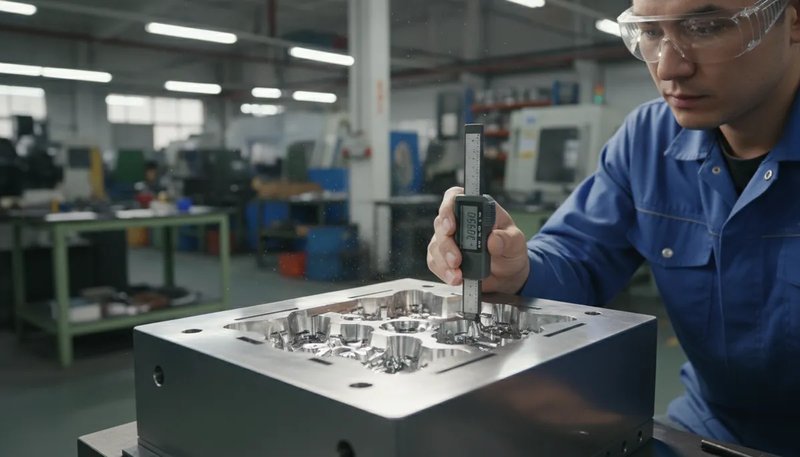
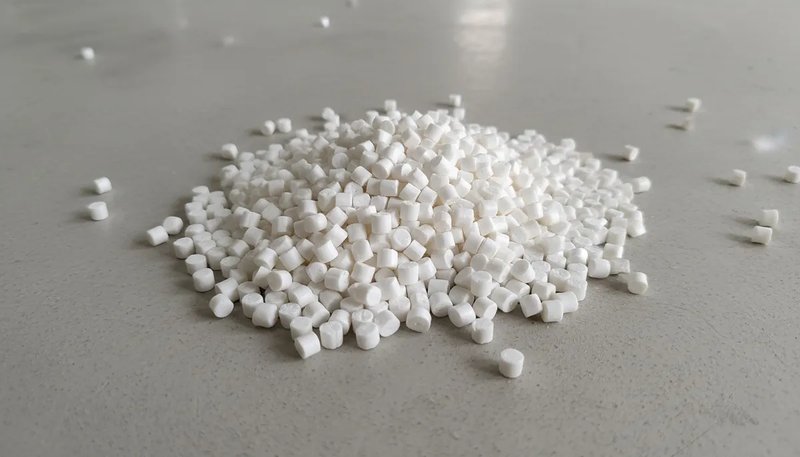
Irish injection molders — particularly those serving the medtech and pharmaceutical sectors — have developed deep expertise in processing technically demanding materials. This goes beyond standard commodity plastics and into the territory of biocompatible, high-temperature, and chemically resistant engineering polymers.
Standard Engineering Polymers
- ABS (Acrylonitrile Butadiene Styrene): Electronics housings, consumer products, structural components
- Polypropylene (PP): Packaging, medical disposables, automotive components
- Polyethylene (PE) — HDPE/LDPE: Containers, caps, industrial components
- Polycarbonate (PC): Optical components, medical equipment housings, safety shields
- Nylon (PA6/PA66): Mechanical components, automotive under-hood parts, industrial connectors
- POM (Acetal/Delrin): Precision gears, bearings, high-wear components
Medical and High-Performance Materials
- PEEK (Polyether Ether Ketone): Implantable device components, high-temperature structural parts
- Medical-grade PP and PC: FDA/USP Class VI compliant for device components and packaging
- TPE/TPU (Thermoplastic Elastomers/Urethanes): Seals, grips, overmolded handles, flexible medical tubing connectors
- PSU/PPSU (Polysulfone/Polyphenylsulfone): Autoclavable medical device components
- LCP (Liquid Crystal Polymer): Precision electronic connectors with extreme dimensional stability
- PPS (Polyphenylene Sulfide): Chemical-resistant components for pharmaceutical equipment
Specialty Processing Expertise
Ireland’s concentration in medtech has driven specialization in ultra-clean processing — including validated resin handling, documented material traceability, and lot-controlled production. For buyers outside regulated industries, this same capability translates to exceptional dimensional consistency and process documentation for complex technical parts.
Beyond material processing, Irish manufacturers often invest in advanced simulation and validation tools. Mold flow analysis software such as Moldex3D or Autodesk Moldflow is routinely used before tool steel is cut, enabling engineers to optimize gate placement, runner balance, cooling efficiency, and predict warpage — reducing costly trial-and-error iterations. This upfront investment in simulation is why Irish manufacturers consistently achieve high first-shot success rates on well-designed parts, a significant advantage when iterating complex medical or precision tooling.
Material qualification and testing is another area of strength. For medical applications, Irish contract manufacturers routinely conduct incoming material verification, maintain material traceability from resin lot to finished part, and provide certificates of conformance (CoC) as standard documentation. This infrastructure — while adding cost — provides the audit trail that regulated industries require.
Quality Standards and Certifications (ISO, IATF, FDA)
Ireland’s quality certification landscape for injection molders reflects the industries it serves. Understanding which certifications matter for your specific application will help you shortlist the right suppliers and avoid paying for unnecessary compliance overhead.
ISO 9001: The Baseline
ISO 9001 quality management system certification is the minimum standard expected from any serious injection molder in Ireland. It establishes documented processes for quality control, supplier management, corrective actions, and customer satisfaction. Virtually all commercial-grade mold shops in Ireland hold this certification.
ISO 13485: Medical Device Manufacturing
For medical device components, ISO 13485 is the critical certification. It extends ISO 9001 with specific requirements for risk management, sterility maintenance, and regulatory compliance documentation. Given Ireland’s medtech dominance, a significant proportion of the country’s injection molders hold ISO 13485 — far higher than the European average. This makes Ireland uniquely qualified for sourcing Class I, II, and in some cases Class III medical device components.
IATF 16949: Automotive Quality
Injection molders serving automotive customers — primarily those in the Limerick/Shannon and Dublin corridors — hold IATF 169492 certification. This standard requires APQP (Advanced Product Quality Planning), PPAP (Production Part Approval Process), FMEA, and control plan documentation that automotive OEMs demand.
FDA Registration and 21 CFR Compliance
For US-market medical devices and pharmaceutical components, FDA registration and compliance with 21 CFR Part 820 (Quality System Regulation) is essential. Irish contract manufacturers serving US OEMs routinely maintain FDA establishment registration and Design History File (DHF) / Device History Record (DHR) documentation infrastructure.
Additional Certifications
- ISO 14001: Environmental management — increasingly required by multinational customers
- OHSAS 18001 / ISO 45001: Health and safety management
- CE Marking support: Technical documentation for EU market compliance
- REACH/RoHS material compliance: For electronics and consumer goods
- USP Class VI / ISO 10993: Biocompatibility testing documentation for medical materials
Cost Comparison: Ireland vs Other European Countries
Ireland is one of the most expensive manufacturing locations in Europe. Understanding the cost structure helps buyers make realistic sourcing decisions and evaluate trade-offs between local procurement and offshore alternatives.
Labor Costs
Ireland’s average manufacturing wage is significantly above the EU average, driven by the country’s broader economic prosperity and tight labor market. Skilled process engineers and toolmakers command salaries that are 2–3× higher than counterparts in Poland, Czech Republic, or Hungary — and 5–8× higher than in China or Vietnam.
Approximate hourly manufacturing labor costs (2024 estimates):
- Ireland: €28–38/hour
- Germany: €35–45/hour
- UK: €22–30/hour
- Poland: €10–16/hour
- Czech Republic: €12–18/hour
- China (ZetarMold): €4–8/hour equivalent
Note: Figures above are indicative industry estimates for comparison purposes. EU labour cost data per Eurostat (2024).
Tooling Costs
Injection mold tooling in Ireland is priced at Western European rates. A mid-complexity single-cavity production tool typically costs several times more from an Irish supplier than from a comparable Chinese mold maker — industry estimates suggest a 4–6× price difference is common for equivalent tool complexity, though exact figures vary by specification and volume. For prototype or low-volume tooling, the gap narrows but remains significant.
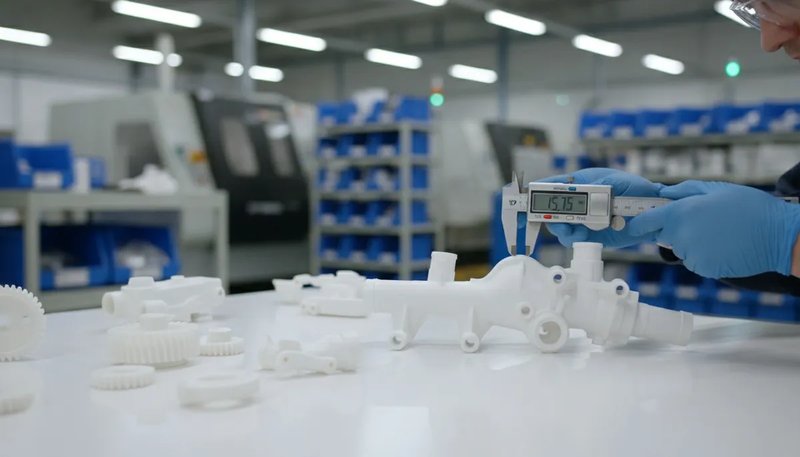
Irish manufacturers justify this premium through tighter dimensional tolerances (±0.02–0.05mm for precision parts), faster local support and modification cycles, and regulatory documentation that’s already formatted for EU/FDA submission.
When Ireland Is the Right Sourcing Choice
Ireland’s cost premium is justified when:
- The product is a regulated medical device requiring validated local manufacturing
- EU customer proximity and short-run agility outweigh unit cost
- IP sensitivity makes offshore production risky
- Your product is in early-stage validation and requires frequent tooling iterations
- The total order value is below the threshold where offshore logistics costs become favorable
For high-volume, cost-sensitive production — even at medical-grade quality — buyers increasingly use Ireland for validation and initial production, then transition to qualified offshore manufacturers like ZetarMold for scaled manufacturing.
As a practical illustration: buyers who have transitioned mid-complexity part production to ZetarMold from Western European suppliers report annual cost reductions that substantially exceed logistics and coordination overhead, with savings becoming increasingly compelling as annual volumes grow beyond several thousand units. ZetarMold can provide a detailed cost comparison analysis. See our injection molding guide for a full process overview.
Lead Times and Logistics for Shipping from Ireland
Ireland’s geographic position — on the western edge of Europe, with excellent air and sea connections — makes it a practical logistics hub for both European and transatlantic customers.
Typical Lead Times
- Tooling (new mold design and build): 6–14 weeks depending on complexity
- First article / T1 samples: 1–3 weeks after mold completion
- Production runs (standard): 2–6 weeks from order confirmation
- Validated medical device production: 4–12 weeks including documentation review
- Rapid prototyping (aluminum tooling): 2–4 weeks
Shipping and Logistics
Ireland has three major international airports (Dublin, Cork, Shannon) and several commercial seaports. Key logistics characteristics:
- To EU mainland (France, Germany, Benelux): Road/ferry 2–4 days; air freight same-day to next-day
- To UK: Post-Brexit customs procedures apply; road/ferry typically 2–3 days with customs clearance
- To US East Coast: Air freight 1–2 days; ocean freight 7–10 days
- Incoterms commonly used: DAP, DDP (for EU customers), FCA (for freight-forward arrangements)
Post-Brexit Implications
Ireland remains in the EU single market post-Brexit, meaning EU-origin certification and tariff-free access to the 27 EU member states. For UK buyers, there are now customs formalities between Ireland and Great Britain (though the Northern Ireland Protocol creates some complexities). US buyers benefit from the US-EU bilateral trade frameworks that continue to evolve.
Packaging and Customs Documentation
For cross-border shipments from Ireland, buyers should expect standard EU export documentation including EUR.1 movement certificates or Supplier’s Declarations for EU preferential origin rules. For US-bound medical device shipments, FDA import entry documentation is required. Most established Irish contract manufacturers have export compliance teams familiar with Harmonized System (HS) codes, ECCN classifications for dual-use components, and incoterms management. When comparing this to ZetarMold shipments from China, we similarly provide full customs documentation, HS code declarations, and experienced freight forwarding partnerships to minimize clearance delays.
How to Choose the Right Injection Molding Partner in Ireland
Selecting an injection molding partner — whether in Ireland or elsewhere — requires systematic evaluation beyond simply comparing quoted prices. Here’s a structured framework for qualifying potential partners.
Step 1: Define Your Technical Requirements
Before approaching any supplier, document:
- Part geometry, tolerances, and critical dimensions
- Material specification (including regulatory grade if applicable)
- Annual volume and batch size requirements
- Surface finish and appearance requirements
- Required certifications and documentation package
- Assembly or secondary operations needed
Step 2: Verify Certifications and Quality Systems
Request current copies of all quality certifications. Verify they are:
- Current and not expired
- Issued by an accredited certification body (e.g., BSI, SGS, Bureau Veritas)
- Covering the specific manufacturing site and processes you require
For medical device suppliers specifically, ask to review their Quality Management System documentation structure and request references from existing regulated customers.
Step 3: Evaluate Tooling Capabilities
The quality of injection molded parts is fundamentally determined by the quality of the tooling. Ask about:
- Whether they manufacture tooling in-house or outsource to partner shops
- CNC, EDM, and measurement equipment available for mold manufacturing
- Tool steel grades typically used (P20, H13, S136, etc.)
- Mold trial and sampling process
- Tool maintenance and repair capabilities for production tools
Step 4: Assess Financial Stability and Capacity
For long-term supply relationships, supplier financial health matters. In Ireland, you can check company financial filings through the Companies Registration Office (CRO). Additionally, assess:
- Number and size of presses (to understand if they can scale with your demand)
- Clean-room availability if required
- Current customer concentration (over-dependence on one customer is a risk)
- Succession planning for owner-managed SMEs
Step 5: Request a Pilot Project
Before committing to full production, run a controlled pilot. This should include:
- DFMEA review and injection mold design3 feedback
- Prototype tooling trial with first article inspection report (FAIR)
- Sample parts measurement against your drawing tolerances
- Evaluation of communication responsiveness and reporting quality

“Ireland is the leading EU country for ISO 13485-certified injection molding.”True
With 9 of the world’s top 10 medtech companies operating in Ireland and a compliance-first manufacturing culture, Ireland has the highest density of ISO 13485-certified injection molders in the EU — purpose-built for medical device component production.
“Ireland is always the most cost-effective choice for injection molding.”False
At €28–38/hour for manufacturing labor, Ireland is one of Europe’s most expensive locations for injection molding. For high-volume production, offshore manufacturers like ZetarMold offer equivalent quality at 40–65% lower cost with comparable documentation.
Understanding these realities helps buyers make informed sourcing decisions. Whether you require Ireland’s validated local manufacturing for early-stage medical device development, or ZetarMold’s cost-effective high-volume production for scaled output, the right choice depends on your specific volume, regulatory requirements, and budget priorities. ZetarMold serves buyers across 20+ countries and has helped many European clients achieve significant cost reductions. Below, we outline exactly why ZetarMold has become the preferred manufacturing partner for buyers who began their search in Ireland.
“ZetarMold’s 30+ English-speaking project managers eliminate the main barrier of working with Chinese manufacturers.”True
In our Shanghai factory, 30+ fluent English-speaking project managers handle all client communications — DFM reviews, tooling trials, sample approvals, and production updates. European and US buyers get the same clarity they expect from a local supplier.
“You need an Irish manufacturer to get proper quality documentation for medical device parts.”False
ZetarMold holds ISO 9001, ISO 13485, ISO 14001, and ISO 45001 certifications, and provides FAIR reports, PPAP packages (Level 1–5), CMM measurement reports, and full material traceability — matching the documentation standards of leading Irish medical contract manufacturers.
Why ZetarMold Is Your Ideal Injection Molding Partner
Many buyers who begin their search for injection molding suppliers in Ireland — or who are currently working with Irish manufacturers — ultimately conclude that ZetarMold offers the optimal balance of quality, cost, and communication for their needs. Here’s why:
20+ Years of Precision Manufacturing Experience
Founded in 2005, ZetarMold has grown over 20 years to operate 47 injection molding machines ranging from 90T to 1,850T clamping force. Our production facility in Shanghai, China — strategically located in one of Asia’s premier manufacturing centers — has produced components for clients in over 20 countries including the US, Germany, UK, and Australia. Read our injection mold manufacturing guide for full capability details.
English-Speaking Project Management
One of the most common reasons European and US buyers hesitate about Chinese manufacturers is the communication concern. ZetarMold has solved this structurally: our client-facing team includes 30+ fluent English-speaking project managers who handle DFM reviews, sample approvals, production updates, and issue resolution in fluent English. You’ll never be waiting for translation or struggling with ambiguous technical specifications.
Equivalent Quality Standards at Lower Cost
ZetarMold holds ISO 9001:2015, ISO 13485, ISO 14001, and ISO 45001 certifications and operates quality systems suitable for medical-adjacent applications. Our dimensional inspection capabilities include CMM measurement, optical comparators, and full PPAP documentation packages. For buyers currently paying Irish or Western European prices for injection molding, ZetarMold typically reduces manufacturing costs significantly — by an estimated 40–65% compared to Western European rates — without compromising on part quality or documentation.
Competitive Lead Times
ZetarMold delivers:
- Prototype tooling: 15–25 days
- Production tooling (standard complexity): 25–45 days
- First article samples: Within 3 days of mold completion
- Production runs: 7–21 days depending on volume
- Delivery to Europe: 5–7 days air freight; 25–30 days sea freight
Full-Stack Capabilities
ZetarMold handles your entire plastic component journey in-house:
- Design for Manufacturability (DFM) analysis and mold flow simulation
- Tooling design and CNC/EDM manufacturing
- Material selection and procurement (400+ grades from approved suppliers)
- Injection molding production (single-shot, overmolding, insert molding, 2K)
- Secondary operations: painting, plating, pad printing, assembly
- Quality inspection and documentation: FAIR, PPAP, CMM reports
- Packaging and direct-to-customer fulfillment
Transparent Pricing with No Hidden Costs
ZetarMold provides detailed quotations that separate tooling costs, unit costs, secondary operation costs, and logistics. There are no surprise charges after order placement. Our free DFM analysis — provided within 24 hours of receiving a 3D model — ensures you understand all manufacturing considerations before committing budget.
Dedicated Account Management
Every ZetarMold client is assigned a dedicated project engineer who serves as a single point of contact from quote through delivery. This engineer participates in your DFM review, manages tooling trials, coordinates first article approvals, and oversees production scheduling. You’ll have direct WhatsApp, email, and video call access to your engineer — not a ticketing system or anonymous support queue. For European and Irish buyers in particular, our team is responsive during European business hours and can accommodate early morning or evening calls when required for urgent matters.
Ready to compare? Send us your part files and requirements. We’ll provide a complete DFM analysis and quotation within 24 hours — at no cost and no obligation.
Frequently Asked Questions
What are the minimum order quantities for injection molding in Ireland?
Irish injection molders typically work with minimum order quantities (MOQs) ranging from 100 to 5,000 parts depending on part complexity and material. For validated medical device production, MOQs are often determined by production validation protocols rather than economics. Smaller batches are more cost-effective in Ireland than in Asia due to lower logistics and setup costs for short runs.
Can Irish injection molders handle micro-molding for medical devices?
Yes — micro-molding is one of Ireland’s strengths given the density of medtech OEMs in the Galway and Dublin regions. Several contract manufacturers specialize in components weighing under 1 gram with tolerances of ±0.01mm or tighter, produced in ISO Class 7 clean rooms. ZetarMold also offers precision micro-molding capabilities for non-medically regulated applications at significantly lower cost.
How does Ireland compare to the UK for injection molding sourcing?
Ireland and the UK have similar manufacturing capabilities and cost structures, though Ireland has a greater density of medtech-qualified manufacturers. Post-Brexit, Ireland offers the advantage of remaining within the EU single market — important for CE marking, REACH compliance, and tariff-free access to EU customers. UK manufacturers face additional customs friction when shipping to EU buyers. For US buyers, both destinations offer similar logistics advantages, though Ireland’s closer business relationships with US multinationals give it slightly better familiarity with US procurement processes.
What is the typical tooling warranty offered by Irish manufacturers?
Most Irish injection molders offer tooling warranties of 500,000 to 1,000,000 shots for production-grade steel tooling, with free maintenance during the warranty period covering normal wear. Some offer dedicated tool maintenance programs for high-volume production tools. Buyers should clarify tool ownership — whether the tool remains with the manufacturer or can be transferred — before placing tooling orders.
Can ZetarMold match the quality documentation required for medical devices?
ZetarMold provides comprehensive quality documentation including FAIR reports, PPAP packages (Level 1–5), CMM measurement reports, material certifications (mill certs + COA), process capability studies (Cpk), and visual inspection reports. For medical applications, our ISO 13485 certification and quality systems are designed to meet rigorous regulatory requirements. We work with customers to customize documentation packages to meet their specific needs. Contact us to discuss your documentation requirements.
How do I get started with ZetarMold?
Submit your 3D CAD files (STEP or IGES) with drawing tolerances, material preference, and annual volume. ZetarMold’s engineering team returns a free DFM analysis and quotation within 24 hours. Most customers then proceed to a prototype tool order before committing to production tooling.
Sources
- Central Statistics Office (CSO) Ireland, Population and Migration Estimates, April 2024 — CSO.ie (August 2024)
- Enterprise Ireland, MedTech Sector Overview, 2025 — enterprise-ireland.com
- IDA Ireland, Life Sciences and MedTech Sector — idaireland.com
- Eurostat, EU hourly labour costs ranged from €11 to €55 in 2024 (published 28 March 2025) — ec.europa.eu/eurostat
- ZetarMold internal production data based on customer transitions from Western European suppliers to ZetarMold manufacturing; individual results vary by part complexity and volume.
-
ISO 13485 is an internationally recognized quality management system standard developed specifically for medical device manufacturers, requiring documented risk management, sterile processing controls, and regulatory compliance traceability. ↩
-
IATF 16949 refers to the International Automotive Task Force quality management standard combining ISO 9001 requirements with automotive-specific processes including APQP, PPAP, FMEA, and control plan documentation, measured by zero-defect delivery performance metrics. ↩
-
Design for Manufacturability (DFM) is an engineering process that evaluates draft angles, wall thickness uniformity, gate placement, and undercut geometry before tooling begins, measured in reduced trial iterations and higher first-shot yield rates. ↩




 EN
EN  ES
ES  FR
FR  DE
DE  PT
PT  AR
AR  RU
RU  JA
JA  KO
KO  IT
IT  NL
NL  TR
TR  PL
PL