 Skip to content

– Follow a 5-step systematic process: define requirements → screen candidates → evaluate tradeoffs → test prototypes → finalize
– Define mechanical, thermal, chemical, and regulatory requirements before looking at materials
– Always test prototype parts under real-world conditions before committing to full production
– Consult your molder early—material and mold design decisions are deeply interconnected
Selecting the right material for injection molding can feel overwhelming when you’re faced with hundreds of resin options, each with different performance characteristics and cost implications. In our factory, we’ve seen too many projects run into costly problems because material selection was rushed or based on incomplete information. The wrong choice doesn’t just affect part performance—it impacts tooling costs, cycle times, reject rates, and your bottom line.
This step-by-step guide walks you through the exact process we use at ZetarMold to help clients choose the optimal material for their injection molded parts. Whether you’re developing a consumer product, automotive component, or medical device, this systematic approach ensures you consider all critical factors before committing to production tooling.
Step 1: How Do You Define Your Part’s Performance Requirements?
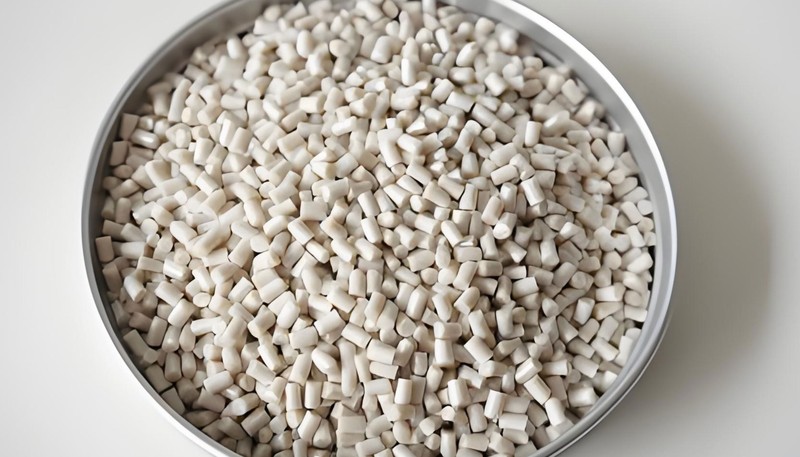
Before you even look at material options, you need to establish a comprehensive requirements profile. This is where most material selection processes fail—people jump straight to comparing materials without fully understanding what their part actually needs to do. In our experience working with clients across industries, taking time to thoroughly document requirements upfront prevents expensive mistakes later.
Start by gathering your cross-functional team: design engineers, quality specialists, manufacturing experts, and end-users if possible. Then systematically work through these requirement categories:
1.1 Mechanical Performance Requirements
Document the forces and stresses your part will experience throughout its lifecycle:
- Tensile strength: What pulling or stretching forces will the part endure?
- Impact resistance: Will it experience sudden shocks or drops?
- Flexural strength: Does it need to resist bending without breaking?
- Hardness: Must the surface resist scratching, abrasion, or indentation?
- Fatigue resistance: Will it undergo repeated stress cycles?
- Dimensional stability: How tight are the tolerances under load?
When we work with clients, we ask them to quantify these requirements with actual numbers whenever possible. “High strength” is subjective—”must withstand 5000 psi tensile stress” gives us concrete data to work with.
1.2 Thermal Environment Requirements
Temperature exposure dramatically affects material performance and lifespan:
- Operating temperature range: Minimum and maximum temperatures during normal use
- Continuous service temperature: The temperature the part will sustain for extended periods
- Short-term heat exposure: Brief temperature spikes (sterilization, welding, assembly processes)
- Thermal cycling: Will it repeatedly heat and cool?
- Heat deflection requirements: The temperature at which the part cannot deform under load
In our factory, we’ve seen parts that performed perfectly at room temperature fail catastrophically when exposed to automotive underhood conditions or outdoor winter temperatures. The Vicat softening point and heat deflection temperature are critical specifications that must align with your application.
1.3 Chemical and Environmental Exposure
Consider everything the part will contact during its service life:
- Cleaning agents and solvents
- Oils, fuels, or hydraulic fluids
- Acids or alkaline solutions
- UV radiation and weathering
- Moisture and humidity
- Salts or corrosive atmospheres
1.4 Regulatory and Compliance Requirements
Don’t overlook certifications that may limit your material choices:
- FDA approval: Required for food contact applications
- UL ratings: Necessary for electrical components (flammability ratings like UL94 V-0)
- Medical certifications: USP Class VI, ISO 10993 biocompatibility
- Automotive standards: OEM-specific material approvals
- RoHS/REACH: Environmental compliance for European markets
- Halogen-free: Required for certain electronics applications
1.5 Aesthetic and Tactile Requirements
For consumer-facing parts, appearance matters as much as performance:
- Surface finish quality (high gloss, matte, textured)
- Color requirements and stability
- Transparency or opacity needs
- Tactile feel (soft-touch, rigid, rubber-like)
- Printing or decorating compatibility
1.6 Manufacturing and Economic Constraints
Finally, establish your practical limitations:
- Target cost per part
- Annual production volume
- Required cycle time
- Part complexity and wall thickness
- Tolerance requirements
- Secondary operations (assembly, welding, inserting)
Create a requirements specification document that prioritizes these criteria. Mark which are absolute must-haves versus nice-to-haves. This document becomes your roadmap for the entire material selection process.
“✗ Common Mistake: Choosing a material based solely on mechanical strength without considering thermal requirements. We’ve seen automotive parts specified in standard ABS fail in summer heat because nobody documented the 80°C underhood temperature requirement upfront.”False
This is a common misconception we encounter regularly in our factory. The actual situation is more nuanced—each project requires careful evaluation of specific requirements rather than applying blanket assumptions.
“✓ Best Practice: Create a weighted requirements matrix that assigns importance scores to each criterion. This helps you make informed tradeoff decisions later when no single material meets all requirements perfectly.”True
This is accurate based on our extensive manufacturing experience at ZetarMold. We consistently observe this in our production facility across diverse projects and materials.
Step 2: How Do You Screen and Shortlist Candidate Materials?
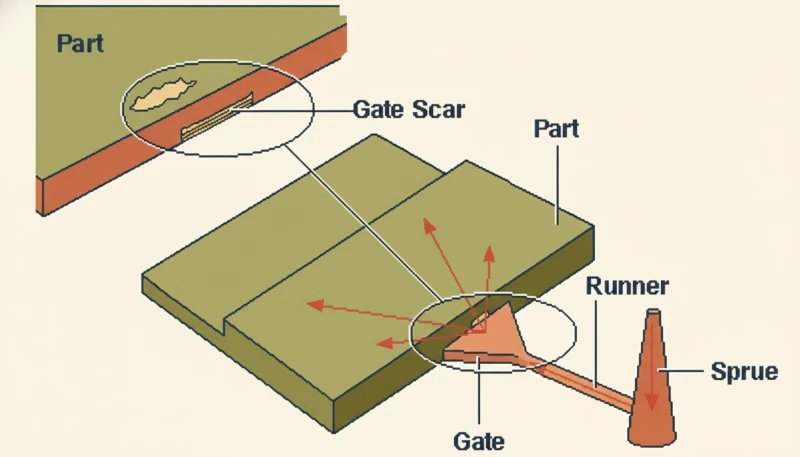
With your requirements clearly defined, you can now efficiently screen the universe of available materials down to a manageable shortlist. Rather than comparing hundreds of options, we use a systematic elimination process that quickly narrows the field to 3-5 viable candidates.
2.1 Start with Material Family Selection
Begin by identifying which broad polymer families can meet your requirements:
Commodity Plastics (cost-effective, high-volume applications):
- Polypropylene (PP): Chemical resistance, living hinges, good impact, low cost
- Polyethylene (PE): Flexibility, chemical resistance, moisture barrier
- Polystyrene (PS): Rigid, clear, low cost, brittle
- ABS: Good balance of properties, easy to process, paintable
- PVC: Chemical resistance, flame retardant, outdoor durability
Engineering Plastics (enhanced performance, moderate cost):
- Polycarbonate (PC): High impact, transparent, heat resistant
- Nylon (PA): High strength, wear resistance, chemical resistance
- Acetal (POM): Low friction, dimensional stability, fatigue resistance
- Modified PPE/PPO: Heat resistance, dimensional stability, flame retardant
High-Performance Plastics (extreme environments, premium cost):
- PEEK: Extreme temperature, chemical resistance, biocompatible
- PPS: Chemical resistance, high temperature, dimensional stability
- Liquid Crystal Polymer (LCP): High strength, precision molding, high temperature
- Fluoropolymers: Chemical inertness, low friction, high temperature
Specialty Materials:
- TPE/TPU: Rubber-like flexibility, overmolding applications
- Transparent materials: PMMA, PC, clear ABS, SAN
- Filled/reinforced: Glass-filled, mineral-filled, carbon-fiber variants
2.2 Apply Elimination Criteria
In our factory, we use these hard filters to eliminate unsuitable families:
- Temperature filter: Eliminate materials whose continuous service temperature is below your maximum operating temperature
- Chemical resistance filter: Remove materials known to degrade in your chemical environment
- Regulatory filter: Eliminate materials lacking required certifications (FDA, UL, medical)
- Cost filter: Remove materials that exceed your cost ceiling even at high volumes
2.3 Review Material Data Sheets
For remaining candidates, obtain detailed material data sheets (MDS) from resin suppliers. Compare these key properties against your requirements:
- Tensile strength and modulus
- Izod impact strength
- Heat deflection temperature (HDT) at 0.45 MPa and 1.8 MPa
- Water absorption rate
- Mold shrinkage range
- Processing temperature window
- Specific gravity (affects part weight and material cost)
2.4 Consider Material Grades and Variants
Most material families have dozens of specialized grades. For example, nylon comes in:
- Different types (PA6, PA66, PA12, PA46)
- Glass-fiber reinforced grades (15%, 30%, 50% glass)
- Impact-modified grades
- Heat-stabilized grades
- UV-stabilized grades
- Flame-retardant grades
- Food-grade formulations
When we work with clients, we typically shortlist 3-5 specific material grades that closely match the requirements profile. This focused list makes the detailed evaluation in Step 3 manageable.
2.5 Consult Your Injection Molder
Before finalizing your shortlist, engage your molder. We can tell you which materials we have experience processing, which cause molding challenges, and which might affect tooling costs. Some materials require special mold treatments, venting, or temperature control that impact project economics.
Step 3: How Do You Evaluate Material Tradeoffs and Total Cost?
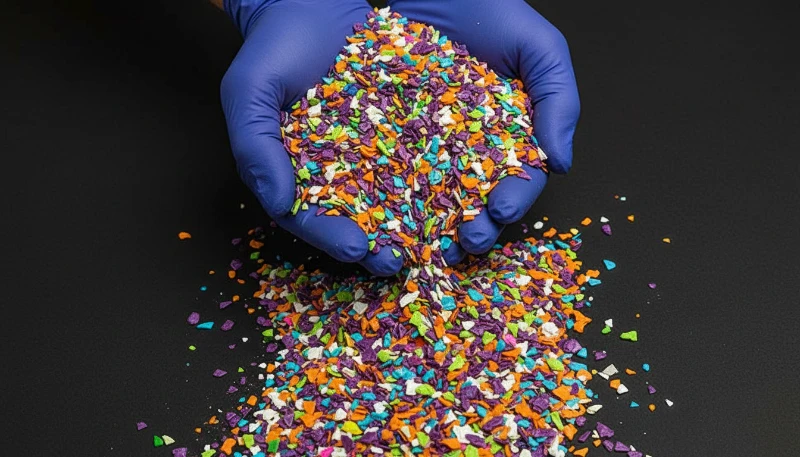
No material will perfectly satisfy every requirement. Step 3 is about making intelligent tradeoffs by understanding total project cost—not just resin price per pound. In our factory, we’ve seen clients choose expensive materials unnecessarily or cheap materials that drove up total part cost through increased cycle times and scrap rates.
3.1 Calculate True Material Cost Per Part
Material cost isn’t just resin price. Calculate the actual cost per part:
Formula: Cost per Part = (Part Weight + Runner/Sprue Weight) × Material Price per Pound / (1 – Scrap Rate)
Consider these factors:
- Material density: Lower density materials yield more parts per pound
- Shrinkage rate: Higher shrinkage may require thicker walls, increasing weight
- Regrind allowance: Some materials can incorporate 25-50% recycled runner material, others cannot
- Moisture sensitivity: Hygroscopic materials require drying equipment and energy costs
- Processing window: Difficult materials increase scrap rate during startup and production
3.2 Evaluate Processing and Cycle Time Impact
Material choice significantly affects manufacturing efficiency:
- Melt temperature: Higher temperature materials consume more energy
- Cooling time: Materials with higher heat deflection temperatures often require longer cooling, extending cycle time by 10-30%
- Injection pressure: High-flow materials reduce required tonnage, potentially allowing smaller machines
- Crystallization behavior: Semi-crystalline materials need controlled cooling to prevent warpage
When we calculate total part cost, a material that costs 20% more per pound but molds 15% faster often delivers lower total cost at production volumes.
3.3 Assess Tooling and Mold Design Implications
Material selection affects tooling in ways that impact your upfront investment:
- Mold steel selection: Abrasive glass-filled materials require hardened tool steel, increasing mold cost 15-40%
- Venting requirements: Some materials generate gases requiring special venting
- Gate design: Shear-sensitive materials need specific gate types and locations
- Cooling complexity: High-temperature materials may need conformal cooling or additional circuits
- Surface finish: Achieving high polish on glass-filled materials is difficult and expensive
3.4 Use a Weighted Decision Matrix
Quantify your tradeoff decisions with a structured scoring system. Here’s a simplified example we use with clients:
| Criterion | Weight (%) | PP | ABS | PC | Nylon 6/6 | POM |
|---|---|---|---|---|---|---|
| Mechanical Strength | 25% | 6 | 7 | 8 | 9 | 8 |
| Heat Resistance | 20% | 5 | 7 | 9 | 8 | 7 |
| Chemical Resistance | 15% | 9 | 6 | 5 | 8 | 9 |
| Cost Effectiveness | 20% | 9 | 8 | 5 | 6 | 6 |
| Processability | 10% | 9 | 8 | 7 | 6 | 7 |
| Surface Finish | 10% | 7 | 9 | 9 | 7 | 8 |
| Weighted Score | 100% | 7.25 | 7.40 | 7.15 | 7.75 | 7.60 |
In this example, Nylon 6/6 scores highest, but the margin is small. You’d continue to Step 4 testing both Nylon and POM to validate real-world performance.
3.5 Consider Supply Chain and Availability
Don’t overlook practical sourcing factors:
- Material availability and lead times
- Number of qualified suppliers (single-source risk)
- Lot-to-lot consistency and quality control
- Color matching capabilities and stability
- Minimum order quantities
- Long-term material stability (will it be available in 5 years?)
“✗ Common Mistake: Choosing materials based solely on material data sheet properties without considering processing characteristics. In our factory, we’ve struggled with materials that looked perfect on paper but were extremely difficult to mold consistently, driving up scrap rates and cycle times.”False
This is a common misconception we encounter regularly in our factory. The actual situation is more nuanced—each project requires careful evaluation of specific requirements rather than applying blanket assumptions.
“✓ Best Practice: Create a total cost model that includes material cost, cycle time, tooling amortization, scrap rate, and secondary operations. The cheapest material often isn’t the lowest total cost solution at production volumes.”True
This is accurate based on our extensive manufacturing experience at ZetarMold. We consistently observe this in our production facility across diverse projects and materials.
Step 4: How Do You Validate Your Material Choice Through Prototyping?

Never skip prototype validation. Material data sheets show standardized test results that may not reflect your actual part geometry, wall thickness, or use conditions. In our experience, prototype testing reveals issues that no amount of theoretical analysis can predict.
4.1 Produce Prototype Parts Using Production-Intent Processes
The most valuable prototypes are made using the same process you’ll use in production:
- Injection molded prototypes: Use a prototype mold or first article tooling in your candidate materials
- Match processing conditions: Use production-representative injection speeds, pressures, and cooling times
- Proper sample size: Produce at least 25-50 parts to assess part-to-part variation
- Document molding parameters: Record actual cycle time, injection pressure, melt temperature, and any processing challenges
When we run prototype molds, we deliberately vary processing parameters to understand the process window. A material with a narrow processing window will cause quality issues during production scaling.
4.2 Conduct Physical Property Testing
Test the actual parts, not just material coupons:
- Dimensional verification: Measure critical dimensions on multiple parts to confirm shrinkage predictions
- Mechanical testing: Perform tensile, impact, or flexural tests on parts (not just standard test bars)
- Stress testing: Load parts to 150% of expected service stress and monitor for failure
- Thermal testing: Expose parts to maximum operating temperature for extended periods
- Environmental testing: Subject parts to humidity, UV exposure, or chemical contact as appropriate
4.3 Perform Real-World Use Simulation
Nothing beats testing in actual application conditions:
- Install prototype parts in the assembly or system
- Operate under normal use conditions for the expected service life (accelerated if necessary)
- Include worst-case scenarios: temperature extremes, maximum loads, chemical exposure
- Monitor for unexpected failure modes, wear patterns, or degradation
- Gather user feedback on tactile qualities, appearance, and functionality
In our factory, we’ve discovered material issues during use testing that never appeared in lab tests—stress cracking under assembly loads, color shift from UV exposure, brittleness in cold temperatures.
4.4 Evaluate Assembly and Secondary Operations
Test how the material performs in your manufacturing process:
- Ultrasonic welding: Does the material weld cleanly without degradation?
- Heat staking or inserting: Can it accept metal inserts without cracking?
- Painting or printing: Does surface treatment adhere properly?
- Adhesive bonding: Do adhesives create adequate bond strength?
- Machining or finishing: Can you achieve required tolerances in post-molding operations?
4.5 Compare Side-by-Side If Undecided
Frequently Asked Questions
Can I change the injection molding material after the mold is already built?
Yes, you can switch materials after mold construction, but with important limitations. The new material must have similar shrinkage characteristics and flow properties to the original material—typically within 0.2-0.5% shrinkage variation. At ZetarMold, we’ve successfully helped clients transition from ABS to PC-ABS blends or from standard PP to glass-filled PP using existing tooling. However, switching from a low-shrinkage material like POM to a high-shrinkage material like PP may require mold modifications or result in dimensional issues. Always consult your mold manufacturer and run prototype testing before committing to a material change in production.
How long does the material selection process typically take for a new injection molding project?
A thorough material selection process typically takes 2-4 weeks for standard applications and 6-8 weeks for complex or regulated products. This timeline includes developing your requirements matrix (3-5 days), narrowing candidates through data analysis (1 week), prototype testing with 2-3 materials (2-3 weeks), and final validation. Rush projects can compress this to 1-2 weeks by running parallel prototype tests and leveraging existing material validation data. However, skipping proper material validation to save time often costs more in the long run through production issues, part failures, or costly mold modifications.
What are the most critical factors to consider when selecting an injection molding material?
The five most critical factors are mechanical performance requirements, environmental resistance, regulatory compliance, processability, and total cost. Mechanical requirements include tensile strength, impact resistance, and flexibility under operating conditions. Environmental factors cover chemical exposure, UV resistance, temperature extremes, and moisture absorption. For medical, automotive, or food-contact applications, regulatory compliance (FDA, UL, RoHS) is non-negotiable. Processability affects your cycle time and scrap rate—some engineering resins require precise temperature control and drying. Finally, evaluate total cost including material price, cycle efficiency, expected scrap rate, and secondary operations rather than just raw material cost per pound.
Should I always choose the highest-performance material available for my application?
No, over-specifying materials is one of the most common and expensive mistakes in injection molding. Choosing a high-performance engineering resin when a commodity plastic would suffice adds unnecessary cost to every part you produce. At ZetarMold, we regularly see projects where clients initially specify polycarbonate or nylon when polypropylene or ABS would meet all functional requirements at 40-60% lower material cost. Build your requirements matrix based on actual application demands, not theoretical worst-case scenarios. Use prototype testing to validate that your selected material meets real-world performance needs with appropriate safety margins—typically 20-30% above expected stress levels.
How do I balance material cost with part performance requirements?
Create a weighted requirements matrix that assigns importance values to each performance criterion based on actual application needs. A cosmetic housing might weight appearance and cost heavily (40% combined) while mechanical strength receives lower priority (15%). A structural component inverts these priorities. Calculate a total score for each candidate material by multiplying performance ratings by importance weights. This reveals whether a premium material’s performance gains justify its cost premium. Also consider design for manufacturability alternatives—adding ribs or adjusting wall thickness might allow a lower-cost material to meet strength requirements that otherwise would demand an expensive engineering resin.
What documentation should I maintain during the material selection process?
Maintain a comprehensive material selection file that includes your requirements matrix with weighted criteria, material data sheets for all candidates considered, prototype test results with actual measurements and photos, processing parameters from trial runs, cost analysis comparing material and processing costs, and the final selection justification. This documentation proves invaluable when questions arise months later about why a particular material was chosen, when scaling production to additional mold cavities, or when considering material substitutions due to supply chain issues. At ZetarMold, we archive this information for every project because it accelerates future projects with similar requirements and protects against institutional knowledge loss.
Summary
Selecting the right injection molding material is a systematic process that directly impacts your product’s performance, manufacturability, and profitability. By following a structured step-by-step approach—defining requirements through a weighted matrix, researching candidate materials using data sheets, validating choices through prototype testing, and planning for potential material transitions—you avoid costly mistakes and production delays. The material selection timeline typically spans 2-8 weeks depending on complexity, but this investment pays dividends throughout your product’s lifecycle. Remember that the “best” material isn’t always the highest-performance option; it’s the material that meets your specific requirements at the optimal balance of performance, processability, and cost.
At ZetarMold, we guide clients through material selection for hundreds of injection molding projects annually, from commodity plastic housings to specialized medical components. Our engineering team helps you build comprehensive requirements matrices, interprets material data in the context of real-world manufacturing, and conducts prototype testing to validate material performance before committing to production tooling. Whether you’re designing your first injection molded product or optimizing an existing part for better performance or cost, our material selection expertise ensures you start with the right foundation. Contact ZetarMold today to discuss your project requirements and leverage our decades of material selection experience to accelerate your path to successful production.
-
Material Data Sheet: A technical document provided by resin manufacturers that specifies physical, mechanical, thermal, and electrical properties of an injection molding material. These data sheets include critical processing information such as melt temperature ranges, mold temperature recommendations, drying requirements, and shrinkage rates. At ZetarMold, we maintain an extensive library of material data sheets and use them as the foundation for material selection, comparing candidate materials against your specific performance requirements to narrow options before prototype testing. ↩
-
Prototype Testing: The process of molding sample parts using candidate materials to validate real-world performance before committing to production. This testing phase evaluates how materials actually process in your specific part geometry, verifies mechanical properties under application-relevant conditions, and reveals potential issues with shrinkage, warpage, or surface finish. ZetarMold typically recommends prototype testing 2-3 final material candidates to make data-driven selection decisions rather than relying solely on material data sheet specifications. ↩
-
Design for Manufacturability: The practice of optimizing part design to improve injection molding efficiency, reduce defects, and lower production costs. DFM principles applied to material selection include adjusting wall thickness to accommodate material flow characteristics, adding ribs or gussets to allow lower-cost materials to meet strength requirements, and designing draft angles appropriate for the material’s shrinkage properties. At ZetarMold, our DFM analysis often identifies design modifications that enable successful production with more economical material choices. ↩
-
Shrinkage Rate: The percentage reduction in dimensions that occurs as molten plastic cools and solidifies in the mold cavity. Different materials exhibit different shrinkage rates—ranging from 0.2-0.6% for low-shrinkage materials like POM to 1.5-3.0% for semi-crystalline materials like PP and nylon. Understanding shrinkage rates is critical for accurate mold design and essential when considering material substitutions after mold construction. ZetarMold accounts for material-specific shrinkage during mold design and provides guidance on acceptable shrinkage variation ranges when clients consider switching materials. ↩




 EN
EN  ES
ES  FR
FR  DE
DE  PT
PT  AR
AR  RU
RU  JA
JA  KO
KO  IT
IT  NL
NL  TR
TR  PL
PL 