Skip to content
– 3D printing cannot fully replace injection molding for high-volume production due to speed, cost-per-part, and material limitations.
– For prototyping and runs under 100 parts, 3D printing is often faster and more cost-effective than injection molding.
– Injection molding delivers cycle times of 15–60 seconds per part, while 3D printing takes hours per part.
– Hybrid workflows that combine 3D-printed prototypes with injection-molded production parts offer the best of both worlds.
What Is the Real Difference Between 3D Printing and Injection Molding?
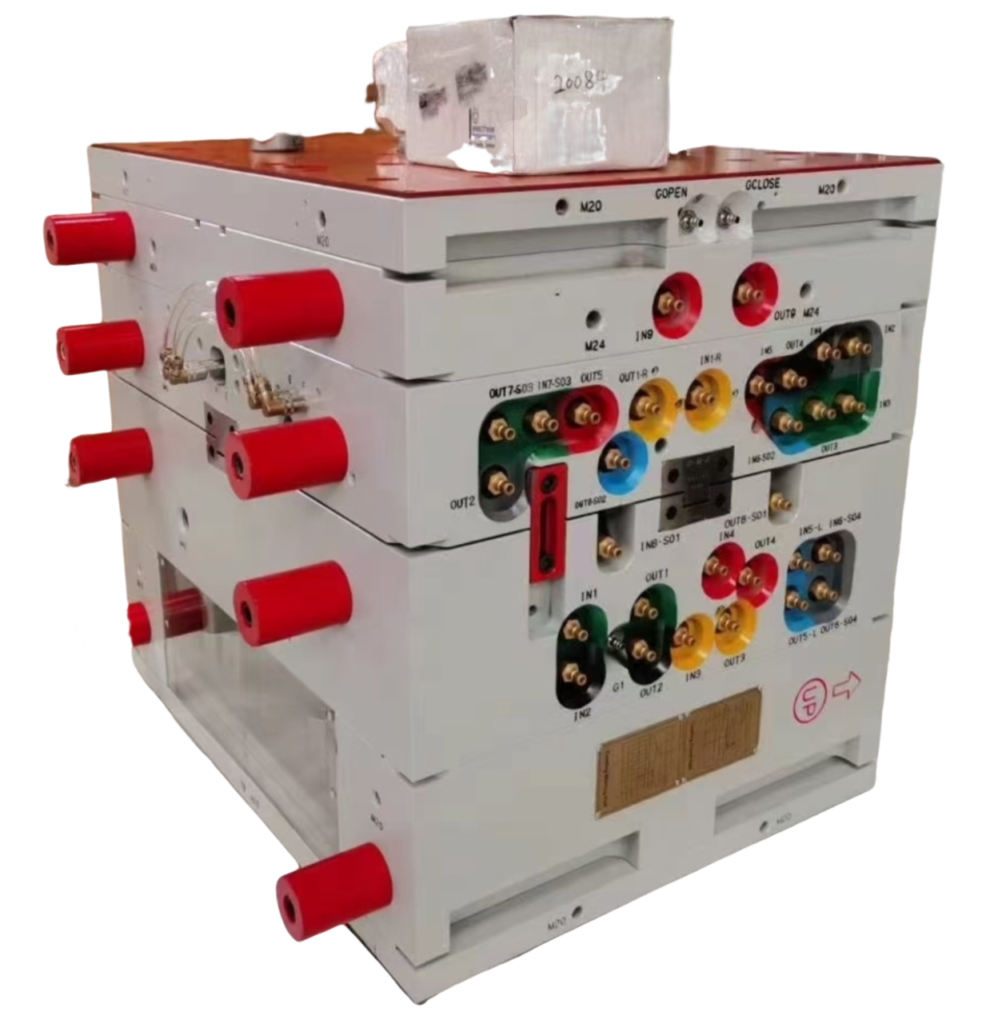
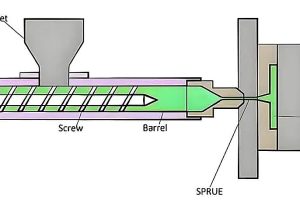
3D printing builds parts layer by layer from a digital file, while injection molding1 forces molten plastic into a steel or aluminum mold cavity under high pressure. In our factory, we use both technologies daily—3D printing for quick design validation and injection molding for mass production. The fundamental difference comes down to how material is deposited: additive (3D printing) versus formative (injection molding). This distinction drives every downstream difference in speed, cost, surface finish, and material performance.

3D printing excels when you need one part tomorrow. Injection molding excels when you need 10,000 parts next week. Neither technology is universally superior—the right choice depends on volume, timeline, material requirements, and budget.
How Do Production Costs Compare at Different Volumes?
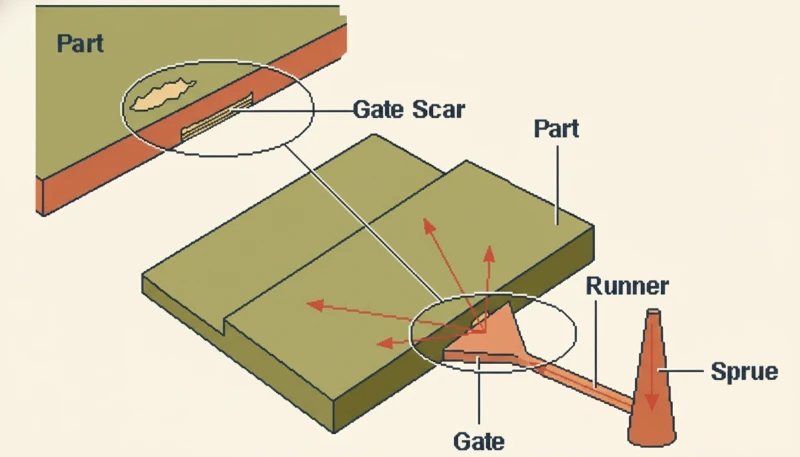
The cost crossover point between 3D printing and injection molding typically falls between 100 and 500 parts, depending on part complexity and size. We’ve run the numbers on hundreds of projects, and the pattern is consistent: 3D printing wins on low volumes, injection molding wins on high volumes.
| Factor | 3D Printing (FDM/SLA) | Injection Molding |
|---|---|---|
| Tooling Cost | $0 (no mold needed) | $3,000–$100,000+ |
| Cost Per Part (1 unit) | $5–$50 | $3,000–$100,000+ (tooling amortized) |
| Cost Per Part (10,000 units) | $5–$50 (unchanged) | $0.50–$5.00 |
| Lead Time (First Part) | 1–3 days | 4–12 weeks (tooling) |
| Cycle Time Per Part | 1–12 hours | 15–60 seconds |
| Material Cost | $50–$200/kg (resin/filament) | $2–$20/kg (pellets) |
At 500 parts, the injection molding mold cost gets spread thin enough that the per-part price drops below 3D printing. At 10,000 parts, there’s simply no contest—injection molding is 10–50× cheaper per unit.
“3D printing is always cheaper than injection molding because there’s no tooling cost.”False
While 3D printing eliminates tooling costs, the per-part cost remains constant regardless of volume. For production runs above 500 units, injection molding’s per-part cost drops to a fraction of 3D printing costs, making it far more economical at scale.
“The cost-effectiveness of each method depends primarily on production volume.”True
3D printing is more cost-effective for low volumes (under 100–500 parts), while injection molding becomes dramatically cheaper per part at higher volumes due to tooling cost amortization and fast cycle times.
What Materials Can Each Technology Process?
Injection molding supports a far wider range of production-grade thermoplastics2 than 3D printing. In our experience, this is one of the biggest practical limitations when clients consider switching to 3D printing for production parts.
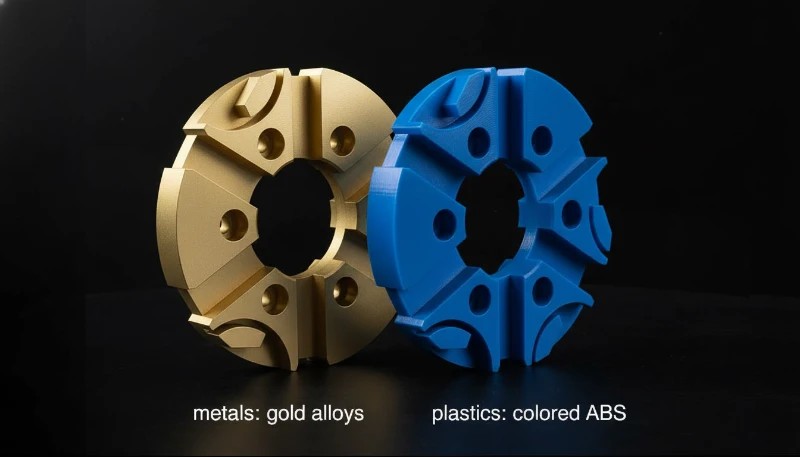
Injection molding can process virtually any thermoplastic—ABS, PC, PP, PA (nylon), PEEK, POM, TPE, and hundreds of engineered blends with glass fiber, carbon fiber, or flame retardants. 3D printing materials have improved dramatically, but most FDM and SLA resins still can’t match the mechanical performance, chemical resistance, or thermal stability of injection-molded engineering plastics.
For example, we regularly mold glass-filled nylon (PA6-GF30) for automotive brackets that need tensile strength above 130 MPa. No consumer-grade 3D printing material comes close to this performance level in a production environment.
How Does Part Quality and Surface Finish Compare?
Injection molded parts consistently achieve superior surface finish compared to 3D printed parts. We routinely deliver SPI A-1 mirror finish (Ra ≤ 0.012 μm) on injection molded parts, while even the best SLA 3D printers typically achieve Ra 1–5 μm before post-processing.
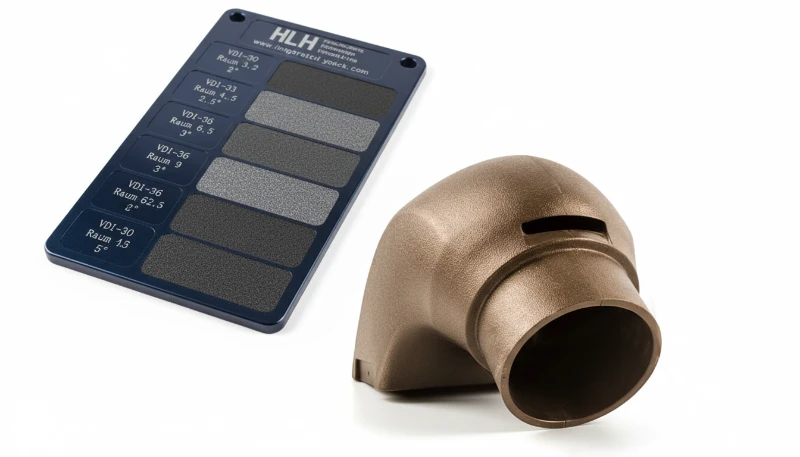
3D printed parts also show layer lines (FDM: 50–300 μm layer height, SLA: 25–100 μm) that require sanding, vapor smoothing, or painting to eliminate. Injection molded parts come out of the mold ready to use with the exact texture specified—from high gloss to deliberate textured finishes.
Dimensional accuracy also favors injection molding. We hold tolerances of ±0.05 mm routinely, while most 3D printers achieve ±0.1–0.3 mm. For consumer products, medical devices, and automotive components where fit and finish matter, injection molding remains the standard.
When Does 3D Printing Make More Sense Than Injection Molding?
3D printing makes more sense when speed to first part, design flexibility, or ultra-low volume outweighs the need for production-grade material properties and surface finish. We recommend 3D printing to our clients in these specific scenarios:
- Prototyping: Get a functional prototype in 1–3 days instead of waiting 4–12 weeks for tooling.
- Bridge production: Produce 10–200 parts while the injection mold is being manufactured.
- Custom/one-off parts: Medical implants, jigs, fixtures, and custom tooling where each part is unique.
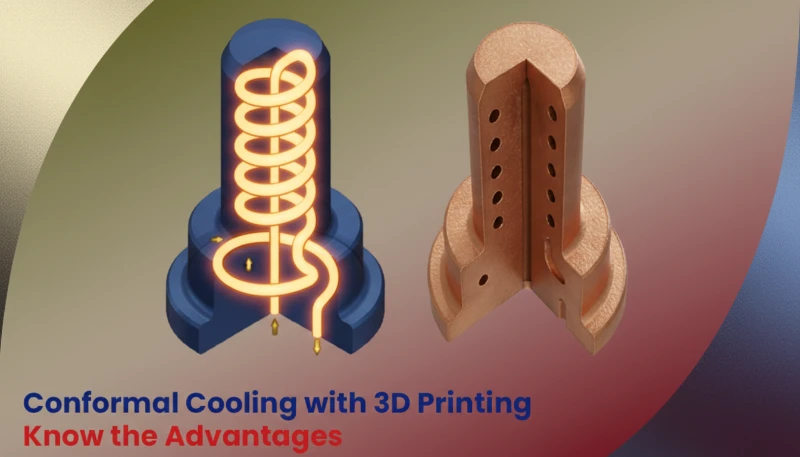
- Complex internal geometries: Lattice structures, conformal cooling channels, and organic shapes impossible to mold.
- Design iteration: Test 5 design variants in a week before committing to a $30,000 mold.
In our factory, we actually use 3D printing to create conformal cooling channel inserts for our injection molds—combining both technologies for better results than either alone.
“3D printing technology has advanced enough to replace injection molding for mass production.”False
Despite significant advances, 3D printing cycle times (hours per part) are still 100–1,000× slower than injection molding (seconds per part). Combined with higher per-part material costs and limited material options, 3D printing cannot economically replace injection molding for runs above a few hundred parts.
“3D printing and injection molding are complementary technologies that work best together in a hybrid workflow.”True
Many manufacturers use 3D printing for prototyping, bridge production, and tooling components (like conformal cooling inserts), then switch to injection molding for full production—leveraging each technology’s strengths.
What Are the Speed and Throughput Differences?
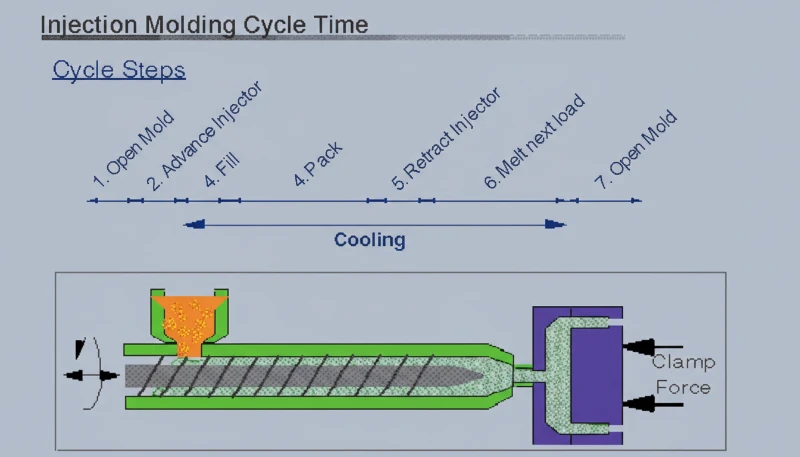
Injection molding is dramatically faster for production. A typical injection molding cycle3 takes 15–60 seconds, meaning a single machine can produce 1,000–4,000 parts per day. 3D printing, even with the fastest technologies, produces individual parts over hours.
| Metric | 3D Printing | Injection Molding |
|---|---|---|
| Time to First Part | 1–3 days | 4–12 weeks |
| Cycle Time Per Part | 1–12 hours | 15–60 seconds |
| Daily Output (single machine) | 2–24 parts | 1,000–4,000 parts |
| Annual Capacity | 500–5,000 parts | 500,000–2,000,000 parts |
| Multi-cavity Scaling | Not applicable | 2× to 128× with multi-cavity molds |
We’ve had clients come to us after trying to “scale up” with banks of 3D printers. One automotive supplier spent $200,000 on 20 SLA printers to produce 400 parts per day—a volume that a single injection molding machine with a 4-cavity mold handles easily at 1/10 the operating cost.
How Can You Build a Hybrid Workflow Using Both Technologies?
The smartest manufacturers don’t choose one technology over the other—they use both strategically. We’ve helped dozens of clients implement hybrid workflows that cut development time by 40–60% while maintaining production-grade quality for final parts.
Here’s the workflow we recommend:
- Concept (Day 1–3): 3D print 2–3 design concepts in PLA or resin for form/fit evaluation.
- Functional Prototype (Day 4–10): 3D print in engineering-grade material (Nylon, PETG) for basic functional testing.
- Bridge Production (Week 2–8): 3D print 50–200 parts for market testing while the mold is being built.
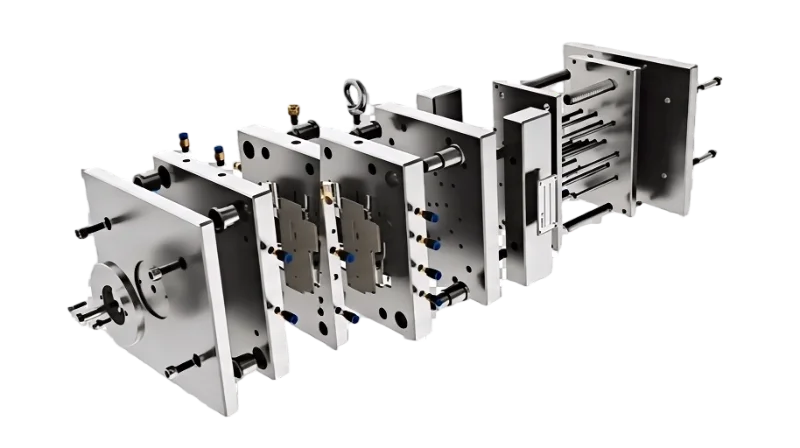
- Mold Production (Week 4–12): Commission steel or aluminum injection mold based on validated design.
- Mass Production (Week 12+): Switch to injection molding for full-scale production at optimal per-part cost.
This approach eliminates the biggest risk in product development: committing $30,000–$100,000 to a mold before validating the design with real users.
What Does the Future Hold for Both Technologies?
Both 3D printing and injection molding continue to evolve, but they’re converging rather than competing. We see three major trends shaping the next decade in our industry.
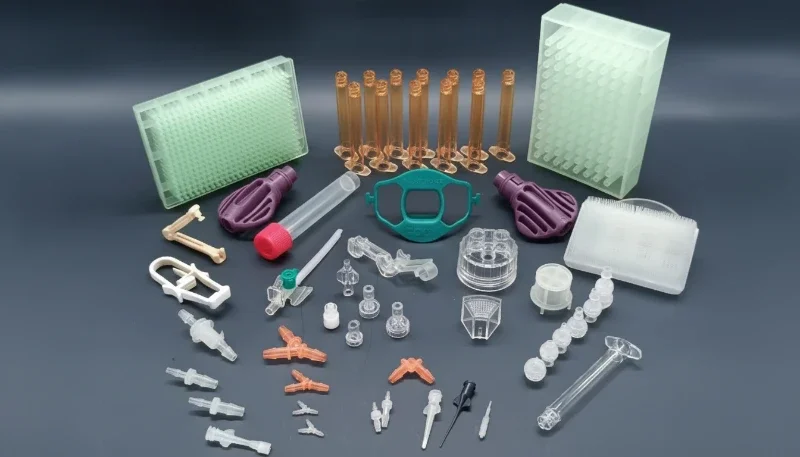
First, 3D-printed tooling is becoming viable. Companies like Nexa3D and Formlabs now offer resins specifically designed for injection mold inserts that can withstand 50–500 shots—perfect for prototyping molds or ultra-low-volume production.
Second, conformal cooling4 channels made by metal 3D printing (DMLS) are improving injection mold performance by reducing cooling time 20–40%, which directly cuts cycle times and improves part quality.
Third, high-speed 3D printing technologies (like HP Multi Jet Fusion and CLIP) are closing the speed gap, making 3D printing competitive for runs up to 1,000–5,000 parts for certain geometries.
FAQ
Can 3D printing match the strength of injection molded parts?
No, not for most engineering applications. Injection molded parts made from glass-filled nylon (PA6-GF30) achieve tensile strengths of 130+ MPa, while the strongest FDM materials reach about 70–90 MPa. SLA resins are typically weaker and more brittle than injection molded thermoplastics.
At what production volume should I switch from 3D printing to injection molding?
The crossover point is typically 100–500 parts, depending on part size and complexity. For simple parts, injection molding becomes cheaper around 100 units. For complex parts with expensive molds, the break-even may be closer to 500–1,000 units.
Can I use 3D printed molds for injection molding?
Yes, for short runs. 3D-printed mold inserts (using high-temperature resins or metal printing) can handle 50–500 injection cycles. This is useful for prototyping or very low-volume production but won’t replace steel molds for long production runs.
Is 3D printing faster than injection molding?
Only for the first part. 3D printing can deliver a first article in 1–3 days versus 4–12 weeks for injection molding (including tooling). But for ongoing production, injection molding produces parts in seconds versus hours for 3D printing.
Will 3D printing eventually replace injection molding entirely?
It’s unlikely in the foreseeable future. The physics of layer-by-layer building fundamentally limits 3D printing speed. Even with 10× speed improvements, 3D printing would still be orders of magnitude slower than injection molding for mass production. The two technologies will continue to complement each other.
What industries benefit most from combining both technologies?
Automotive, medical devices, consumer electronics, and aerospace benefit most. These industries need rapid prototyping (3D printing) followed by high-volume production (injection molding), and often use 3D-printed tooling components to improve mold performance.
Summary
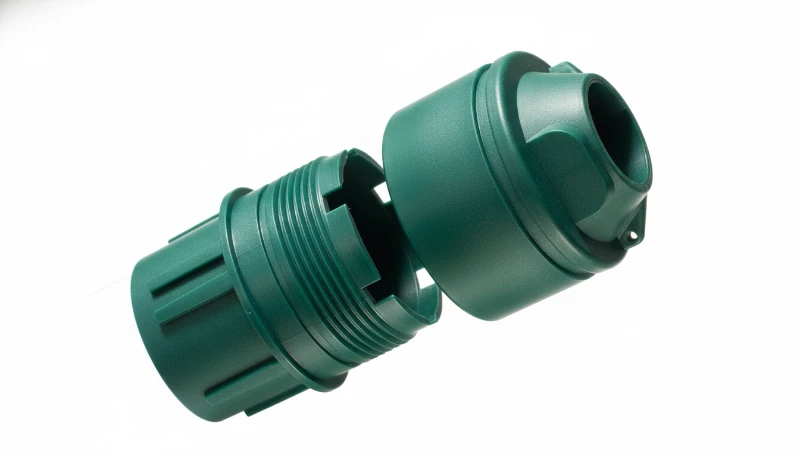
3D printing cannot replace injection molding for mass production—the speed, cost, material, and quality gaps are too large. But the question itself misses the point. The real opportunity is using both technologies together: 3D printing for prototyping, design validation, and bridge production, then injection molding for cost-effective mass manufacturing. In our factory, we’ve seen this hybrid approach reduce product development timelines by 40–60% while delivering the production-grade quality our clients need. The future isn’t one technology replacing the other—it’s both technologies working together. See our Injection Molding Complete Guide for a comprehensive overview. See our Injection Molding Complete Guide for a comprehensive overview.
-
Injection molding is a manufacturing process where molten plastic is injected under high pressure (10,000–30,000 psi) into a precision-machined mold cavity, then cooled and ejected as a finished part. The process is optimized for high-volume production with cycle times typically between 15 and 60 seconds. ↩
-
Thermoplastics are polymers that become moldable above a specific temperature (glass transition or melting point) and solidify upon cooling. Unlike thermosets, thermoplastics can be remelted and reshaped, making them ideal for injection molding processes. Common examples include ABS, PC, PP, PE, and nylon. ↩
-
The injection molding cycle refers to the complete sequence of operations in one molding shot: mold closing → injection → packing/holding → cooling → mold opening → ejection. Cycle time optimization directly affects production throughput and per-part cost. ↩
-
Conformal cooling uses cooling channels that follow the contours of the mold cavity rather than straight-line drilled channels. Typically produced via metal 3D printing (DMLS/SLM), conformal cooling can reduce cooling time by 20–40% and improve part quality by providing more uniform temperature distribution. ↩
Need a Quote for Your Injection Molding Project?
Get competitive pricing, DFM feedback, and production timeline from ZetarMold’s engineering team.


 EN
EN  ES
ES  FR
FR  DE
DE  PT
PT  AR
AR  RU
RU  JA
JA  KO
KO  IT
IT  NL
NL  TR
TR  PL
PL