 Skip to content

Injection molding optimization is key to improving manufacturing efficiency, reducing costs, and ensuring high-quality output across diverse industries.
Optimizing injection molding cycle time involves adjusting temperature, pressure, and cooling time1 to reduce production duration and costs while improving quality, using advanced technologies, materials, and machinery.
While this summary outlines the basics of cycle time optimization, delving into specific techniques and technologies can significantly enhance your production process. Discover how targeted adjustments can lead to substantial improvements in your facility’s output efficiency.
- Cycle time optimization should start with cooling, holding, fill, mold temperature, and ejection stability rather than arbitrary machine speed changes.
- Every cycle-time reduction must be validated against defects, dimensional stability, and repeatability.
- Factory data, machine maintenance, and mold cooling design determine whether faster cycles create real profit or only quality risk.
“Optimizing cycle time reduces manufacturing costs and boosts efficiency.”True
By decreasing cycle time, manufacturers can produce more parts in less time, effectively lowering per-unit costs.
“All cycle time optimizations require expensive equipment upgrades.”False
Many optimizations can be achieved through process adjustments and parameter tuning without significant investment in new equipment.
What is the Concept of Injection Molding Machine Cycle Time?
The concept of injection molding machine cycle time is defined by the function, constraints, and tradeoffs explained in this section. If you are comparing suppliers or planning procurement, our injection molding supplier sourcing guide covers RFQ prep, qualification checks, commercial risks, and target cycle-time assumptions.
Injection molding machine cycle time is a crucial factor in manufacturing efficiency, impacting both production speed and cost-effectiveness across various industries.
Cycle time in injection molding encompasses injection, cooling, and ejection phases. Reducing it boosts efficiency and cuts costs, influenced by equipment settings, material choice, and mold design.
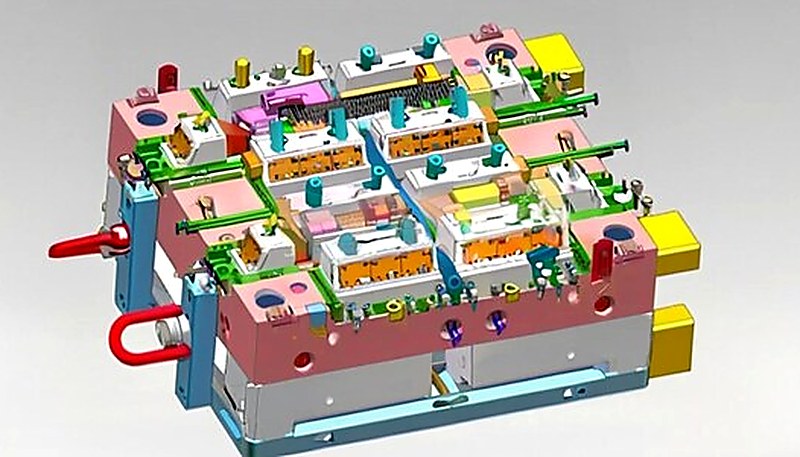
Cycle time for an injection molding machine is the time it takes for the machine to complete each injection molding process, which typically includes injection, holding pressure, cooling, and other steps. It directly affects the production efficiency and product quality of the machine. So, adjusting the cycle time of an injection molding machine is an important part of optimizing production.
“Cycle time reduction leads to lower production costs.”True
Efficient cycle times increase production rates, thus reducing labor and overhead costs per part.
“Reducing the cycle time always improves the quality of the final product.”False
Reducing cycle time might increase efficiency, but it doesn’t always enhance product quality, which depends on other process parameters too.
What are the Steps of the Injection Molding Cycle Times?
The steps of the injection molding cycle times are the main categories or options explained in this section. Injection molding cycle times determine the efficiency and productivity of manufacturing, impacting everything from production speed to the quality of the finished product.
Injection molding cycle times include filling, packing, cooling, and ejection. Optimizing these steps is essential for enhancing efficiency and cutting manufacturing costs.
Injection stage: The heated material is pushed into the mold and cavity by pressure.
“Injection molding cycle times include the cooling phase.”True
The cooling phase allows the molded part to solidify and be capable of being ejected without deformation or defects.
“Reducing injection molding cycle times always compromises product quality.”False
Careful optimization of cycle times can maintain or even enhance product quality while increasing efficiency.
Filling stage:When all the material of a cycle is pushed into the mold and continuous pressure is applied to make sure that the cavity is completely filled and to solve the shrinkage that may happen when the material efficient cooling.
Cooling stage: When the material cools into a solid form and is ready to be pushed out.Each of these steps has potential efficiencies that can reduce overall cycle time. The cooling phase is by far the most time-consuming step in the injection molding process, so a significant impact can be made in reducing these times.
In our factory in Shanghai, cycle time changes are not approved from stopwatch data alone. ZetarMold has 20+ years of injection molding experience and 47 injection molding machines with 90 to 1850 tons of clamping capacity, so our engineers compare cooling time, part quality, and machine stability before locking a faster cycle. We recommend validating every speed change against defects and repeatability.
What are the Parameters to Consider When Optimizing Molding Cycle Time?
Optimizing molding cycle time is essential for maximizing efficiency and reducing costs in the injection molding process across industries.
Optimizing molding cycle time hinges on mold temperature2, cooling rate, material choice, and equipment efficiency, affecting production speed, quality, and costs. Adjustments in these areas can greatly enhance cycle efficiency.
Cooling Time
One of the easiest ways to optimize your cycle is cooling time. In most molding scenarios, cooling time is set to be 1.5 to 2 seconds longer than screw rotation time. It is important to note that some situations may require a longer cooling cycle (such as dimensional requirements or part bonding), but as a general rule, screw rotation time determines cooling time.
Holding Time
Another big thing that will help you maximize your cycle time is holding time3. The best way to do this is through a gate seal study. Gate seal is the amount of time it takes to cool the runner tip to a stationary state. This keeps plastic from leaking out of the runner, which can cause molding inconsistencies.
Doing a gate seal study is easy. Once you have your decoupled process set up, set your hold time way higher than you normally would for the material and part size you’re working with. While you’re running, reduce your hold time and weigh each part as it relates to variation. If you see the weight go down, when the weight goes down, increase your hold time by 1 second and you’re done.
Fill Time
Another thing that affects cycle time is fill time. Fill time is how fast or slow the material goes into the mold. Fill time is controlled by injection speed. Fill time is also limited by the type of material and the complexity of the mold. The goal of optimizing fill time is to shoot the material as fast as possible without affecting the looks and function of the part you are making.
Melt Temperature
When you’re setting up the process, using the lowest temperature can help reduce cooling time, which can help reduce cycle time. It’s important to note that each processing method is different, so higher viscosity at lower melt temperatures can cause defects. Start your process at the lower end of the melt window and as you make adjustments, increase the temperature until you achieve process stability.
Mold Temperature
Mold temperature also affects cooling time. When setting mold temperature, start at the low end of the normal processing range recommended by the material supplier. Higher temperatures may be needed to improve appearance or even to eject the part. Mold temperature can also affect dimensional properties, so this must be considered.
Back Pressure
The higher the back pressure, the longer the screw will rotate, which affects the minimum cooling time. Use enough back pressure to achieve melt consistency, but keep it as low as possible to reduce screw rotation time.
Mold Opening/Closing
Maximize mold open and close speeds to minimize mold open time. Note that mold separation and mold close speeds are affected by the complexity of slides, flare pins, etc., so make sure you have safe mold operation first when setting up the mold.
Also, watch for low pressure closing – you want to keep it as low as possible for mold protection, but remember that with speed/pressure settings too low, they can increase overall cycle time. Again: safety and mold protection come first, then optimization.
Ejection
If you don’t have your ejection set up right, it can really slow down your cycle. When you’re setting up your ejection, only use as much stroke as you need to get the part out of the mold without sticking it in the mold.
Ejection speed and pressure are also important for faster ejection times, but when you start increasing your speed/pressure settings, watch out for pin pushing or cracking. Generally, minimum pressure and maximum speed will give you the best results.
Robotics
Robotic function can also affect the cycle. There are two main effects that can be optimized. First, the robot needs to get in and out of the mold quickly to prevent the mold open time from increasing. Second: The robot needs to be in position waiting for the mold to open. When possible, set the robot\’s waiting position on the Y axis as low as possible to shorten the extraction time.
“Adjusting mold temperature can reduce cycle time.”True
Proper mold temperature control leads to faster cooling and solidification, directly decreasing the cycle time.
“Cycle time optimization is irrelevant to product quality.”False
Optimal cycle times help maintain consistent product quality by ensuring precise material cooling and shaping.
How to Optimize the Cycle time of Injection Molding?
Streamlining cycle time in injection molding is crucial for enhancing productivity and reducing manufacturing costs. Efficient cycle time management leads to faster production runs and improved output quality.
Optimizing injection molding cycle time through temperature control, mold design, and automation enhances efficiency and reduces costs, benefiting industries such as automotive and consumer goods manufacturing.
If you want to save money on making plastic parts, you need to make your injection molding machine run faster. When it runs faster, it makes more parts at the same time and uses the same amount of electricity. Here are some ways to make your injection molding machine run faster.
Injection Molding Machine
Maintain the Injection Molding Machine
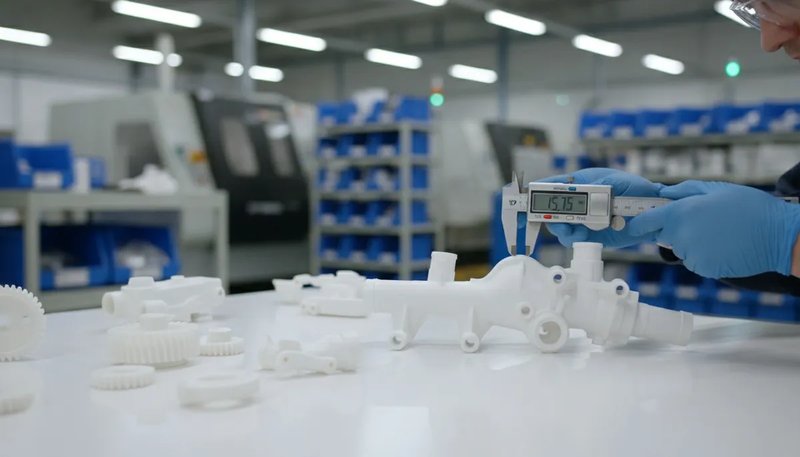
Check and maintain the injection molding machine itself. Regularly check if there are any defects or damages in the structure of the injection molding machine, and repair them in time to avoid failures during the production process.
The injection system of the injection molding machine must be kept unobstructed to ensure that the melt can enter the mold quickly and stably. In addition, regular cleaning and lubrication of mechanical parts can reduce mechanical failures and avoid production delays caused by failures.
To improve injection molding cycle time and production efficiency, you need to use advanced injection molding machine equipment and technology. The selection and use of large injection molding machines directly affect the efficiency and effect of the injection molding process.
Advanced injection molding machines are equipped with high-performance motors and hydraulic systems, which have faster response speed and higher precision, so that the injection molding cycle time is faster and the production efficiency is higher.
At the same time, the use of automated and intelligent control systems can achieve precise parameter adjustment and monitoring, improve the stability and consistency of the injection molding process.
“Machine maintenance can reduce cycle variation.”True
This is true because worn screws, unstable hydraulics, blocked nozzles, and poor lubrication can make fill time, pressure transfer, and ejection less repeatable.
“Machine speed alone does not guarantee a better cycle.”False
This is false because machine speed only helps when the mold, cooling, material drying, gate seal, and quality checks are stable enough to support the shorter cycle.
Fine-Tuning the Injection Molding Machine
Older injection molding machines can have performance problems, like inconsistent injection pressure and speed. This means it takes longer to inject the same amount of material as a new machine or a better-maintained machine. Pressure or filling time errors can also cause parts to be scrapped, which increases overall production time (and makes for longer effective cycle times).
Injection molding expert. Good injection molding is more than just setting up the machine and letting it run. An injection molding expert will be able to identify subtle adjustments to variables such as injection speed, buffer, holding time, etc., which can have a big impact on part quality and cycle time.
Using High-Speed injection Molding Machines
Injection molding machines go through the following steps: melting plastic, injection, mold opening, mold closing, and demolding. The function of the injection molding machine itself is one of the main reasons that affect the injection molding cycle time. High-speed injection molding machines have many advantages in terms of speed.
Make sure the mold structure is simple and easy to process, in other words, make the mold design as difficult as possible. Most molds can be designed in different ways, and there are many ways to demold. Simplified mold design can reduce the cycle time of injection molding.
Mold
Consider Mold Design
Besides the material, the mold is also a big factor in cooling time. A good mold will let water and air (two common coolants) flow through it well. The cooling channels should be kept clean and clear so the parts cool as fast and evenly as possible. If the parts cool unevenly, they will warp and be scrapped.
When designing and manufacturing molds, the cooling channels should be reasonably arranged according to current production needs to ensure sufficient cooling water flow, minimize mold surface adhesion, ensure the smoothness of the mold surface, etc.
Adjust Mold Temperature
Changing the mold temperature can have a big impact on cycle time. Lowering the mold temperature can increase the cooling time and increase the cycle time. You can control the mold temperature by adjusting the temperature of the heater.
Mold Design Optimization
Optimizing mold design is a great way to cut down on molding time. The runner design should be as simple as possible to shorten the flow path and speed up filling. Also, a good cooling system design can speed up the cooling of the plastic part. But be careful, if you cool too much, it will take longer to cool, so you have to balance cooling efficiency and cycle time.
Design the mold structure, cooling system, and runner layout in a way that reduces cooling time and plastic flow resistance, thus shortening the cycle.
Material
Choose the Right Plastic Material
Some materials will have a higher fill pressure rating or a higher flow rate. This means they can get into the mold faster and fill all the cavities faster. Material selection is often overlooked or dismissed, but make sure to consider whether different resin properties are appropriate for your parts.
Picking the right plastic material can make a big difference in the cycle. When you’re making the part, you want to use good raw materials and pick different materials for different production conditions. Materials with low melting points and high fluidity can fill the mold faster and cool and solidify faster, so you can make the part faster.
Use Resins That are Easy to Flow and Quickly Solidify
Using resins that flow easily and solidify quickly can greatly reduce filling and cooling times. For example, resins with low viscosity can fill the mold faster, while resins with high thermal conductivity can help speed up the cooling process. However, you must also consider the requirements of the finished product, such as strength, temperature resistance, and chemical resistance, when selecting materials.
Injection Molding Process
Optimizing the Injection Molding Process
To shorten the cycle time during production, you can analyze and adjust different process parameters. For example, you can adjust the injection speed, injection pressure, and holding time.
To improve the injection molding cycle time and production efficiency, you need to optimize the injection molding process. By designing and optimizing the injection molding process, you can reduce the injection molding cycle time and improve production efficiency.
The key injection molding process parameters include injection speed, injection pressure, cooling time, etc. By adjusting and optimizing these parameters, you can achieve the best injection molding effect and cycle time. In addition, the reasonable selection of injection molding materials and mold design also have an important impact on the injection molding cycle time and production efficiency.
Adjustment of Process Parameters for Injection Molding
Changing the process parameters for injection molding is a good way to make the molding cycle shorter. If you increase the injection speed, you can fill the mold faster, but if you go too fast, you might get flash or short shots, so you have to find the right balance.
If you increase the mold temperature and the barrel temperature, the melt will flow better, but if you go too high, you might degrade the material or put too much internal stress in the part, which will affect the quality. Also, if you optimize the hold time and the hold pressure, you can make sure the part is fully solidified and you can get rid of any unnecessary delays.
Wall Thickness
The Wall Thickness is Kept at the Minimum Thickness
This minimalist approach to part design means that less material needs to be injected into the mold cavity, thereby gradually reducing the injection time (which can save material time in many cycles). Just remember to consider the strength required for the product wall and follow best design practices to minimize the wall thickness.
Reduce Wall Thickness
Thinning the wall can not only get your part through the injection stage faster, but also directly affect the cooling time. Less thickness means less cooling time.
In addition, it also includes reasonable control of injection speed and pressure to achieve the best filling effect, avoid overfilling and underfilling problems, and thus reduce cycle time.
To make cooling more even and avoid hot spots, design reliable mold temperature control and cooling channels. Better cooling balance helps parts solidify faster, reduces warpage risk, and gives process engineers more room to shorten injection, holding, and ejection timing safely.
You can use a sensor to watch how long you inject and how long you wait before you open the mold. Then you can change how long you inject and how long you wait before you open the mold.
When you introduce automated equipment, like robot arms, you can cut down on the time it takes to do things by hand and make your operation more efficient. That means you can make your cycle shorter.
Use advanced monitoring systems and data analysis technology to watch all the different things that happen when you’re doing injection molding in real time. That way, you can catch problems as they happen and make changes to make your cycle better.
Training operators to improve their injection molding skills and knowledge level can help them operate the equipment better and control various parameters more reasonably, so as to achieve a faster cycle.
“Cycle time optimization leads to cost savings in injection molding.”True
By reducing the overall cycle time, manufacturers can lower energy consumption and increase the number of parts produced in a given period, leading to significant cost savings.
“Reducing cycle time always compromises product quality.”False
Properly optimizing cycle time can maintain or even enhance product quality through precise control and monitoring of molding parameters.
What Are the Most Common Questions About Injection Molding Cycle Time?
Frequently Asked Questions
What is a good cycle time for injection molding?
A good cycle time depends on part complexity, material choice, and wall thickness. Simple, thin-walled parts in fast-flowing resins like polypropylene can achieve 5 to 10 second cycles, while complex geometries or engineering-grade materials such as PEEK may require 30 to 60 seconds or more. Rather than chasing an arbitrary benchmark, focus on optimizing each phase individually. Measure your current cycle, identify the longest phase, and use scientific molding principles to reduce it without compromising part quality or dimensional stability.
How much does cooling time affect the total cycle?
Cooling time typically accounts for 50 to 70 percent of the total injection molding cycle, making it the single largest time contributor. Even modest reductions in cooling yield significant overall cycle improvements. Strategies include optimizing coolant flow rate and temperature, using conformal cooling channels in the mold, selecting materials with higher thermal conductivity, and lowering melt temperatures within the processing window. In our experience, shops that systematically address cooling often cut total cycle time by 15 to 30 percent without any other changes.
Can cycle time be reduced without sacrificing part quality?
Yes, cycle time can absolutely be reduced without sacrificing quality when you apply scientific molding techniques. Methods like gate seal studies, decoupled molding, and Design of Experiments help you identify the true optimal processing window rather than relying on conservative defaults. Many manufacturers achieve 15 to 25 percent cycle time reductions while actually improving part consistency and reducing scrap rates. The key is data-driven optimization: measure, adjust incrementally, and validate quality after each change rather than making aggressive cuts blindly.
What is the role of mold design in cycle time?
Mold design has a direct and significant impact on cycle time through three main mechanisms: cooling channel layout, gate placement, and ejection system design. Conformal cooling channels that follow the part contour can reduce cooling time by 20 to 40 percent compared to traditional straight drilled channels. Optimized gate locations ensure balanced filling with less pressure drop, while reliable ejection systems prevent sticking and demolding delays. Investing in proper mold design upfront often pays for itself through cycle time savings within the first few production runs.
How do I know if my cycle time is optimized?
You can evaluate cycle time optimization through several measurable indicators. First, run a gate seal study to confirm your holding time is not longer than necessary. Second, monitor part weight consistency across consecutive cycles using a process capability index like Cp/Cpk, where a value above 1.33 indicates a stable process. Third, use process monitoring software to track real-time cycle time variation. If your cycle is consistent, parts pass quality inspection, and further parameter changes show diminishing returns, your cycle is well-optimized.
Does wall thickness affect cycle time?
Wall thickness directly affects cooling time because thicker sections require exponentially longer to solidify. Since cooling represents 50 to 70 percent of the total cycle, even small wall thickness reductions can yield meaningful time savings. Reducing wall thickness by 10 percent can cut cooling time by 15 to 20 percent. However, always balance this against structural requirements, flow length, and functional performance. Working with an experienced tooling partner like ZetarMold early in the design phase ensures you achieve the thinnest acceptable wall while maintaining part integrity.
What Is the Final Takeaway on Injection Molding Cycle Time?
Cycle time and production efficiency are key factors for measuring the performance of large injection molding machines. With the market getting more competitive and customers demanding more, injection molding companies need to improve cycle time and production efficiency to stay in the game.
The practical takeaway is simple: cycle time improves when cooling, filling, mold design, automation, and operator habits are managed as one production system. A useful target is not the shortest possible cycle, but the shortest stable cycle that still protects part quality, mold life, and delivery reliability.
Injection molding companies should connect cycle-time work with process discipline, tooling maintenance, and production planning. Use the Injection Molding Complete Guide as the P1 reference, then compare this article with our injection molding production time breakdown.
“Continuous cycle time monitoring can save 10-20% in annual production costs.”True
Tracking cycle time trends helps manufacturers spot process drift early, isolate cooling or handling losses, and avoid repeated downtime before it becomes expensive.
Keep measuring after launch.
“Once cycle time is optimized, no further improvements are possible.”False
Cycle time optimization is a continuous control loop because resin lots, mold wear, machine condition, ambient temperature, and operator practice can all change the stable window over time.
Get competitive pricing, DFM feedback, and production timeline from ZetarMold’s engineering team.
Request a Free Quote →
-
cooling time: Cooling time is a critical phase in the injection molding cycle when molten plastic solidifies inside the cavity before safe ejection. ↩
-
mold temperature: Mold temperature is a controlled parameter that directly influences cooling rate, part shrinkage, and surface finish quality. ↩
-
holding time: Holding time refers to the pressure-hold stage that packs material after filling and before gate freeze. ↩




 EN
EN  ES
ES  FR
FR  DE
DE  PT
PT  AR
AR  RU
RU  JA
JA  KO
KO  IT
IT  NL
NL  TR
TR  PL
PL 