 Skip to content

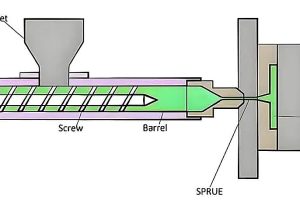
Injection molding is the process of changing the shape and size of plastic, and injection molding is one of the most common ways to do this. It involves using a mold and injecting melted plastic into it. The plastic then hardens and takes the shape of the mold, creating products of different sizes and shapes. However, there are problems that can happen when using injection molding, and one of them is called undercutting. Undercutting happens when part of the product gets stuck in the mold, making it hard to separate the mold and the product without damaging either of them. This article will help engineers and operators figure out why undercutting happens in injection molding, how to prevent it, and how to fix it. This will help them deal with the problem better and make sure it doesn’t hurt the quality or efficiency of the products they make.

Analysis of the Causes of Undercutting
Undercutting is facilitated by number of factors, which are mainly are mold design, process parameters, and material properties. Here is a detailed analysis of these factors:
Unreasonable Mold Design
Mold design is crucial to the success of injection molding. It is often said that an unreasonable mold design will cause undercuts during demolding, especially a slight draft angle or the so-called demolding angle. Unlike adequate draft angles, poor draft angles increase the friction between the plastic part and the mold, making it difficult to demold smoothly.

Improper Setting of Process Parameters
The frequency of undercuts depends on some process parameters, such as injection pressure time, holding time, and cooling time of the workpiece. For example, if the injection pressure or holding pressure is too high, the plastic product may fit too tightly in the mold, making it difficult to remove.
Material Properties
Why different plastics shrink and flow at different rates, depending on the type of plastic and how it’s used in the process. If you choose a plastic that shrinks a lot or is hard to process, you might have trouble getting the part out of the mold. Some plastics stick to the mold and don’t come out easily.

Improper Use of Release Agents
Release agents can make it easy to get plastic products out of their molds. But if you use them wrong, like if you put on too much or put it on everywhere, they can make it harder to get the plastic out, or even make it so you can’t get the plastic out at all.
Preventive Measures Against Undercutting
To prevent undercutting, appropriate measures must be taken in mold design, process parameter settings, and material selection.

Reasonable Mold Design
1. Increase the Draft Angle: Try to put draft on as many mold surfaces as you can, with a minimum of 1°.
2. Optimize Mold Structure: Avoid complex mold designs; make the mold as simple as possible because you might have to cut undercuts.
3. Set Up a Reasonable Ejector System: Design the ejection system so that it pushes evenly and uniformly on the part so that the part doesn’t stick in the mold because there’s not enough force in some areas.
Reasonable Setting of Process Parameters
1. Control Injection Pressure: It shouldn’t be too high, but it should be just right to make sure the product doesn’t stick too hard to the mold walls.
2. Shorten Holding Time Appropriately: It’s not good to have it too long, because then the product will solidify in the mold and it will be a pain to get it out.
3. Control Cooling Time Reasonably: Don’t let it be too long, because then the product will pull too hard on the mold surface.

Selection of Suitable Materials
1. Choose Materials with Low Shrinkage Rates: Use plastics with low shrinkage coefficients to reduce the shrinkage stresses that occur during demolding.
2. Modified Materials: For materials that tend to have poor undercutting, it is a good idea to use plastics that have improved flowability, demolding.
Proper Use of Release Agents
1. Even Spraying: Be careful when applying release agents, especially on large surfaces, to avoid buildup in some areas and weak coverage in others.
2. Moderate Use: Apply release agents in moderation to avoid difficulty when removing the mold.

Specific Methods for Handling Undercutting
Despite taking preventive measures, undercutting may still occur at times. When it happens, effective methods must be employed to resolve the issue.
Improve Mold Design
If you occasionally encounter undercutting problems, first of all, please consider whether the mold design is reasonable. Increase the draft angle; Adjust the mold to achieve the best design; Polish the mold to remove all roughness to reduce the drag force.

Adjust Process Parameters
To address specific undercutting issues, you may want to think about changing injection parameters. If demolding looks difficult, decrease the injection pressure, reduce the holding time, or increase the cooling time.
Use Suitable Release Agents
Use different types of release agents and change the amount and way you spray all the stuff you need to spray. Sometimes, you also use special high-efficiency release agents to make it easier to get the stuff out.
Optimize the Ejector System
Demolding is a big deal. The ejector system can do it well. Do more little ejections at high speed to keep the force even across the part and avoid undercuts. You can add stuff to the ejector system of the mold to help demold, like springs.

Improve Material Properties
If you’re dealing with undercuts due to material properties, then you might want to consider using different plastics, or adding flow and release additives. For example, you could add lubricants or other modifiers to help the material flow better and release from the mold during the molding process.
Mold Maintenance and Upkeep
To avoid undercuts, you need to take some general steps, such as regularly maintaining and caring for the mold, etc. Clean the mold surface, inspect and replace broken parts to keep the mold clean and reduce demolding problems.
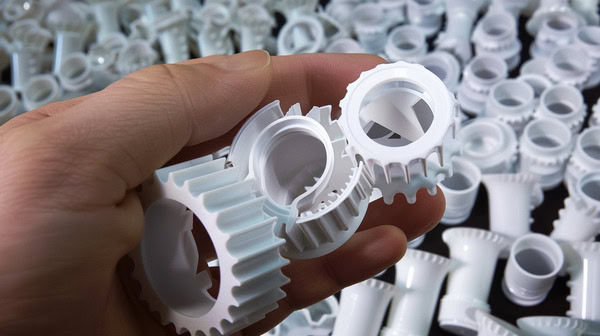
Case Studies
Here are some actual cases to further explore specific methods for solving undercutting problems.
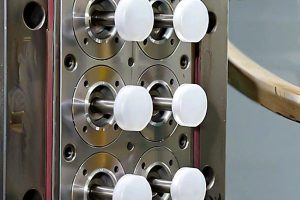
Case 1: Undercutting in the Injection Molding Process of Plastic Bottle Caps
Problem Description: A factory that makes bottle caps out of plastic was having trouble with undercuts that made it hard to get the caps out of the mold.
Cause Analysis: After the inspection, we found the following problems: The mold’s draft angle was not enough. The inner thread of the bottle cap was stuck in the mold. The material on the undercut of the bottle cap was always stuck.
Solution: Mechanically, one can enhance draft angle of the mold’s inner thread portion that will facilitate easy demolding of the bottle cap. This tightness increases the time required for the cap to be removed from the mold hence it is advisable to manufacture with the appropriate injection pressure and holding time settings. Finally, undercutting was minimized and there have been positive changes in terms of production rates as well as quality of the products being manufactured.

Case 2: Undercutting in Automotive Parts Injection Molding
Problem Description: When a part has geometry with undercut features, manufacturing efficiency decreases. An automotive parts factory has found that parts with complex geometry often have undercutting.
Cause Analysis: The structural design problem led to the fact that the molded had many undercut areas, complicated mold structure, high injection pressure, and lack of cooling time.
Solution: Change the mold to have a bigger draft angle for the parts in the undercut areas and make the ejector systems for the parts in the areas that matter. Control the process parameters and lower the injection pressure and increase the cooling time. These changes were made to get rid of the undercutting, which was almost completely eliminated, and make the parts easier to produce.

Case 3: Undercutting in Household Appliance Plastic Casings
Problem Description: There was this company that made household appliances. And they had this problem where the plastic casings on the appliances would get stuck in the mold. And that was messing up their production line.
Cause Analysis: Some of the big problems that caused demolding problems are: the plastic casing was designed with a lot of technology, which made it hard to get the product out of the mold; the mold structure had small draft angles; and the plastic material shrinks a lot.
Solution: Redesign the mold to increase the draft angle and optimize the parting line design and make sure the parting line is in the right place. Use a plastic material that shrinks less so it can be demolded easily. Also, use a good release agent when making the mold so the part doesn’t stick to the mold. After these changes the moulding process of this plastic casing improved greatly, the speed of production was increased.

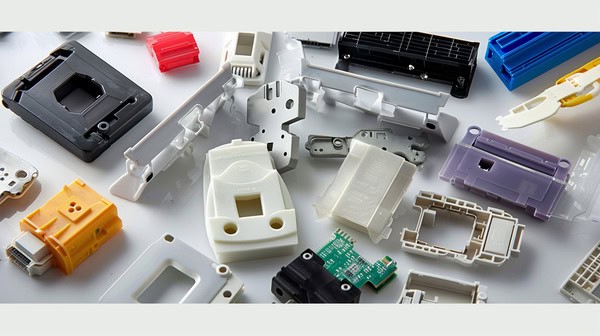
Case 4: Undercutting in Electronic Product Housings
Problem Description: When manufacturs make electronic product housings using the injection molding method, the material of the products tends to stick to the surface of the mold. This causes surface abrasions that affect the appearance quality of the products.
Cause Analysis: The mold surface wasn’t polished enough, so the plastic parts stuck to the mold. This happened because the process settings were wrong and the parts didn’t have enough time to cool down.
Solution: Make an effort to smooth the mold surface by polishing it to create a mirror-like finish. It is therefore necessary to rework the parameters of the management process to ensure that it takes a longer time before being released from the mold since it is not fully cooled. After fine-tuning these factors, demolding of the housing became more rigid and the quality of the housing surface also improved.

Comprehensive Management of Undercutting Issues
Undercutting is not just a bowels issue but also defines the production constitution and the standard of production. To reduce undercutting, systematic management processes should be put in place to manage potential problems regarding undercutting.
Develop Standard Operating Procedures
It is necessary to create number and tightly controlled standard operating procedures (SOPs) defining the mold design requirements, the criteria for the setting of process parameters, as well as the norms of applying release agents, and making each of them free of any unnecessary variation.
Strengthen Employee Training
The injection molding operators and engineers need to be trained and retained to improve their technical knowledge and problem-solving skills. Training should include information and techniques on how to recognize, prevent, and deal with undercutting.
Implement Quality Control
When you’re making your stuff, you need to have some quality control measures in place to help you find the places where you’re undercutting yourself and then fix them. Create a standard way to check your quality and keep an eye on the quality of your product and the way you’re making it.

Continuous Improvement
Collect and analyze production data for injection molding and mold design to continuously improve the process. Implement feedback systems to encourage employees to suggest changes to improve current production systems.
Future Development Trends
As new technologies develop, injection molding technology and material molding methods are becoming more complex. As we continue to address undercuts in communication, we will develop better techniques to deal with these issues in the future.

Advanced Mold Materials
Keep studying and using new mold materials and coatings to make your molds easier to get parts out of. For example, pick mold materials that have auto-lube built in so you don’t have to worry about undercuts.
Intelligent Manufacturing
Intelligent manufacturing technologies will help improve the precision and productivity of injection molding processes. In production, important production data can be collected through big data applications and artificial intelligence. By using this data, the production process itself can be controlled and, if necessary, changes in the parameters affecting the undercutting can be made in real-time.
New Release Agents
Better types and use of release agents will also help improve demolding to some extent. For example, nano-grade release agents also make it possible to get much higher demolding rates and prevent undercutting.
Environmental Technologies
In the future, environmentally friendly injection molding processes and materials will be widely used. While solving undercutting issues, attention should also be paid to environmental protection and sustainable development, reducing the impact on the environment.

Conclusion
Undercutting is a common problem in injection molding that can lead to slow revenue generation and poor quality products. With a reasonable mold design, reasonable process parameter settings, appropriate material selection, and reasonable application of release agents, undercutting can be prevented and solved. In fact, the above-mentioned undercutting methods can be used in actual production according to specific circumstances and be applied in a more flexible manner to handle undercutting issues so as to prevent the smooth flow of the injection molding process.
In conclusion, this paper has shown that getting to deal with undercutting issues in injection moulding is definitely not a impossibility. Consequently, when these causes are established, it is easy to eradicate this menace and guarantee nonintermittent output. It is believed that the analysis and methods given herein will be useful to the injection molding engineers and operators and will go a long way in refining injection molding technology as well as enhancing the quality of the products that are manufactured. With the spirit of exploration and innovation carried out day by day, it is our hope that the future of injection molding would be more effective and dependable.
Need a Quote for Your Injection Molding Project?
Get competitive pricing, DFM feedback, and production timeline from ZetarMold’s engineering team.
Request a Free Quote → See our Injection Mold Complete Guide for a comprehensive overview.


 EN
EN  ES
ES  FR
FR  DE
DE  PT
PT  AR
AR  RU
RU  JA
JA  KO
KO  IT
IT  NL
NL  TR
TR  PL
PL 